




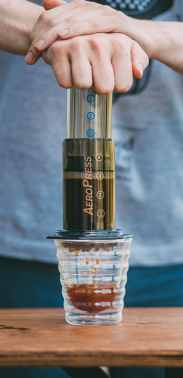
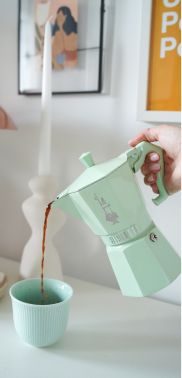

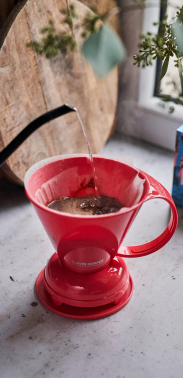
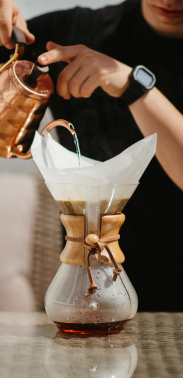




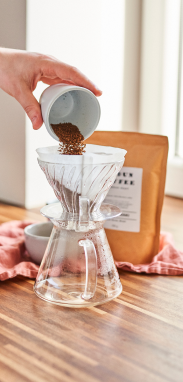


Freshly roasted beans, ready to grind and brew. Here you'll find bags that left the roaster's drum at craft roasteries within the last few weeks.
Kawa świeżo palona
109 - 144
of 369 available products
"Selection by Coffeedesk" is our in-house recommendation that combines expert quality assessment, customer popularity, and product freshness — so you always see the best coffees at the top.
A blend of whole-bean specialty coffee roasted by HAYB roastery from Poland. Dark roast, consisting of beans from Brazil and Guatemala. Perfect for full-bodied, creamy espresso. Full of sweet notes, with prominent hints of chocolate, almonds, and dried fruits. Great as a black coffee, and with milk.Store in a cold and dry space.
A whole-bean specialty coffee beans from Ethiopia and Kenya, roasted by BeMyBean from Poland. Light roast, perfect for filter coffee machines, drippers, Chemex, AeroPress, French Press, and other pour-over brewing methods. You can expect hints of lemon, jasmine, nactarine, red currant, honey.Country: Ethiopia, KenyaRegion: Yirgacheffe, KiambuProcessing: WashedVarietal: HeirloomAltitude: 2000 m a.s.l.Store in a cold and dry space.
Whole-bean specialty coffee from Kenya, roasted in Warsaw by Coffeelab. Light roast, perfect for filter coffee machines, drippers, Chemex, AeroPress, French Press, and other pour-over brewing methods. In the cup, you can expect the hints of red currants, cherry and raspberry.Country: KenyaRegion: KirinyagaVarietal: SL28, SL34, Ruiru 11Processing: WashedAltitude: 1800 – 2100 m a.s.l.Store in a cold and dry space.
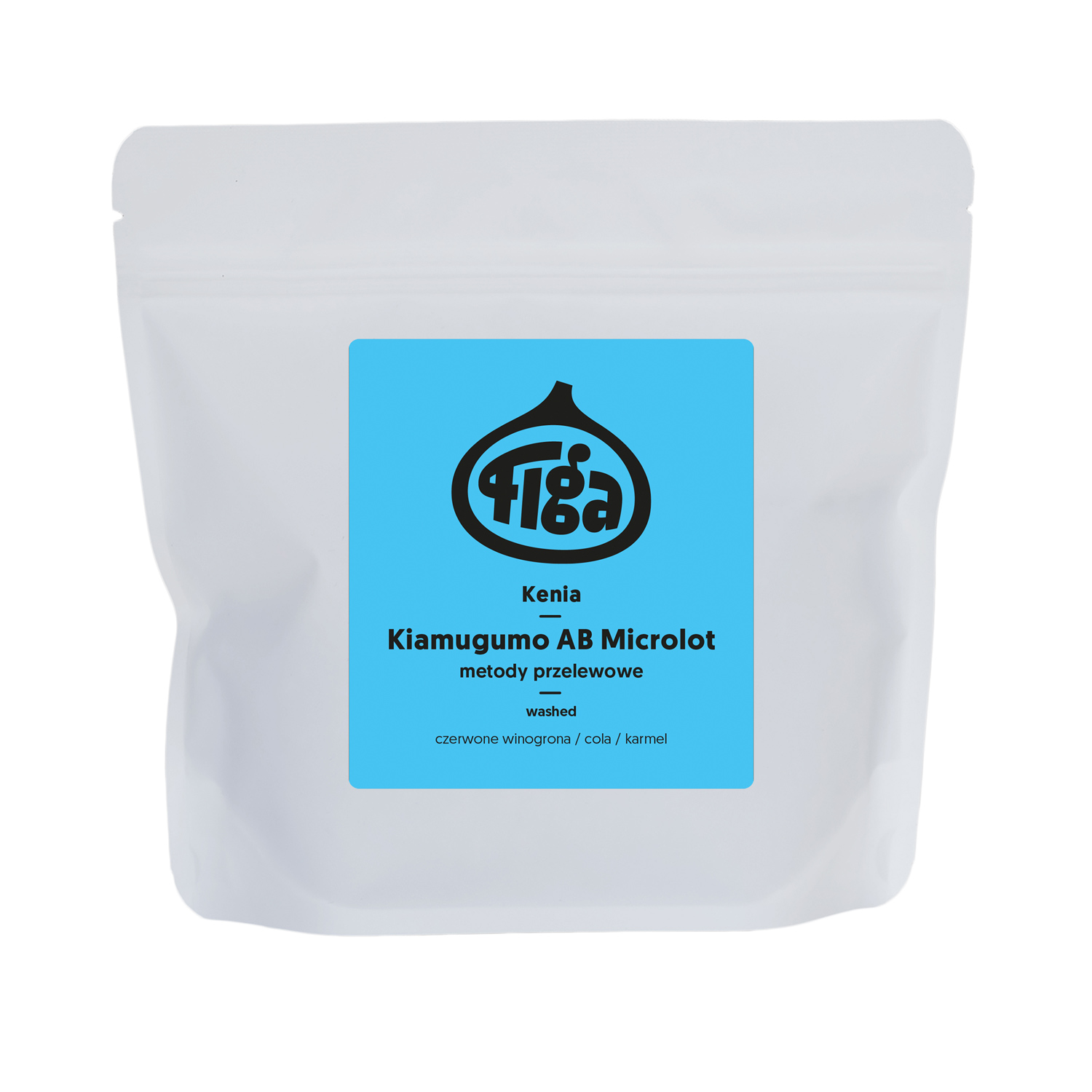
Whole-bean specialty coffee from Kenya, roasted by Figa Coffee roasting brand. Light roast, perfect for filter coffee machines, drippers, Chemex, AeroPress, French Press, and other pour-over brewing methods. The brew resembles the flavour of red grapes, cola and caramel. Country: KenyaRegion: Gariama, Manyatta, KirinyagaFarm: Kiamugumo Factory stationProcessing: WashedAltitude: 1550 m a.s.l.Variety: Batian, SL28, SL34, Ruiru 11The Kiamugumo coffee processing station was established in the 1970s and is run by the New Ngariama Farmers' Co-operative Society, which currently brings together approximately 1,500 farmers delivering coffee to the station. Each of them grows coffee alongside other crops on a plot with an average area of about 1/8 of a hectare.Fun fact: Kenyan microlots (coffee lots) can be traced all the way back to the station level or, where possible, to individual farms, and their selection is based on flavor evaluation. Since most coffee growers in Kenya own small farms, they deliver coffee in the form of cherries to a local processing station for sorting and processing. There, the deliveries are blended and processed into daily lots, with the best ones selected and sold as microlots.Store in a dry and cool place.
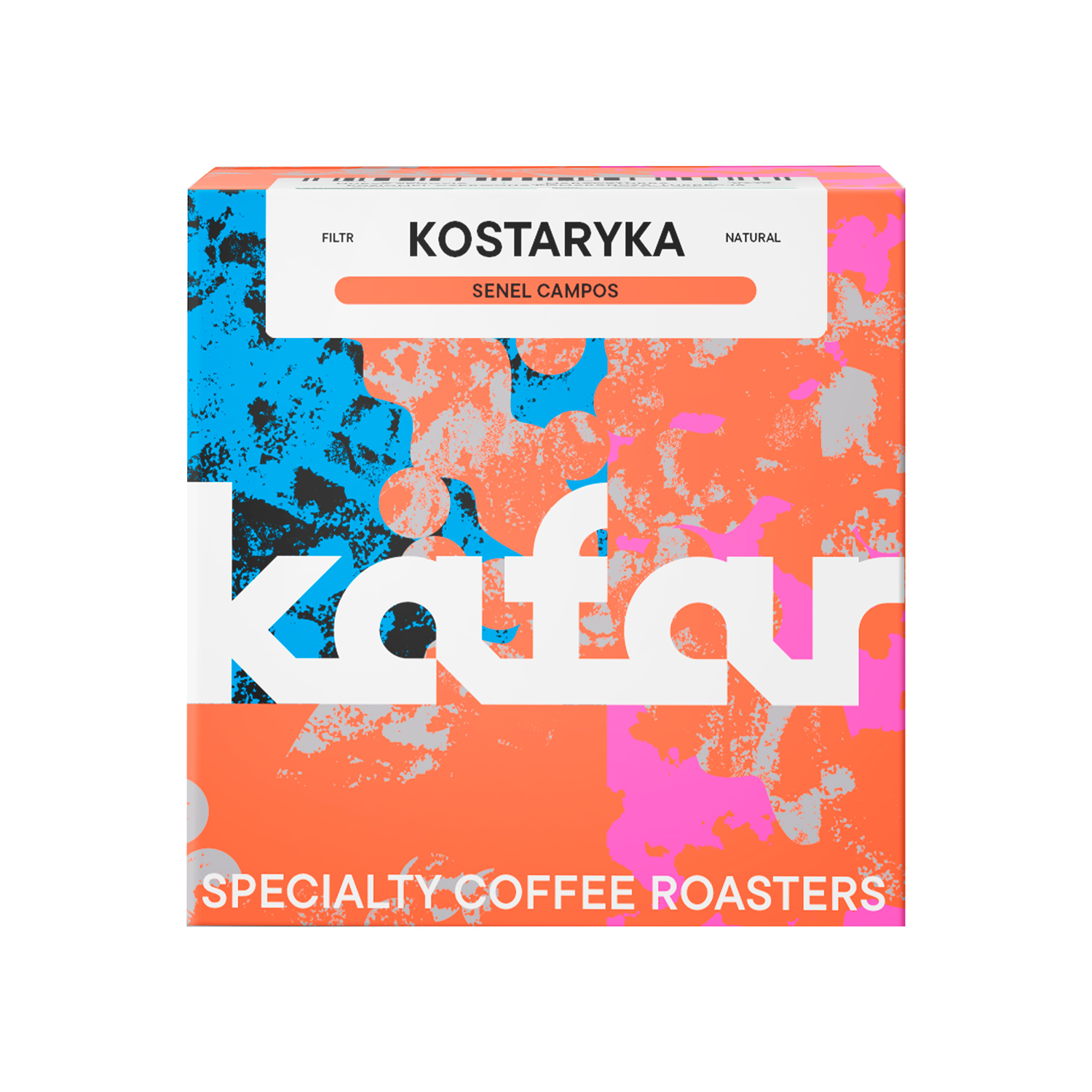
Whole-bean specialty coffee from Costa Rica, roasted in Poland by Kafar. Light roast, perfect for filter coffee machines, drippers, Chemex, AeroPress, French Press, and other pour-over brewing methods. The cup is filled with notes of walnut, mandarin and brown sugar.Country: Costa RicaRegion: BruncaFarm: La TobobaProcessing: NaturalVarietal: CatiguaCupping score: 86 / 100 Altitude: 1700 m a.s.l.ABOUT THE COFFEEThis lot from the La Toboba farm combines sugar cane in its flavor profile with the citrus freshness of mandarin and a subtle note of walnut. It is created in cooperation with Senel and Alan Campos — producers who have consistently developed their approach to quality and precise coffee processing over the years. The natural process highlights the fruity character and dense body of the brew. We recommend it primarily for filter brewing methods, where its clarity and multi-layered nature are most pronounced.Finca La Toboba Jocotes is located in the Convento, Pérez Zeledón region of Brunca, Costa Rica, at an altitude of 1420 to 1710 meters above sea level. The farm is run by Senel Campos along with his son Alan, managing three estates spread across the steep terrains of southern Costa Rica.Senel Campos' story is a tale of consistency and gradual development. He grew up in Pérez Zeledón under difficult conditions, sharing a small house with his siblings and often going to school hungry. Despite limited opportunities, he and his family built a project based on high-quality specialty coffee production and an increasingly precise approach to processing.Over the past decade, the processes on the farm have evolved from simple, basic methods to consciously controlled production of honey and natural process lots. Coffees from La Toboba are characterized by a very low number of defects and high consistency in quality.This specific lot of the Catigua variety was subjected to the natural process, which brings out notes of walnut, mandarin, and sugar cane in the cup. The coffee stands out for its high sweetness, performing particularly well in filter brewing methods.Store in a dry and cool place.
Cuba Espresso is beans from Cuba and Africa. Roasted by Audun Sorbotten, the 2015 World Roasting Champion. The predominant flavour is chocolate, the coffee is creamy with low acidity.The beans are roasted for espresso. The Cuban and African beans are roasted separately and then blended. This blend is ideal for traditional espresso, it is also excellent for use in a coffee maker and in combination with milk.The jury´s feedback on the Cuba blend from the Global Coffee Awards 2025:A beautifully balanced blend with rich notes of toffee, milk chocolate, white chocolate, and hazelnut. The pleasant acidity adds brightness, complemented by a passionfruit-like aftertaste and a hint of controlled fermentation that enhances complexity. The coffee cuts through milk exceptionally well, maintaining its presence and sweetness.Store in a cold and dry space.
Coffee beans from Colombia, roasted by Polish Etno roastery. Medium roast makes this coffee perfect for espresso and pour-over coffee machines. You will find this coffee full of citrus-like acidity and the notes of dark chocolate.Country: ColombiaRegion: MedellinGrowing altitude: 1400 - 1700 m above sea level.Botanical variety: various types of local arabicaBean processing: WashedStore in a cold and dry space.
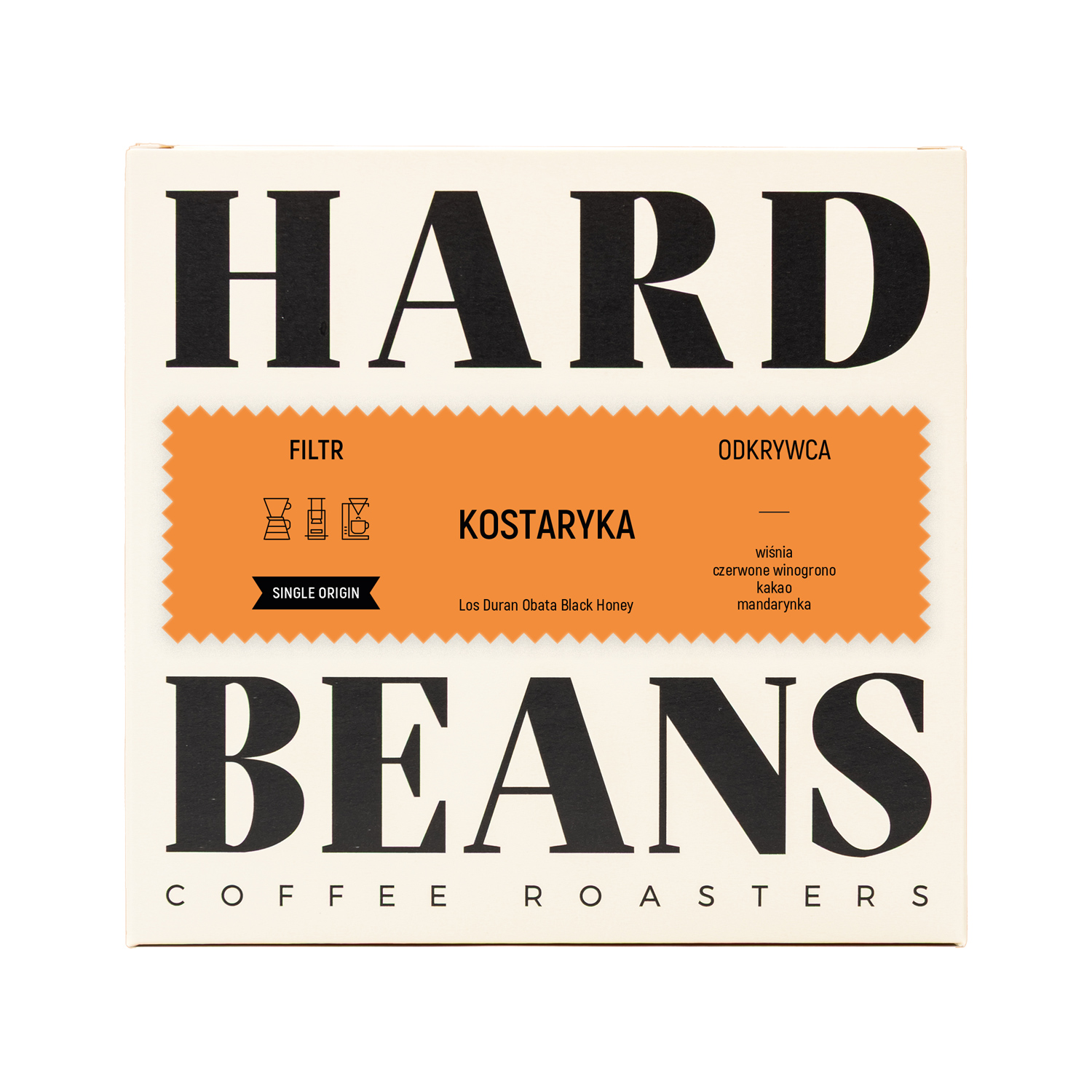
Whole-bean specialty coffee from Costa Rica, roasted by Hard Beans from Poland. Light roast, perfect for filter coffee machines, drippers, Chemex, AeroPress, French Press, and other pour-over brewing methods. In the cup, you can expect the notes of cherry, red grapes, cocoa and tangerine.Country of origin: Costa RicaRegion: West ValleyFarm: Los Durán MicromillProcessing: Black HoneyVarietal: ObataAltitude: 1600 – 1900 m a.s.l.ABOUT THE FARMLos Durán is a family micromill run by Eduardo Durán and his three sons: Barney, Kendall, and Arnold. The farm is located in Sarchí, in Costa Rica's West Valley, a region with a long tradition of coffee production and a high number of small, family-owned farms.Each family member is responsible for a different part of the business. Barney manages daily production and processing, while Kendall and Arnold also apply their engineering backgrounds to develop the family enterprise.The Duráns work on several small plots where they cultivate traditional varieties such as Catuaí and Caturra, alongside SL28 and more modern hybrids.A key milestone for the farm was launching their own micromill. Eduardo and Kendall built it directly next to the family home to handle the processing and drying of harvested coffee on their own. The decision regarding technology was also crucial. Instead of a mechanical demucilager, they used a traditional depulper. It allows a larger amount of mucilage to remain on the parchment, which is particularly important for honey-type processing.They also have raised beds and a greenhouse at their disposal. As a result, the entire process—from freshly harvested cherry to dried parchment—remains in the hands of a single family.ABOUT THE VARIETALObata belongs to a group of varieties developed to combine good productivity, disease resistance, and quality potential.At Los Durán, however, it is not treated merely as a commercial variety. The family works with it as a standalone microlot and guides it through an extensive Black Honey process. Because of this, the coffee's character stems not only from genetics and growing conditions, but also from a series of decisions made post-harvest.ABOUT THE PROCESSINGBlack Honey by Los Durán is a multi-stage process.After harvesting, the ripe cherries remain whole for about 12 hours. Only after this time are they depulped. The skin of the fruit is removed, but the mucilage remains on the parchment. Next, the coffee rests for another ~24 hours. After this stage, it moves to raised beds, where it stays covered for the first 24 hours.Further drying lasts about 21 days. Throughout this period, the full layer of mucilage remains on the parchment. This is what sets this lot apart from simpler honey processing variants. The producer consciously preserves a larger amount of fruit material during drying and carries out moisture reduction gradually on raised beds.In practice, this means a significantly higher number of decisions between harvesting and the end of drying: the length of whole-fruit resting, the timing of depulping, the duration of the next resting stage, the amount of remaining mucilage, and the course of three weeks of drying. At Los Durán, all these stages are carried out in a single micromill. It is precisely this level of control over processing that makes this coffee so interesting.RECIPEProportions: 60 g of coffee per 1 liter of waterWater temperature: 93°Grind size: mediumBrewing time: 3:30 minutesMethod: Pour water over the coffee in 5 equal parts (e.g., 5x 60 g) at 30-second intervals.The water should filter through the coffee completely between pours.If the water flows too slowly or too quickly, adjust the grind size to coarser/finer.Remember to use soft, filtered water!Store in a dry and cool place.
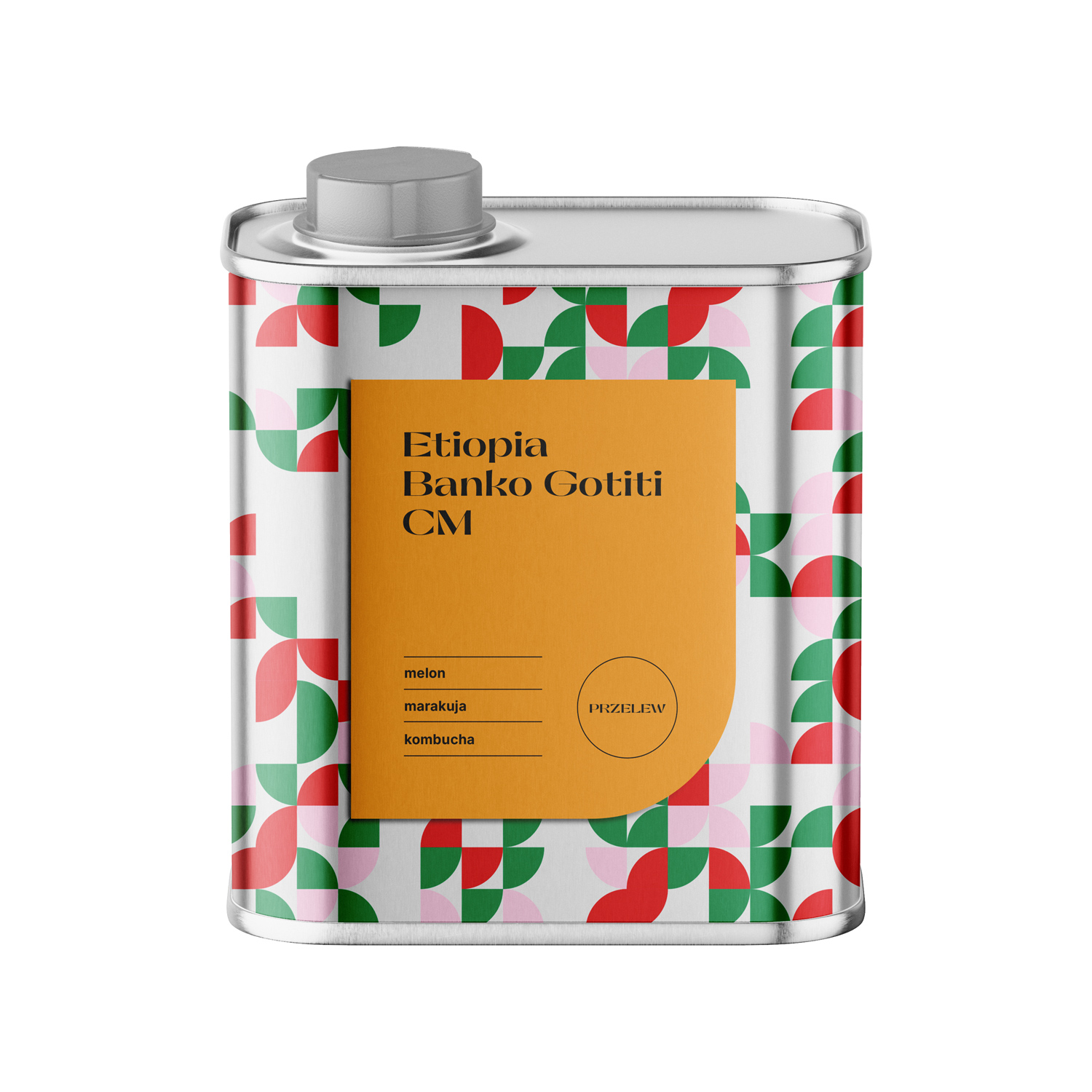
Whole-bean specialty coffee from Ethiopia, roasted in Warsaw by Coffeelab. Light roast, perfect for filter coffee machines, drippers, Chemex, AeroPress, French Press, and other pour-over brewing methods. In the cup, you can expect the hints of melon, passionfruit and kombucha.Country: EthiopiaRegion: Gedeb, YirgacheffeVarietal: HeirloomProcessing: Carbonic MacerationAltitude: 2100–2250 m a.s.l.ABOUT THE COFFEEToday, somewhat out of the spotlight, Carbonic Maceration was once a highly sought-after processing method. Banko Gotiti reminds us why it attracted so much interest. For starters, it has little in common with a classic Ethiopia. There’s plenty of sweet, tropical fruit here: melon, passion fruit, pineapple, and lychee, with a pleasantly sparkling acidity. You know that feeling when a lightly fizzy drink tickles your palate? That’s the kind of tropical tickle Banko Gotiti has in store for you (it reminds us of kombucha). :)ABOUT THE PROCESSING AND VARIETYCM stands for Carbonic Maceration, a technique borrowed from winemaking. Saša Šestić brought it into the coffee spotlight by presenting it at the World Barista Championship. It showed just how much you can bring out of a coffee by changing the way fermentation is managed.In coffee processing, it works like this: first, the cherries go into sealed tanks, where carbon dioxide is introduced to displace oxygen and create conditions for anaerobic fermentation. By controlling the temperature and fermentation time, producers influence the coffee’s acidity, body, and character. This processing method can highlight fruitiness, intensify aromas, and give the coffee a more concentrated flavour. Quite a few possibilities for a stage that happens before the beans are even dried.Here, the starting point is local varieties collectively known as heirloom, grown at 2,100–2,250 metres above sea level in Gedeb, in the Yirgacheffe region. It’s one of the regions whose coffees we reach for regularly. We hope Banko Gotiti finds a permanent place in your coffee rotation, too.Store in a cold and dry space.
Coffee from Brazil roasted in Poland by LaCava. Medium roast, perfect for espresso machines and moka pots. Sweet, with delicate fruitiness - you can expect the highlighted notes of almonds and chocolate.Country: BrazilStore in a cold and dry space.
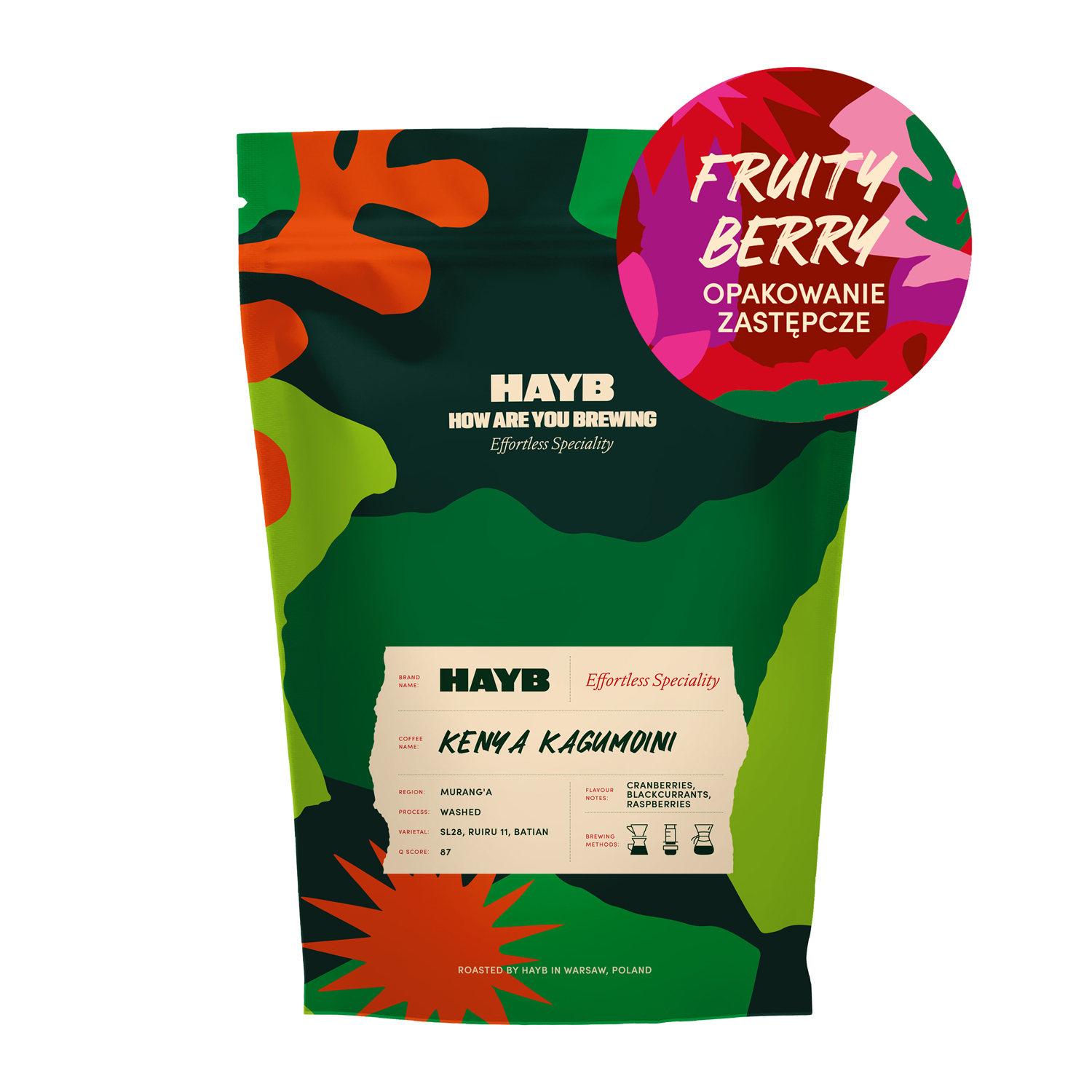
Specialty-grade whole bean coffee from Kenya, roasted by the Warsaw-based roastery HAYB. Light roast, ideal for filter coffee makers, drippers, Chemex, AeroPress, French Press, and other alternative brewing methods. The flavor profile features notes of cranberry, black currants and raspberry.Country of origin: KenyaRegion: MurangaVariety: SL28, Ruiru 11, Batian.Processing method: WashedAltitude: 1750 m a.s.l.Cupping score: 87 / 100ABOUT THE FARMThe Kagumoini coffee processing station operates under the Kamacharia Farmers Co-operative Society and is located in Murang'a County. This station collaborates with local farmers who put a tremendous amount of heart into growing high-quality arabica, focusing on sustainable agriculture and truly careful bean processing.The Kagumoini cooperative itself was built on the foundations of the former Kagima cooperative, after which it was officially registered. Before becoming an independent entity, however, it was part of the larger Tetu cooperative. Since its official start, they have been doing a fantastic job for their members: offering field advice, promoting good agricultural practices, handling coffee processing and sales, and helping farmers achieve increasingly better yields with even higher bean quality. Check it out for yourself!Store in a cool, dry place.
A blend of whole-bean specialty coffee roasted by HAYB roastery from Poland. Medium roast, consisting of beans from Brazil and Guatemala. Perfect for full-bodied, creamy espresso. Full of sweet notes, with prominent hints of chocolate, almonds, and dried fruits. Great as a black coffee, and with milk.This blend contains:- Brazylia Cerrado, Minas Gerais (Natural) - Gwatemala Huehuetenango (Washed) Store in a cold and dry space.
Whole-bean specialty coffee from Brazil, roasted by Klaro roasting brand. Dark roast, perfect for espresso machines and moka pots. The brew resembles the flavour of milk chocolate, caramel, and nuts.Country: BrazilRegion: Minas GeraisVarietal: Bourbon, Mundo MovoProcessing: NaturalROASTER'S NOTENueces is the perfect everyday coffee, especially for fans of bold, nutty espresso. Roasted with black coffee lovers in mind, it performs beautifully not only in espresso machines but also in moka pots and French presses.The flavor profile is dominated by milk chocolate and caramel notes, with a subtle nutty finish. It’s bold, easy to brew, and ideal for anyone looking for an aromatic, smooth cup whenever the mood strikes.RECIPEdose 17 g yield 36-4026-28 secondsStore in a cold and dry space.
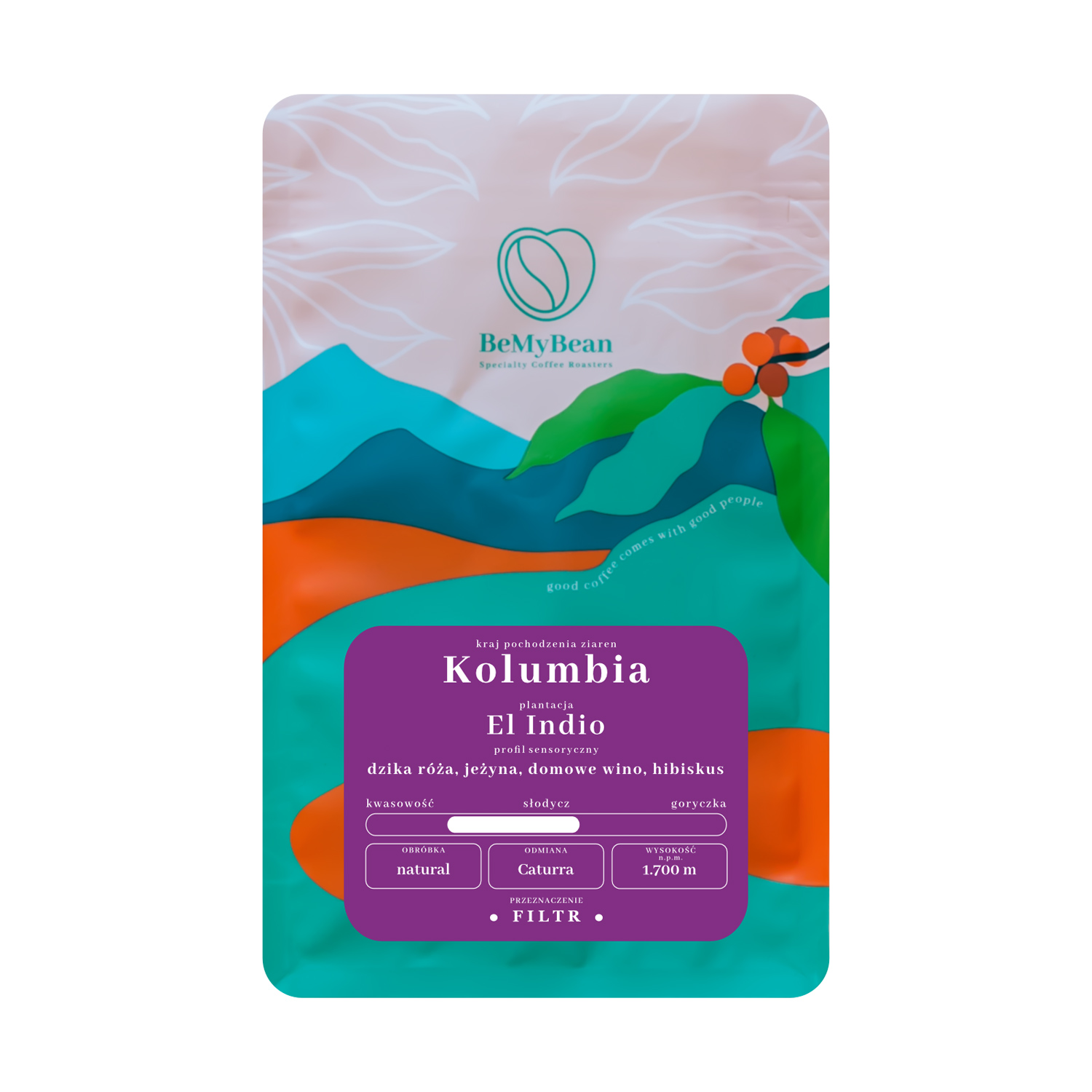
A whole-bean specialty coffee beans from Colombia, roasted by BeMyBean from Poland. Light roast, perfect for filter coffee machines, drippers, Chemex, AeroPress, French Press, and other pour-over brewing methods. You can expect hints of wild rose, blackberry, wine and hibiscus.Country: ColombiaRegion: TolimaFarm: El Indio Processing: NaturalVarietal: CaturraAltitude: 1700 m a.s.l.ABOUT THE COFFEEColombia El Indio comes from Planadas in the Tolima region, located among high mountains and volcanic soils. It is one of Colombia's most important coffee regions, where the cooler climate and high-altitude plantations favor the creation of coffees with great complexity. El Indio is composed of Caturra variety beans grown at an altitude of approximately 1,700 meters above sea level. The coffee comes from smallholder farms whose owners have been perfecting the art of natural processing for years.In the cup, El Indio immediately shows its intense, fruity character. There is juicy blackberry reminiscent of freshly picked, ripe fruits, the intensity of rosehip, and a delicate accent of hibiscus. The whole profile is brought together by a characteristic note of homemade wine, which adds depth, vinosity, and a bit of a fermentative kick to the coffee. It is a full, expressive, and sweet profile, but at the same time very aromatic – instead of a quiet fruity background, we get a cup that definitively attracts attention.ABOUT THE PROCESSINGThe coffee cherries go to drying as whole fruits, along with the skin and pulp. After harvesting, the best ripe cherries are selected and then spread out on raised beds. There, under the influence of the sun, they gradually lose water, and the sugars and aromatic compounds present in the fruit have time to interact with the bean.Drying is carried out very carefully. The quality control team checks the coffee up to four times a day, ensuring its even drying. This is particularly important in Tolima, where frequent rainfall occurs during the harvest season. However, the producers manage to master this demanding process – as much as 80% of their coffees undergo natural processing.It is the natural processing that is responsible for a large part of El Indio's character. Prolonged contact with the fruit during drying helps build intense sweetness, juiciness, and deep fruity notes. In this cup, this translates into a combination of blackberry juiciness, floral hibiscus, rosehip aroma, and the characteristic vinosity of homemade wine. This is a coffee for those who like filter brews with a distinct character and a profile that is hard to miss.Store in a cool and dry place.
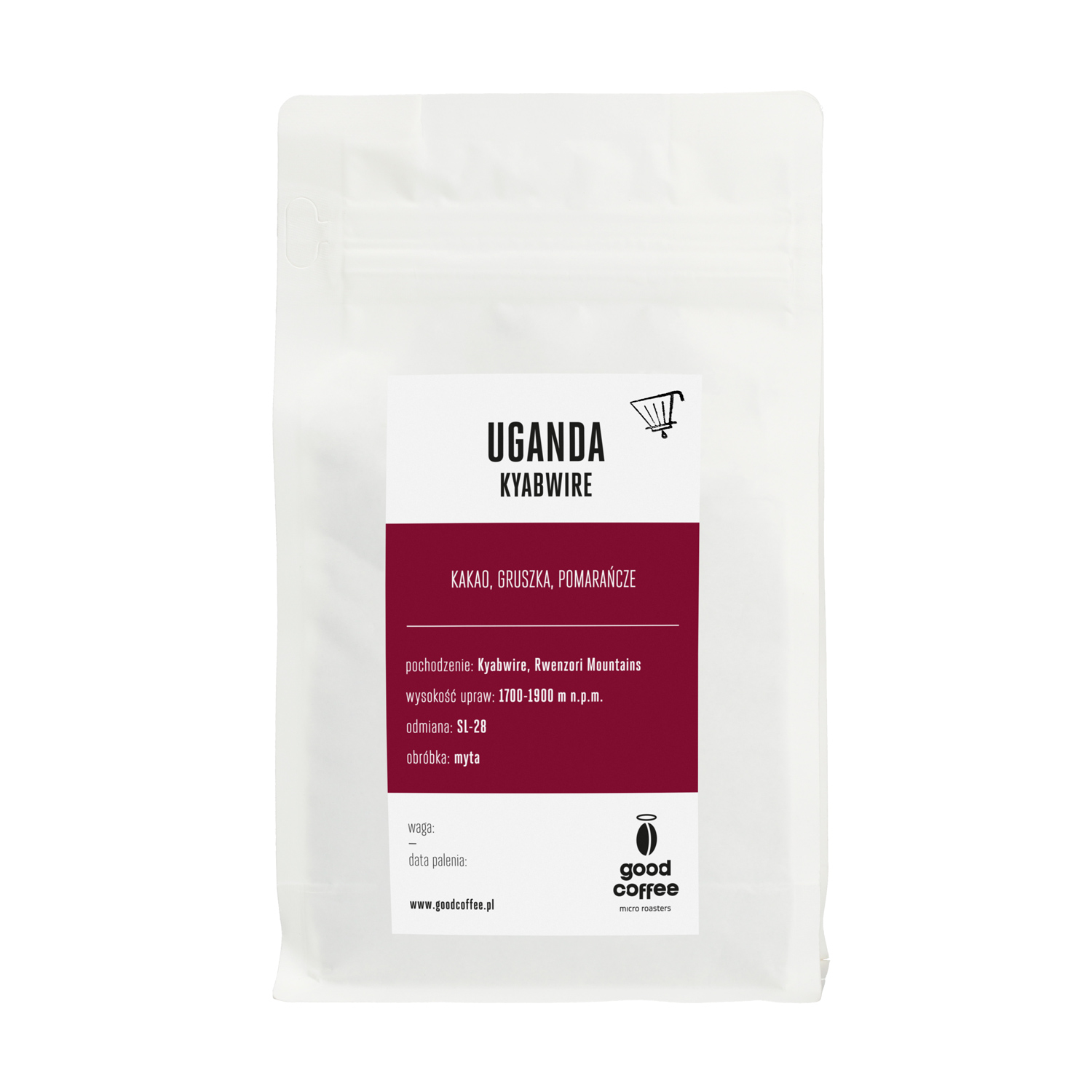
Whole-bean specialty coffee from Uganda, roasted by Good Coffee roasting brand. Light roast, perfect for filter coffee machines, drippers, Chemex, AeroPress, French Press, and other pour-over brewing methods. The brew resembles the flavour of cocoa, pear and orange.Country: UgandaRegion: Fort Portal, Rwenzori MountainsAltitude: 1700 - 1900 m a.s.l.Processing: WashedVariety: SL-28 ABOUT THE COFFEECoffee that makes a difference. Behind it are exceptional people. One of them—and we had the great pleasure of meeting him in person—is Kabuuka Elimethidas from the Empaako Collective. Kabuuka, known as Eli, is a young coffee farmer who, together with his wife Immaculate Karungi, dedicated himself to changing coffee trading conditions in western Uganda for the benefit of farmers.ABOUT PRODUCTIONEli grew up surrounded by coffee—his family cultivated robusta. He planted his very first coffee bush when he was 8 years old! After studying agronomy in Kampala, he took a job in the coffee industry in Fort Portal, western Uganda, where a local exporter hired him to liaise with farmers. The company collapsed right before the pandemic, leaving hundreds of farmers high and dry. Instead of looking for another job, Eli decided to help these producers sell their fruit. During that time, he witnessed many of the injustices that are still present in the coffee trade. What kind? For example, buyers would reject a reserved batch of cherries at the last minute without giving a reason—it is just like if you picked raspberries to sell, delivered them, and the buyer told you they would not buy them after all (fresh fruit, which coffee cherries are, spoils very quickly and cannot wait to be processed). Huge problems arose during peak harvest season, when buyers would slash purchasing prices to absurdly low levels or refuse to buy, claiming they already had too much fruit and could not process it (in a country where a farmer has a car and several buying stations nearby, this is no problem, but not in Uganda, where heavy bags of fruit are carried by hand—a working bicycle is the ultimate dream—and the next processing station is at least several dozen kilometers away). Unhonest middlemen were common, cheating farmers (e.g., with miscalibrated scales) or lending money to farmers to pay for school fees or food in exchange for a guaranteed low coffee price—so low that it did not cover production costs.On top of that, producers lacked the resources and knowledge to properly manage their crops. Without fertilization, pruning, and weeding, the bushes bear less fruit, and many farmers do not know that they need to be replaced even every few years. Lacking this knowledge and the money for fertilizers or basic tools, many earned little more than 60 USD a year—despite immense manual labor from themselves and their entire families (!). It must be emphasized that these farmers were and are the most vulnerable part of the entire production chain, yet it is the most important part, without which the entire chain does not exist!Eli saw a lot of this and dreamed of a system where farmers would be treated with respect and fairness. He thought about having his own buying and processing station where farmers could always sell their fruit and receive fair payment. He wanted to offer local producers predictable, dignified, and stable conditions.Thanks to a coincidence, Eli and Immaculate met the company Semilla, and the dream came true—the Empaako Collective was born. Today, thanks to huge support from Semilla, Eli offers all producers the certainty that they will receive a fixed, guaranteed price for their fruit throughout the entire harvest season. For higher quality coffee, farmers receive higher pay, and the money goes directly into their hands as soon as the fruit is delivered to the buying station. Eli proudly showed us how he sent the day's payments using a special app! Interestingly, farmers receive the money on a mobile device and can exchange it for cash at any mobile phone kiosk, which are plentiful across East Africa (these are small shops where you can buy a SIM card, top up your phone, send a Western Union transfer, etc.). Eli and Immaculate also train farmers in cultivation and harvesting techniques, helping them achieve the best possible quality.Our coffee consists of SL-28 variety beans coming from 11 farmers in the village of Kyabwire. After harvesting, the cherries are washed and sorted 3 times: first at the farmer's home, second at the buying station, and third at the processing station. Then, they are fermented in barrels for several dozen hours until they reach the correct pH level. Next, the skin and pulp are mechanically removed, and the beans are fermented again, then rinsed several times to remove the remaining parchment—the thin outer layer of the fruit on the beans. Finally, of course, they are dried on raised beds for about 3 weeks.Store in a cool, dry place.
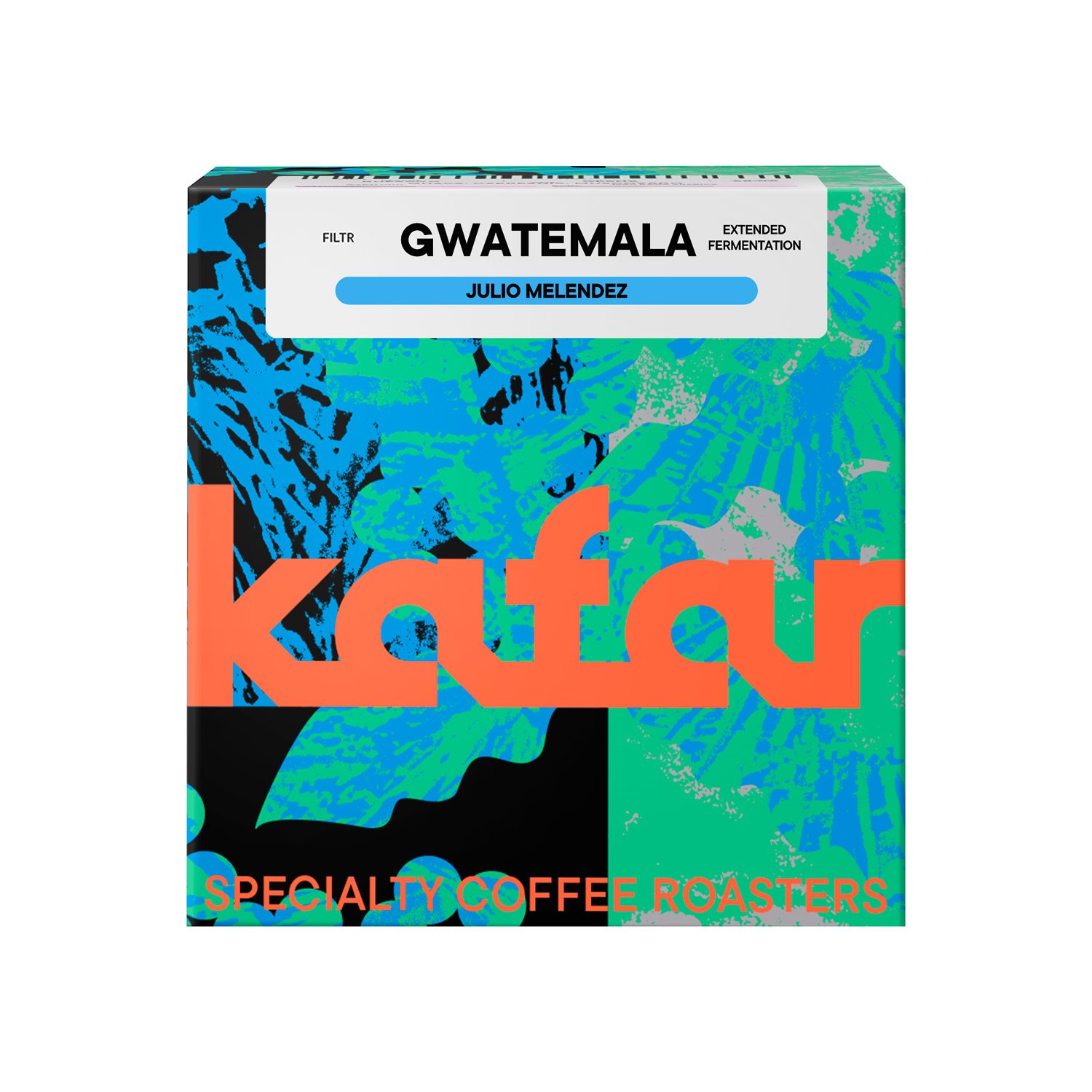
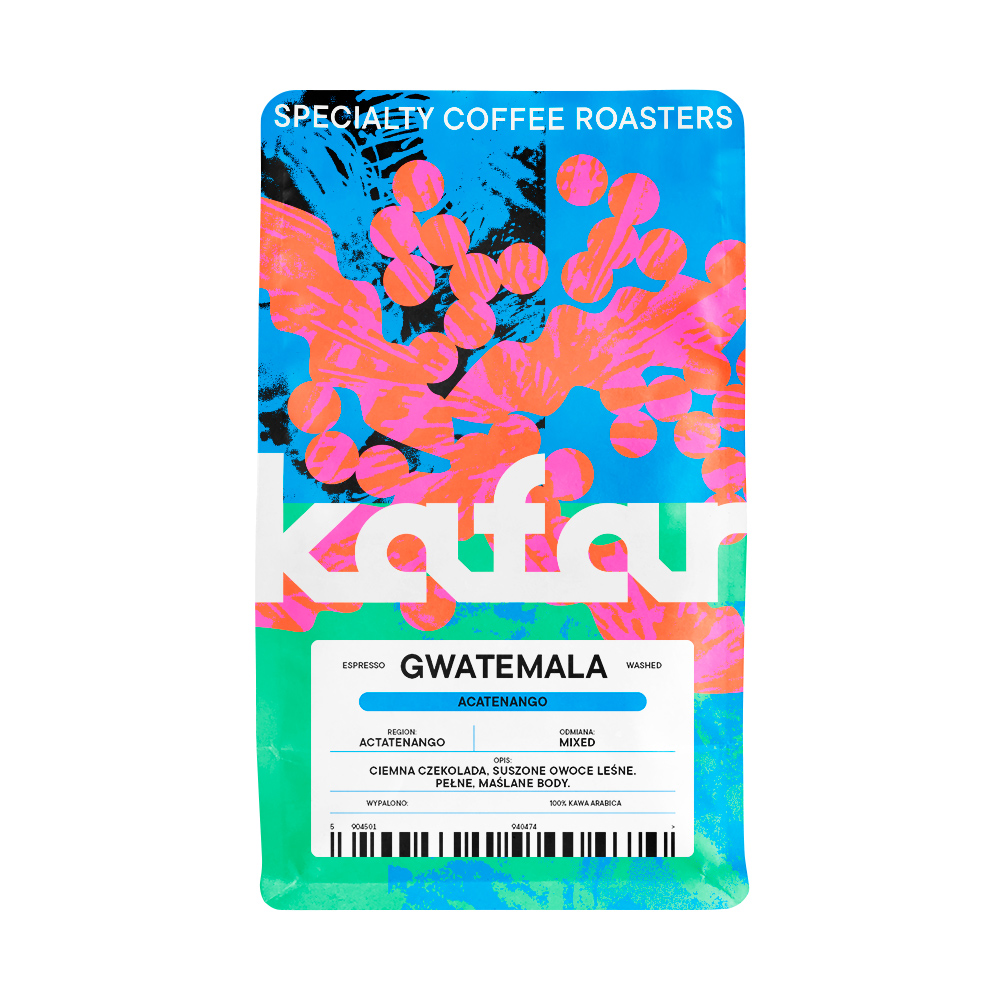
Whole-bean specialty coffee from Guatemala, roasted in Poland by Kafar. Light roast, perfect for filter coffee machines, drippers, Chemex, AeroPress, French Press, and other pour-over brewing methods. The cup is filled with notes of pomelo, aloes and cocoa.Country: GuatemalaRegion: AcatenangoFarm: Finca El ZapoteProcessing: Extended FermentationVarietal: Geisha Cupping score: 86 / 100Altitude: 1500 m a.s.l.ABOUT THE COFFEEA profile that intrigues from the very first sniff. The citrus crispness of pomelo combines with an intriguingly cool hint of aloe vera, creating a surprising introduction. Together with cocoa, they form a trio that lingers in the memory of your taste buds for a long time.Julio Melendez is a true farmer-engineer. At Finca El Zapote, he modernized the processing station to be more eco-friendly and created proprietary three-tier drying beds. He conducts the Extended Fermentation process with extraordinary precision, drawing out the full complexity from the beans. Add to that the volcanic terroir of Acatenango and the farm's eco-certifications (Rainforest, UTZ, 4C).This story has a personal touch for Kafar. The roastery owners – Adam, Błażej, and Paweł – had the opportunity to meet Julio in person on a trip to Guatemala, and a few months later, the entire Kafar team was cupping his samples in Gliwice. By adding Julio's coffee to our offer, we are also adding the joy of a direct relationship with this producer. Take and drink of this, all of you!Store in a dry and cool place.
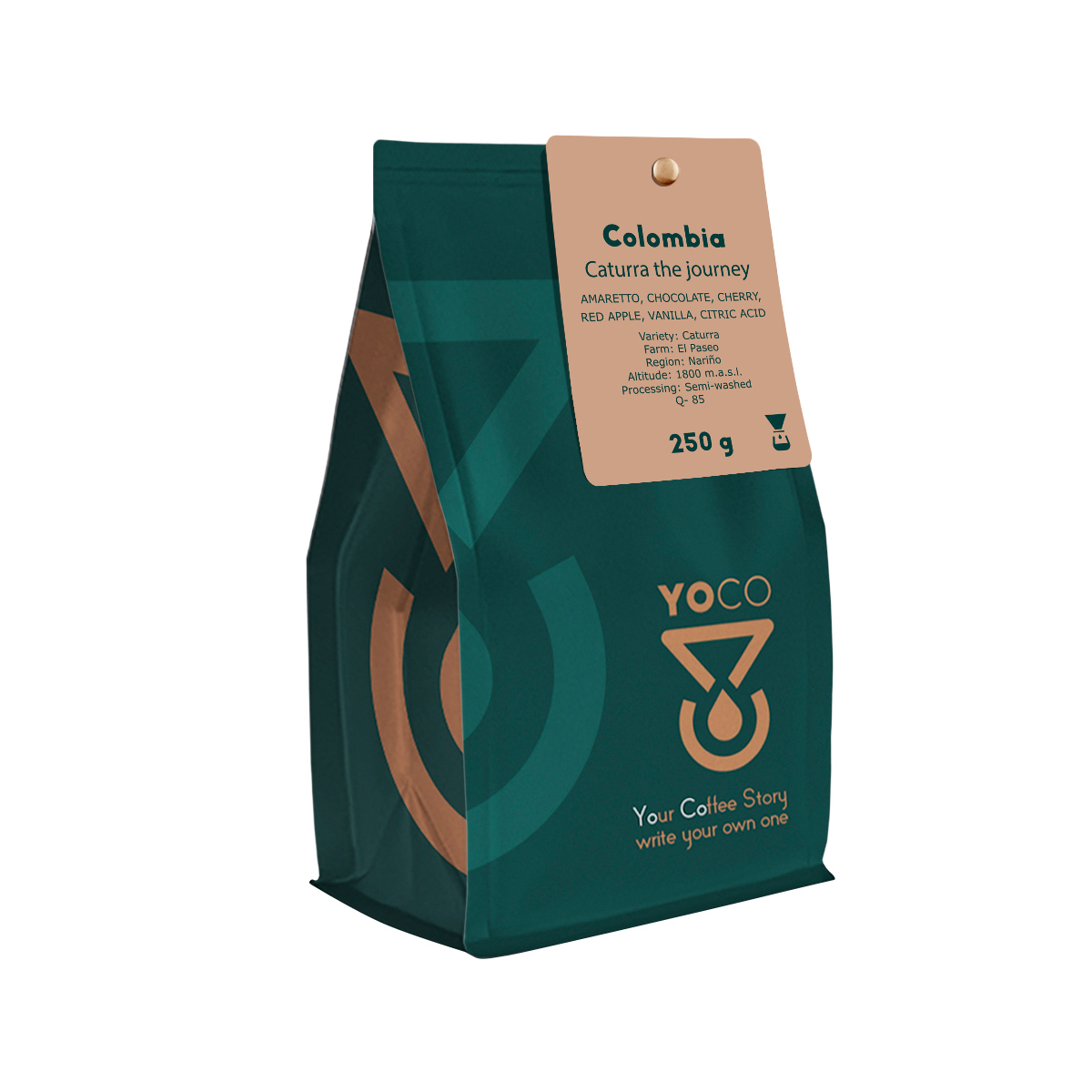
Whole-bean specialty coffee from Colombia, roasted by YOCO roasting brand. Light roast, perfect for filter coffee machines, drippers, Chemex, AeroPress, French Press, and other pour-over brewing methods. The flavour of the brew resembles amaretto, chocolate, cherry, red apple, vanilla and lemon acidity.Country: ColombiaRegion: NarinoFarm: El PaseoVarietal: CaturraProcessing: Semi-WashedAltitude: 1800 m a.s.l.Cupping score: 85 / 100 pointsABOUT THE PROCESSINGThe process begins with 60 hours of aerobic fermentation in a concrete tank, where the cherries are floated to remove any that do not meet quality standards. Following this, the coffee is depulped and transferred to special anaerobic steel tanks, where the pH is monitored daily to ensure optimal fermentation conditions.Store in a cold and dry space.
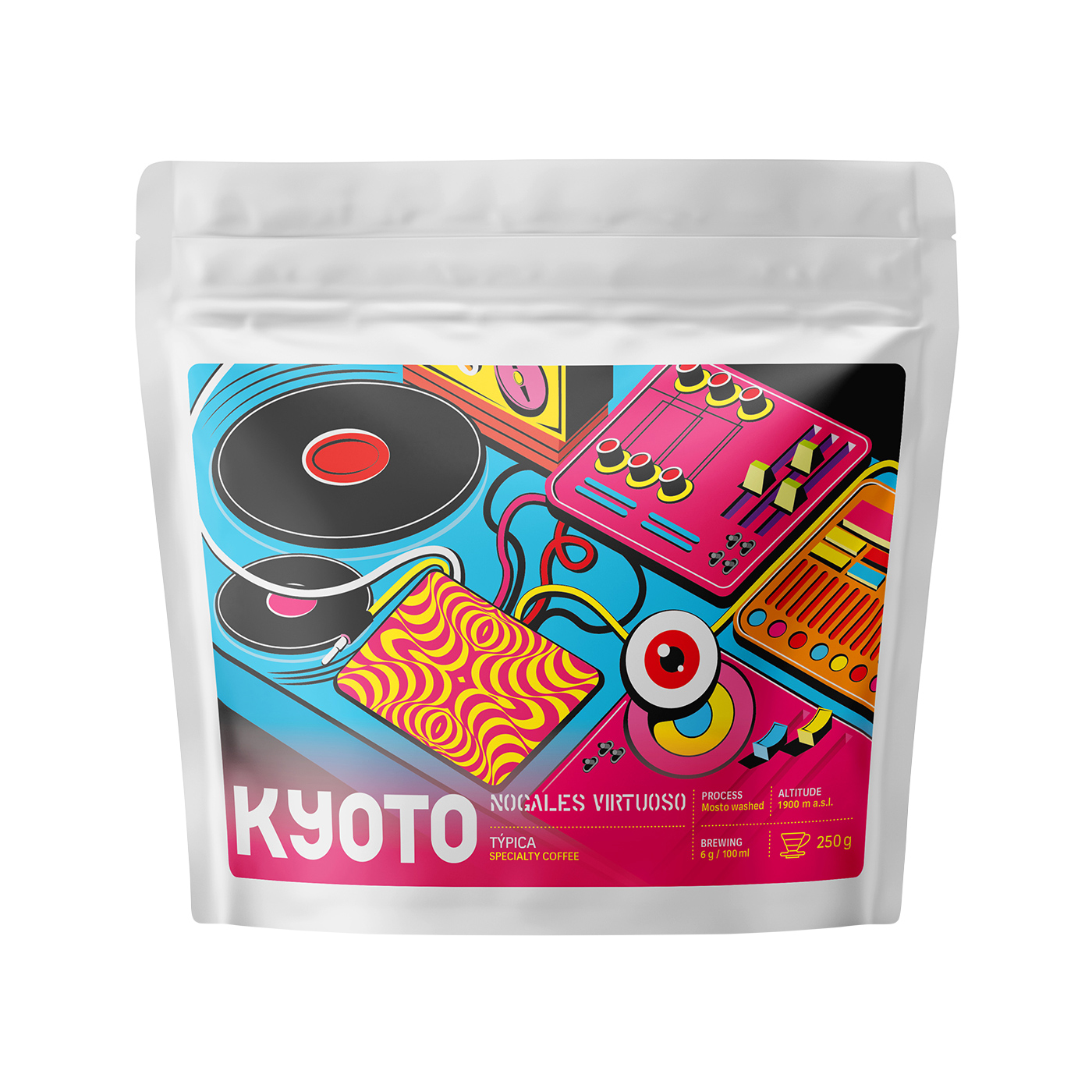
Whole-bean specialty coffee from Colombia, roasted in the KYOTO Coffee Roasters roastery in Wrocław. Light roast, ideal for drip coffee makers, Chemex, AeroPress, French Press, and other alternative brewing methods. The taste has notes reminiscent of mango, pomelo and gooseberry.Country: ColombiaRegion: Bruselas, HuilaFarm: Los NogalesProcessing: Washed, mosto fermentationVarietal: TypicaCupping score: 88 / 100 pointsAltitude: 1900 m a.s.l.ABOUT THE COFFEEAnother coffee from Oscar Hernandez from the Los Nogales plantation in Colombia, which completely shatters the general understanding of coffee sensory characteristics as a beverage. You smell it, and the very first impressions tell you that you will find something unobvious here, and you certainly are not mistaken.This coffee is as aromatic, as sweet, as fruity, and as surprising as possible. If a bag of these beans falls into your hands, it will certainly transform your previous sensory memory in your future searches for the coffee holy grail.ABOUT THE PROCESSINGThe Los Nogales plantation specializes in very unusual, modern bean processing methods, not shying away from experiments whose results are usually surprising.These beans come from an experimental process in which, after removing the coffee cherries, they underwent controlled fermentation in juice (mosto) squeezed from those cherries. Thanks to this, it gained a unique character with high sweetness and a mind-blowing aroma. We managed to bring out the full depth and complexity of these beans:)ABOUT THE FARMLos Nogales Farm is a family-run coffee plantation in Colombia. The face of this generational business is currently Oscar Hernandez. The farm is located in the mountainous region of Huila near the city of Bruselas, in the southern part of this region. Oscar is an inventive and charismatic person. He is guided by the idea of producing the highest quality specialty coffee in Colombia, and this batch of beans clearly proves it.In 2006, Oscar's father, Ricaurte Hernandez, won the Colombian Cup of Excellence. Thanks to this great distinction, the farm became synonymous with the highest quality. Oscar continues this tradition, and thanks to him and his approach, Los Nogales is a center of innovation and information for all proactive farmers in this region.Detailed description of this coffee's processing method:Process: mosto fermentationSelection of ripe fruit: The process begins with the careful harvesting of only ripe coffee cherries. This is the key to obtaining high-quality coffee beans, as ripe fruit has optimal flavor and aroma.Cleaning and disinfection with purified water: The harvested coffee beans are thoroughly cleaned and disinfected with purified water. This helps eliminate impurities and unwanted microorganisms.Density sorting, or floating: Coffee beans are submerged in water and sorted by density. Higher-density beans tend to sink to the bottom, while lower-density beans float on the surface. This helps separate good beans from defective ones.Thermal shock: Selected beans undergo thermal shock in water at 80°C for 60 seconds, followed by rapid cooling in cold water at 15°C for 3 minutes. This process breaks down sugars and pasteurizes the beans, contributing to the final flavor of the coffee.Pulping in a wet mill and adding mosto: Coffee beans are separated from the skins and placed in fermentation barrels. Squeezed juice from the coffee cherry skins themselves, which contains a high amount of natural sugars—the so-called "mosto"—is added to them. This can enhance the flavor profile and give the coffee sweet notes.Fermentation: Coffee beans undergo a fermentation process lasting 120 hours. During this time, sugars break down, which affects the coffee's flavor and acidity. Pre-fermentation agents, similar to bread sourdough, are also added to give the coffee unique properties.Sun drying: Finally, the fermented coffee beans are sun-dried for 15 days. This stage is necessary to reduce the moisture level of the beans to a level suitable for long-term storage and to further develop the coffee's flavor.Store in a cold and dry space.
Whole-bean specialty coffee from Rwanda, roasted in Wrocław by KYOTO Coffee Roasters. Light roast, perfect for filter coffee machines, drippers, Chemex, AeroPress, French Press, and other pour-over brewing methods. In the cup you can expect hints of lemon, milk chocolate, orange, grapes and mirabelle.Country: RwandaRegion: Southern ProvinceFarm: Simbi Coffee InvestmentsProcessing: WashedAltitude: 1700 - 2200 m a.s.l.Variety: Red BourbonCupping score: 86 / 100This bean is the quintessential taste of Rwandan coffee, as it is a blend from three different growing regions:From the organic mountain forest region in western Rwanda, near Lake Kivu, right on the border with Congo.From the northern regions of Rwanda, rich in volcanic soils and green hills in the Gicumbi district.From one of the most forested regions of the country in the southern part, where the beans are delivered by many smallholder farmers to the Gitega Hills washing station.
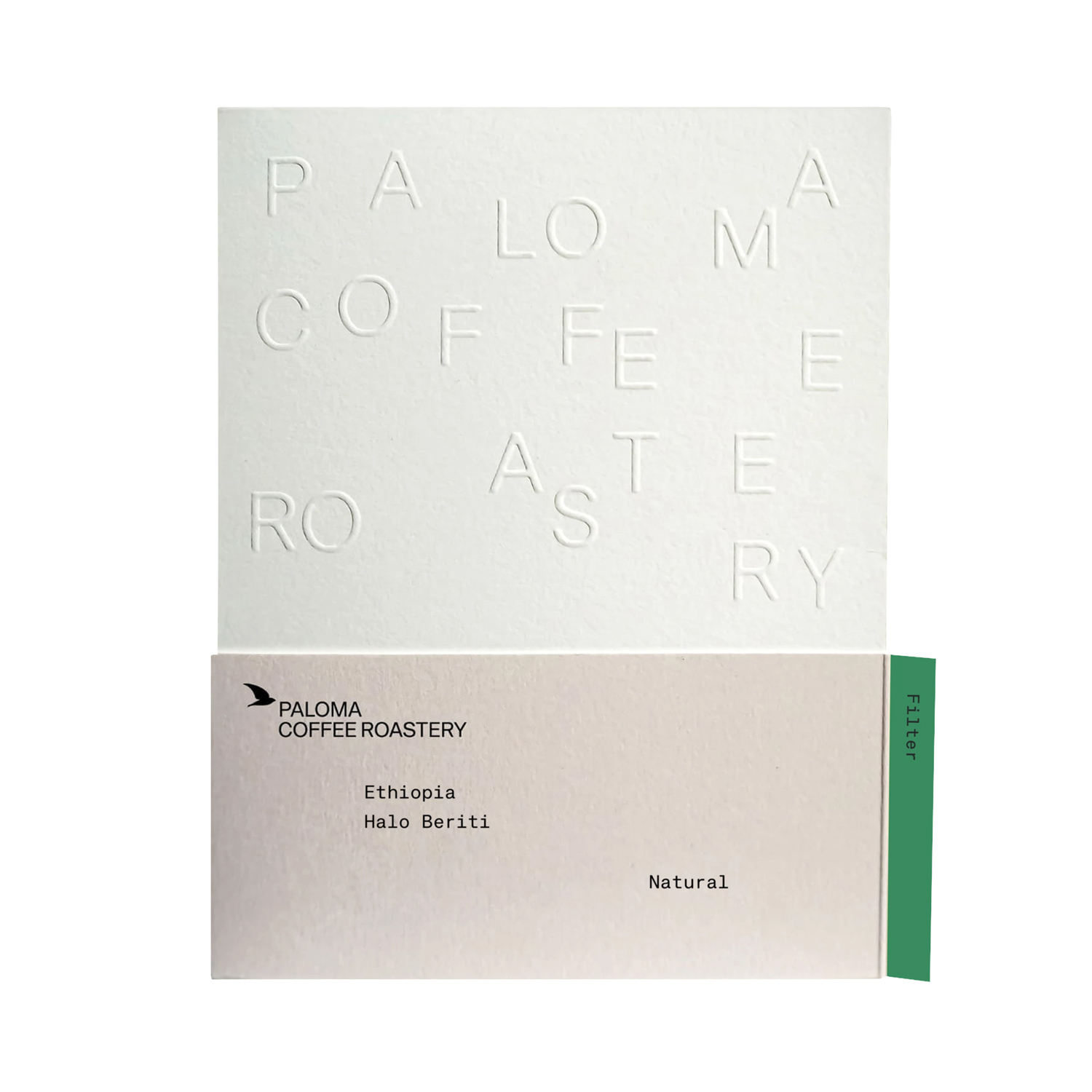
Specialty-grade whole-bean coffee from Ethiopia, roasted by the Polish roastery Paloma. Light roast – perfect for pour-over brewing methods such as drip, Chemex, AeroPress, French Press, batch brewers, and other alternative methods. In the cup, you’ll find notes of wild strawberry, milk chocolate, white tea, orange and chamomile.Origin: EthiopiaRegion: YirgacheffeProcessing method: NaturalVariety: HeirloomCupping score: 86 / 100Farm: Mr. Mengeche DersoAltitude: 2200 - 2300 m a.s.l.ABOUT THE FARMMr. Mengeche Derso is the owner of a 15-hectare farm located in the highlands of the Gedeo Zone, in the Southern Nations, Nationalities, and Peoples' Region of Ethiopia. This region, and the Gedeo Zone in particular, is famous for producing high-quality Yirgacheffe coffee.Mr. Mengeche is 62 years old and has been involved in agriculture his entire life. Thanks to his commitment to producing the highest quality coffee, he has gained recognition from state institutions.Mr. Mengeche has twelve children. Together with four of them, he actively works on the coffee plantation. To enrich the soil, they use natural fertilizers such as manure and plant residues. His farm is located at an altitude of 2,300 meters above sea level and is one of many in this area renowned for producing top-quality coffee.Store in a cool and dry place.
Whole-bean specialty coffee from Brazil and Costa Rica, roasted in Wrocław by Figa Coffee. Dark roast, perfect for espresso machines and moka pots. You can expect hints of chocolate and fruits, medium acidity.Country: Brazil, Costa RicaRegion: Mococa / Sabanilla de Alajuela, Central ValleyFarm: Essencia / Las LajasProcessing: Natural / HoneyContents: 65% Brazil / 35% Costa RicaTutti Frutti is our seasonal blend that changes throughout the year.It combines classic coffee with chocolatey and nutty notes with more fruity, often exotic beans. The result is a unique blend of flavors, different every time. In this sixteenth edition, we have combined high-quality coffees from Brazil and Costa Rica. The blend contains 65% Brazil and 35% Costa Rica.The Tutti Frutti blend is available in two versions - for espresso and for filter brewing methods.Store in a cold and dry space.
Speciality coffee from Guatemala, roasted in Poland by Kafar. Medium roast, perfect for espresso machines and moka pots. The cup is filled with the notes of dark chocolate and dried forest fruits.Country: GuatemalaRegion: AcatenangoPlantation: La EsmeraldaProcess: WashedVariety: Bourbon, TypicaStore in a cold and dry space.
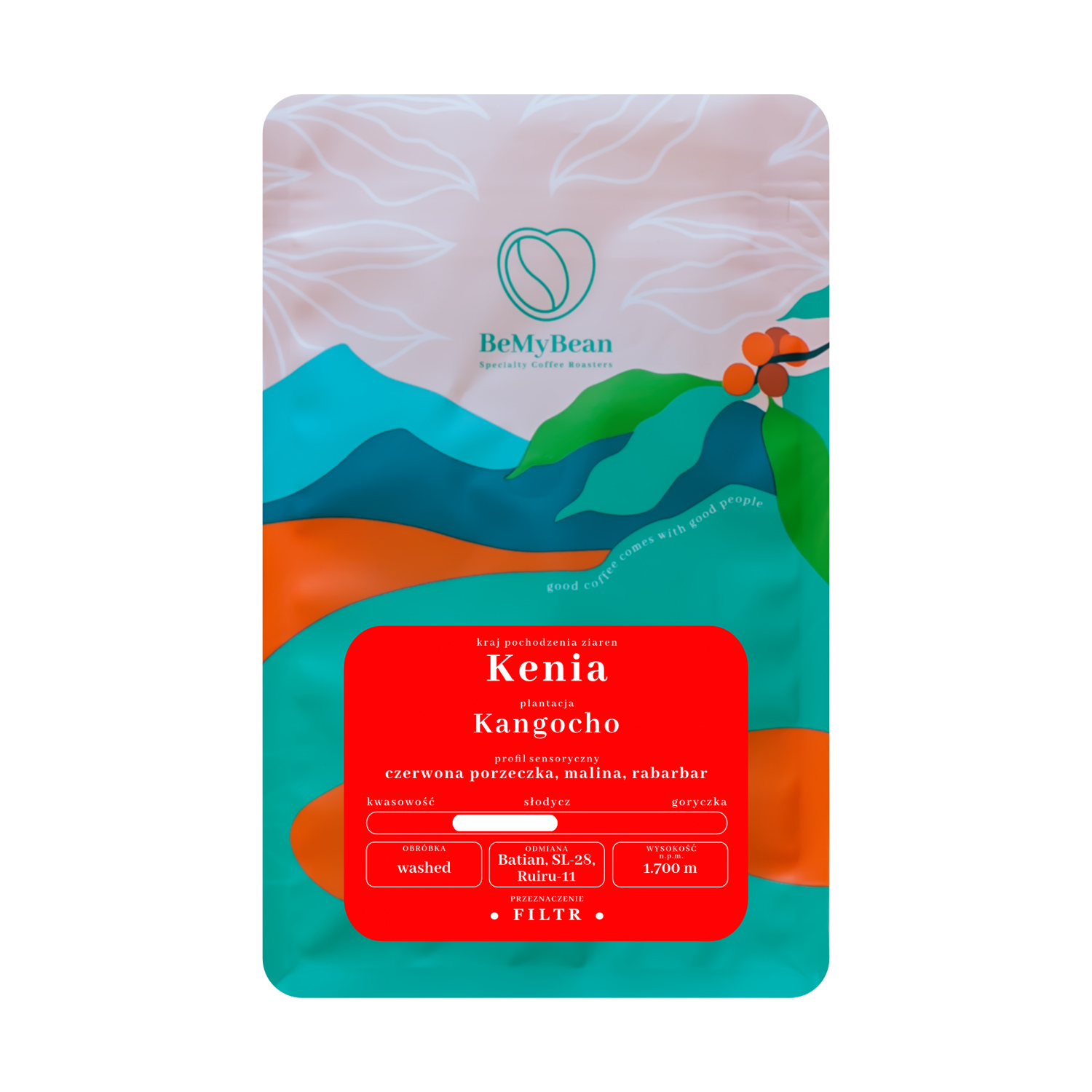
A whole-bean specialty coffee beans from Kenya, roasted by BeMyBean from Poland. Light roast, perfect for filter coffee machines, drippers, Chemex, AeroPress, French Press, and other pour-over brewing methods. You can expect hints of red currants, raspberry and rhubarb.Country: KenyaRegion: NyeriFarm: KangachooProcessing: WashedVarietal: Batian, SL-28, Ruiru-11Altitude: 1700 m a.s.l.ABOUT THE COFFEEKenya Kangocho comes from the Nyeri region, in the central highlands of Kenya, located at the foot of Mount Kenya. The coffee reaches us from the Kangocho Factory, a washing station cooperating with 781 local producers affiliated with the Gikanda Farmers Cooperative Society. The plantations are located at an altitude of approximately 1,700 meters above sea level, and this lot utilizes the Batian, Ruiru 11, and SL28 varieties.In the cup, Kangocho is primarily juicy and fruity. Redcurrant brings a distinct, fresh acidity, raspberry adds soft fruity sweetness, and rhubarb gives the whole profile a slightly refreshing character. It is precisely this combination of red fruits with rhubarb acidity that gives the coffee its typically Kenyan, energetic profile – it is fresh, expressive, and works very well in filter coffee.ABOUT THE PROCESSINGThe washed processing method is responsible for the cleanliness of this profile. Ripe cherries arrive at the station, where they are depulped, and then the beans ferment for 12–48 hours, depending on weather conditions. After fermentation, the coffee is thoroughly washed and dried on raised African beds for about 2–3 weeks. The beans are then rested in parchment, hulled, cleaned, and sorted by size. Finally, they undergo hand selection.The Nyeri region is famous for coffees with high acidity, a fuller structure, and distinct fruity aromas. Cool temperatures at high altitudes slow down the ripening of the fruit, which favors flavor concentration and the buildup of intensity characteristic of Kenyan coffees.Kangocho is a coffee for lovers of fresh, fruity filter brews – with clear acidity, juicy fruitiness, and a very clean finish. Redcurrant, raspberry, and rhubarb create a profile that is both intense and crisp, making the coffee show great potential both hot and brewed over ice.Store in a cool and dry place.
Specialty coffee beans from Colombia and Honduras, roasted in Poland by COFFEE PLANT. Dark roast, perfect for espresso, coffee machines, and moka pots. You can expect hints of chocolate, cacao, and yellow plums.Country: Brazil, MexicoMethod of decaffeination: CO2, Mountain Water WashedProcessing: WashedVarietal: Typica, Caturra, CastilloStore in a cold and dry space.
Coffee from Brazil, Honduras, and Vietnam roasted in Poland by LaCava. Medium roast, perfect for espresso machines and moka pots. Sweet, with delicate fruitiness - you can expect the highlighted notes of almonds and dark chocolate.Kraj pochodzenia ziarna: Brazil/ Honduras / VietnamStore in a cold and dry space.
Whole-bean specialty coffee from Brazil, roasted in Wrocław by Figa Coffee. Medium roast, perfect for espresso machines and moka pots. You can expect hints of chocolate, caramel and nuts.Country: BrazilRegion: MococaProcessing: NaturalVarietal: Catuai, Catucai, Acaia, Mundo NovoStore in a cold and dry space.
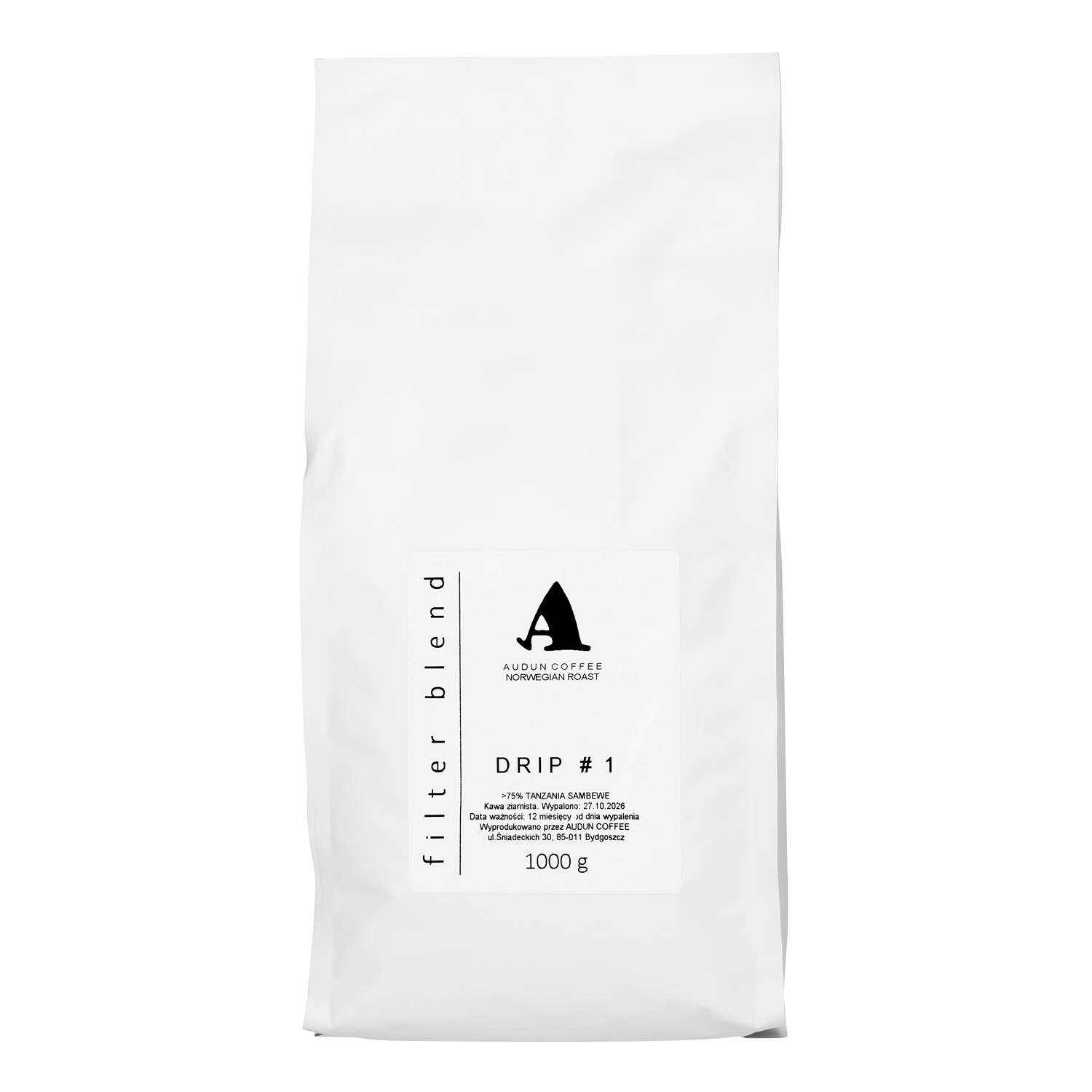
A specialty-grade blend of whole-bean coffees roasted by Audun. Each package contains at least 75% beans from Tanzania and around 25% Arabica from various origins.The coffee is lightly roasted and recommended especially for cafés, it also performs well in V60, Chemex, AeroPress, French Press, and other alternative brewing methods. The flavour has notes of cranberry, orange and tea.Country: >75% Tanzania, approx. 25% mixed ArabicaFarm: Sambewe farmersRegion: SongweProcessing method: WashedVariety: Bourbon, KentStore in a cold and dry space.
Specialty coffee beans from Brazil roasted in Poland by LaCava. Dark roast, perfect for espresso machines and moka pots. You can expect the highlighted notes of milk chocolate, caramel, and roasted almonds.Country: BrazilRegion: Mogiana Santa Rita Processing: Natural Cupping score: 81 / 100 pointsStore in a cold and dry space.
Whole-bean specialty coffee beans from Uganda and Ethiopia, roasted by COFFEE PLANT from Poland. Light roast, perfect for filter coffee machines, drippers, Chemex, AeroPress, French Press, and other pour-over brewing methods. You can expect hints of stone fruit, lemon, black tea.Country: Uganda, EthiopiaProcessing: Washed Varietal: MixExperience the intense juiciness of fruit with FLOW Juicy Fruit! In this unique blend, we have combined beans from Uganda and Ethiopia to create the perfect combination of distinctive African flavors. Thanks to traditional washed processing, the coffee retains its intense juiciness, emphasizing the richness of its fruity notes. Truly juicy.Store in a cold and dry space.
Coffee roasted in the KYOTO Coffee Roasters roastery in Wrocław. Light roast, ideal for drip coffee makers, Chemex, AeroPress, French Press, and other alternative brewing methods. The taste has natural notes reminiscent of caramel, blackberries, and grapefruits.Country: RwandaRegion: Northern ProvinceFarm: Nova Coffee Processing: WashedVarietal: Red BourbonCupping score: 87 / 100 pointsAltitude: 1450 - 1500 m a.s.l.
Speciality coffee beans from Rwanda roasted in Poland by LaCava. Light roast, perfect for filter coffee machines, drippers, Chemex, AeroPress, French Press, and other pour-over brewing methods. You can expect hints of plum, caramel, and blueberries.Country: RwandaRegion: Gicumbi / SimbiProcessing: NaturalVarietal: Red BourbonAltitude: 1450 - 1500 / 1700 - 2200 m a.s.l.Cupping score: 86 pointsStore in a cold and dry space.
Whole-bean specialty coffee from Rwanda and Brazil, roasted by Trigger roasting brand. Light roast, perfect for filter coffee machines, drippers, Chemex, AeroPress, French Press, and other pour-over brewing methods. The brew resembles the flavour of dried fuit, chocolate and ripe fruits.Country: Rwanda /BrazilRegion: Southern Province / São José do Rio PardoFarma: local farms from around Gisanga / local farms from São José do Rio PardoProcessing: Anaerobic / NaturalAltitude: 1650-1850 / 900-1000 m a.s.l.Cupping score: 85 / 100 pointsVariety: Bourbon / Catuai, CaturraABOUT THE COFFEEFruity and complex coffee with an intense, winey-aromatic character. Batch Brew Winey Filter is an example of how anaerobic fermentation can bring exceptional depth, sweetness, and aroma to the beans. In the cup, you will find notes of ripe fruit, red wine, and subtle spices, combined into a smooth, juicy whole with a long finish. This is a coffee with a distinct character, created for those who like their batch brew with a personality. It was crafted with lovers of intense, unconventional flavors in mind. Anaerobic fermentation brings out a wealth of fruity notes and layered sweetness while maintaining a clean, balanced profile. Deep and juicy in the cup, it unfolds with every sip – ideal for those looking for expressiveness and emotion in coffee.ROASTER'S OPINIONCoffees from the Batch Brew series offer depth, fruitiness, and balanced intensity. Dried and ripe fruits give it a rich, winey character, while notes of chocolate and cocoa provide depth and smoothness. It is a bold coffee full of character, yet well-structured and clean, without excessive signs of fermentation. A coffee with character, but still pleasant on the palate.V60 RECIPEwater temperature: 92 degrees Celsius 300 g water 21 g coffee grind size 7 (Fellow Ode II)Pre-infusion 75 g water pour: 0-0:10150 g water pour: 0:30-0:40225 g water pour: 1:00-1:10300 g water pour: 1:30-1:40 All water should finish drawing down around 2:10 - 2:20.Store in a cool, dry place.
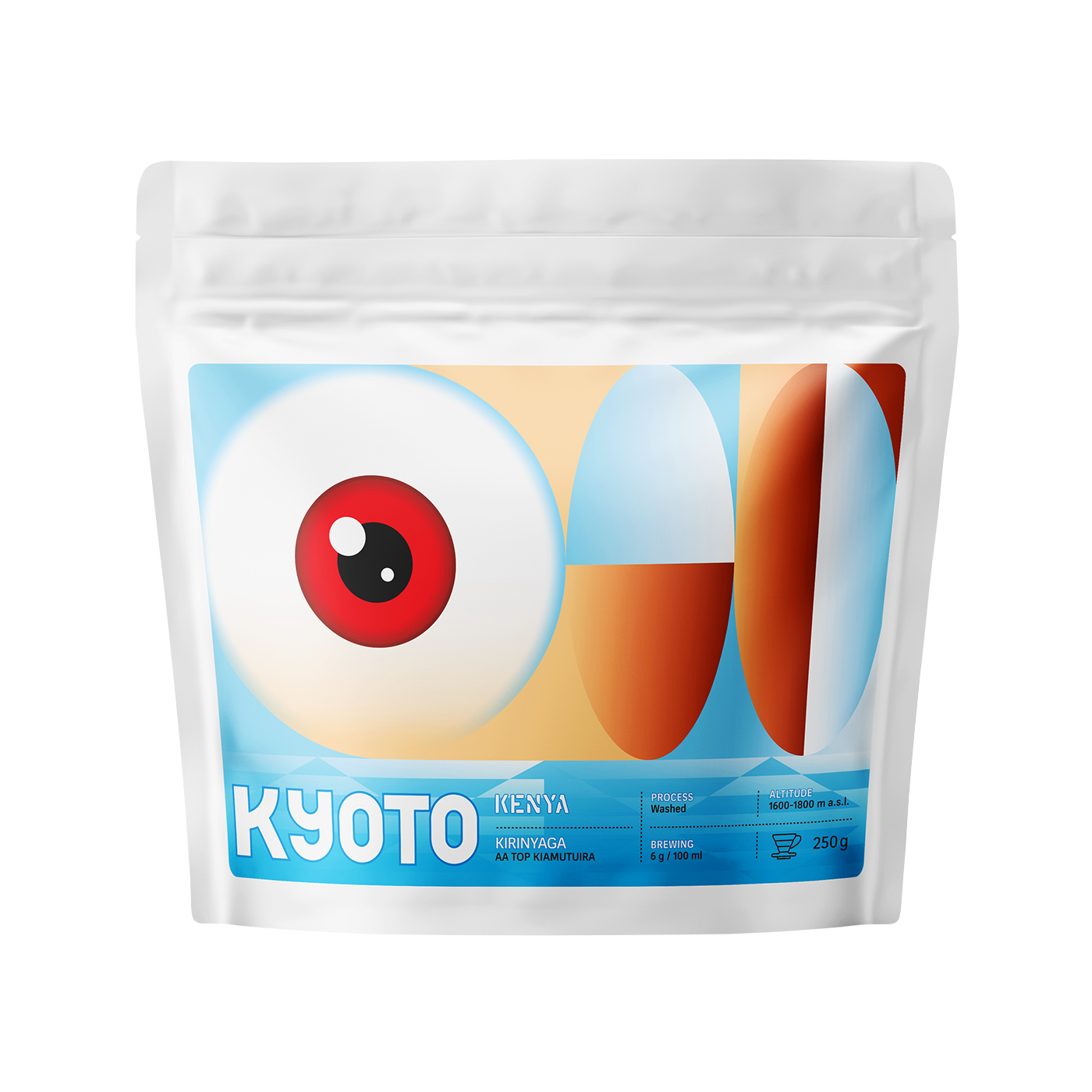
Whole-bean specialty coffee from Kenya, roasted in the KYOTO Coffee Roasters roastery in Wrocław. Light roast, ideal for drip coffee makers, Chemex, AeroPress, French Press, and other alternative brewing methods. The taste has notes reminiscent of black currants, pomegranate and lime.Country: KenyaRegion: KirinyagaFarm: Kiamutuira – Cooperativa MutiraProcessing: WashedVarietal: SL28, SL34 oraz BatianCupping score: 88 / 100 pointsAltitude: 1630 - 1700 m a.s.l.ABOUT THE COFFEEThis coffee perfectly demonstrates why the finest Kenyan beans are so highly prized. It delights with a distinct, juicy acidity and exceptional clarity of flavor, creating a harmonious and vibrant cup.The sensory profile is dominated by notes of blackcurrant, juicy pomegranate, and fresh lime. The intensity of the fruit combines with a pleasant sweetness, leaving a long, elegant finish.The beans come from the Kirinyaga region, located at the foot of Mount Kenya, where fertile volcanic soils and a favorable microclimate support the cultivation of exceptional quality coffees. It is a composition of SL28, SL34, and Batian botanical varieties – valued for their flavor complexity, high quality, and characteristic, lively profile.BREWING RECOMMENDATION6 g / 100 ml, Drip V60 02, water temp.: 94°C, 26 clicks, brew time: 3 - 4 min / 600 ml.Store in a cool, dry place.
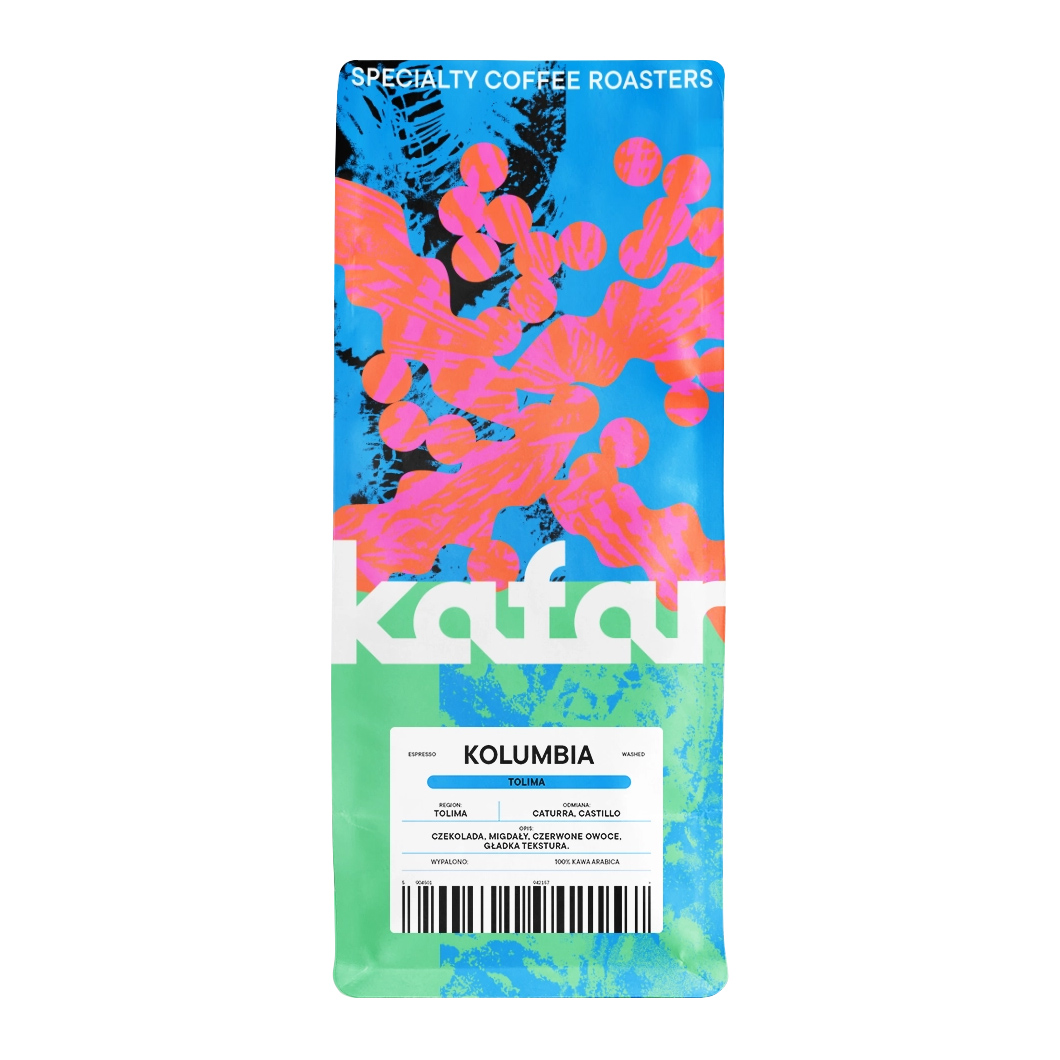
Specialty coffee from Colombia, roasted in Poland by Kafar. Dark roast, perfect for espresso coffee machinesand moka pots. The cup is filled with notes of chocolate, red fruits, and almonds.Country: ColombiaRegion: TolimaVarietal: Castillo, CaturraProcessing: WashedStore in a cold and dry space.
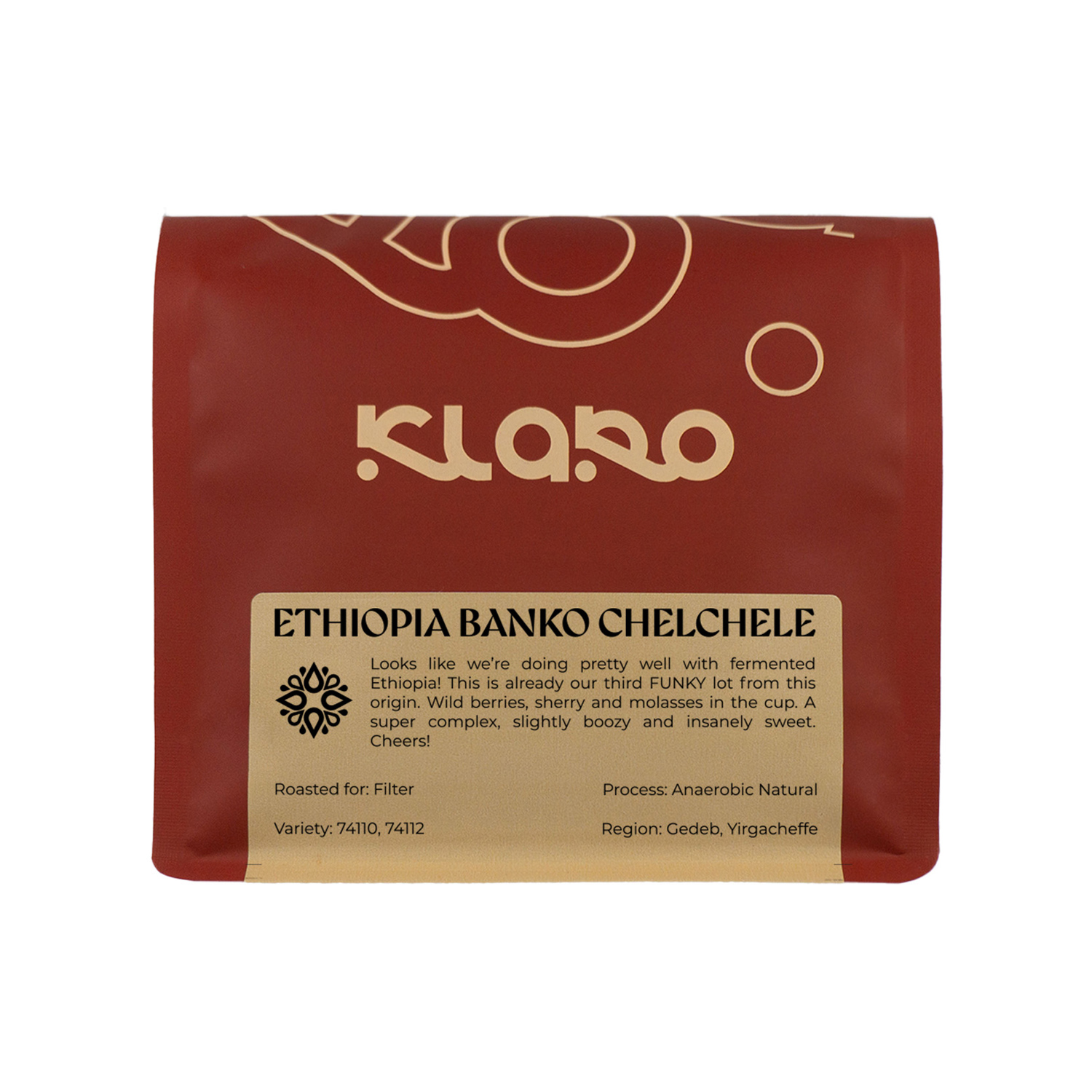
Specialty-grade whole bean coffee from Ethiopia, roasted by Klaro. Light roast, perfect for filter coffee makers, drippers, Chemex, AeroPress, French Press, and other alternative brewing methods. Its flavor profile features notes of blackberry, sherry and melasa.Country of origin: EthiopiaRegion: Gedeb, YirgacheffeFarm: Banko ChelcheleVariety: 74110, 74112Processing method: Anaerobic NaturalAltitude: 1200 – 2300 m a.s.l.I guess we're doing well with fermented Ethiopia! This is already the third twist from this country from us - Klaro. We have blueberries, sherry, and molasses in the flavor profile. A super complex, slightly boozy, and sweet bomb. Cheers!Store in a cool, dry place.
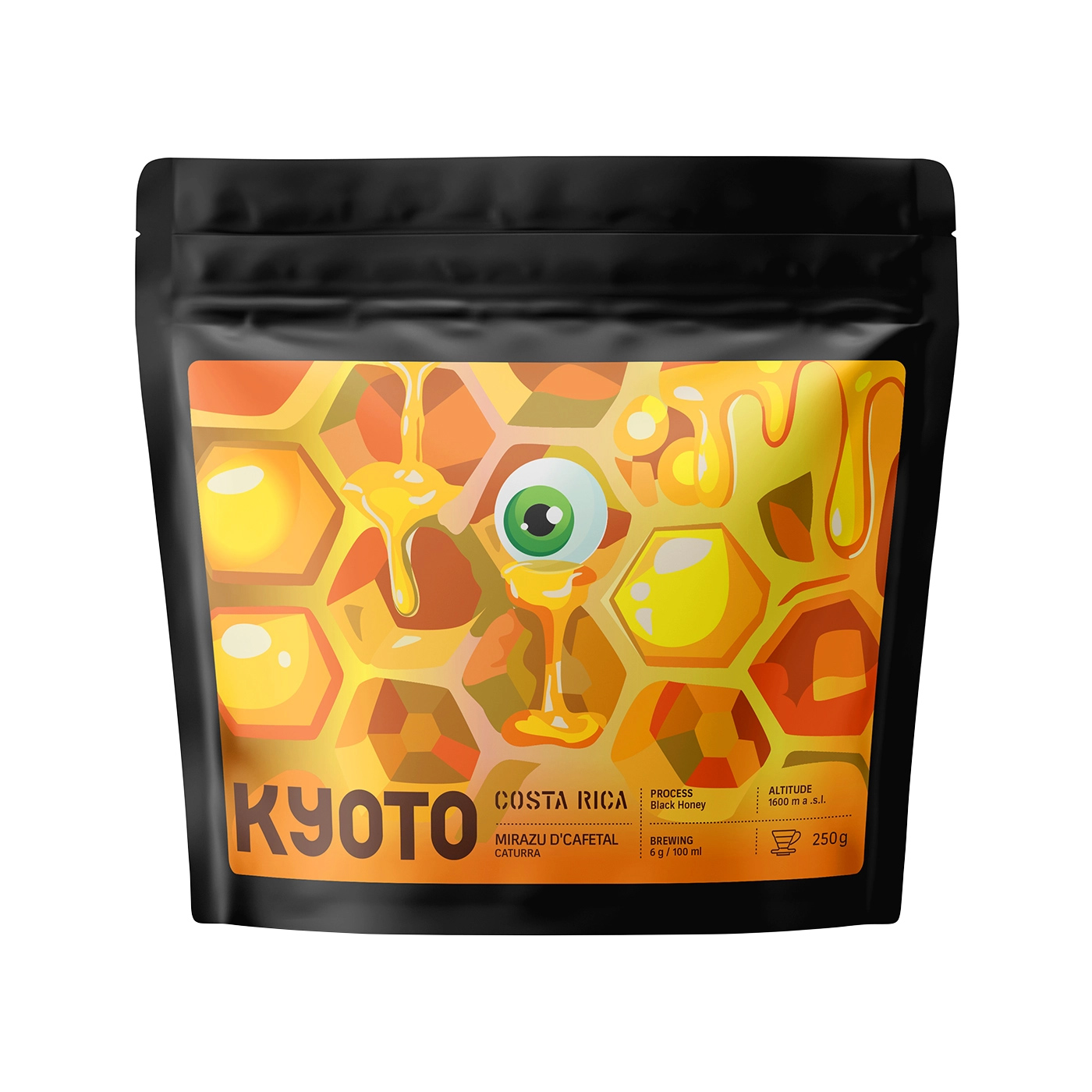
Whole-bean specialty coffee from Costa Rica, roasted in the KYOTO Coffee Roasters roastery in Wrocław. Light roast, ideal for drip coffee makers, Chemex, AeroPress, French Press, and other alternative brewing methods. The taste has notes reminiscent of honey, papaya and linden blossom.Country: Costa RicaRegion: TarazzuFarm: MirazuProcessing: Black HoneyVarietal: CaturraCupping score: 87 / 100 pointsAltitude: 1600 m a.s.l.ABOUT THE COFFEEMirazu is a plantation located in one of the highest coffee-growing points in the Tarrazú region of Costa Rica. This area is a place where fruits are grown, mainly passion fruit. Consequently, coffee bushes are rare and scattered, as they can only be planted in a specific area where special care is taken and where only mature, red coffee cherries are selected.Some claim this is the best coffee processed using the honey method. Black Honey is the most complex and labor-intensive bean processing method. 100% of the mucilage and part of the fruit itself remains intact, while the beans are dried under a plastic tarp and turned only once every 24 hours. This process gives these beans a full and sweet taste with fruity notes and immense depth.BREWING RECOMMENDATION: 6 g / 100 ml, Drip V60 02, water temp.: 95°C, 22-23 clicks, brew time: 3 - 4 min / 600 ml.Store in a dry and cool place.