





















Coffeedesk Recommends
These are the bags that most often end up in our own mugs. We drink them every day at the office and at home, so we recommend them with a clear conscience—they simply hit the spot.
1 - 9 of 9 available products
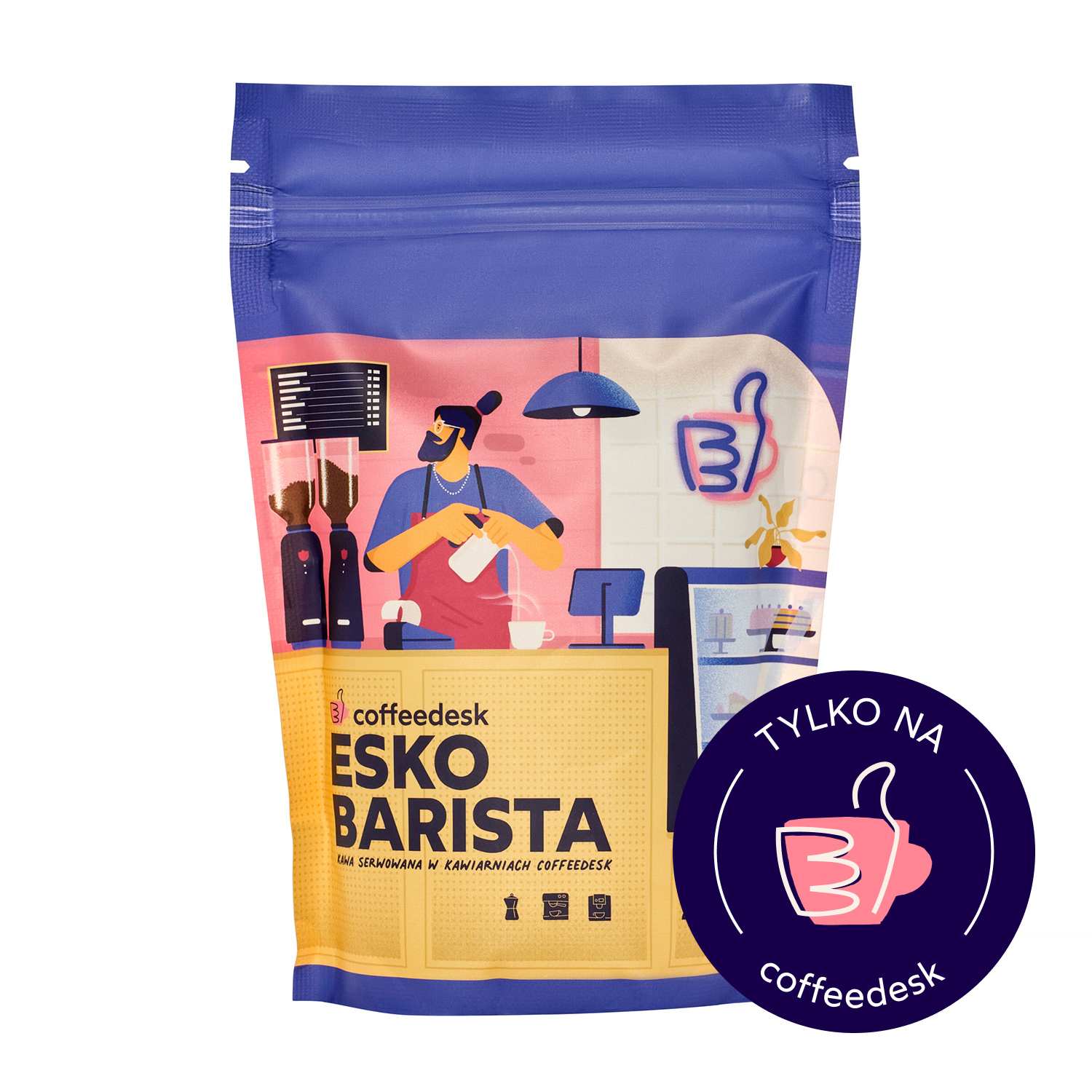
Coffeedesk - Esko Barista Brazil Espresso 250g
Manufacturer: COFFEEDESK
Roasting date: 17.08.2026
Speciality coffee from Brazil, roasted by Hard Beans roastery from Poland, launched in cooperation with Coffeedesk. This is coffee that is served in Coffeedesk cafés.Dark roast, perfect for espresso machines and moka pots. In the cup, you can expect the notes of dried figs, nougat, and chocolate.Country: BrazilRegion: Campo das VertentesVarietal: Catuai, Acaia, Mundo Novo, Yellow CatucaiFarm: SancoffeeAltitude: 900 - 1300 m a.s.l.Processing: NaturalABOUT THE COFFEEElegant classics of the highest quality. Brazil Campo Das Vertentes Espresso is a clean, crisp, gently fruity coffee featuring tasting notes of dried fig, nougat, and chocolate.We source it through the direct trade model—straight from the producer we collaborate with, whose coffee cultivation methods and quality we know firsthand.Discover Sancoffee—a collective of coffee growers from the Campo das Vertentes region, located in the mountains of Brazil, one of the country's most significant areas for coffee production. Soil conditions, climate, and plantation elevation give the beans an exceptional, complex flavor profile with distinct nutty and chocolate notes.Campo das Vertentes is a blend of various varieties combined to give the coffee a balanced character with a dense body, noticeable fruity notes, and a clean finish. Our coffee combines Catuai, Acaia, Mundo Novo, and Yellow Catucai varieties—commonly used across South America, particularly in Brazil.The oldest processing method, where harvested coffee cherries are sun-dried whole while ensuring even distribution and regular turning. Once the optimal moisture level is achieved, the bean is separated from the remnants of the outer layers.RECIPEProportions: 16.5 g (dose) / 36 g (yield)Water temperature: 94°CGrind size: very fineBrewing time: 24 secMethods:Drip coffee maker:rinse the filter with water before pouring in the coffeestir the coffee in the server before pouring into a cupEspresso machine:set the grinder to a fine settingextraction time should be 20–30 secondsStore in a cool, dry place.
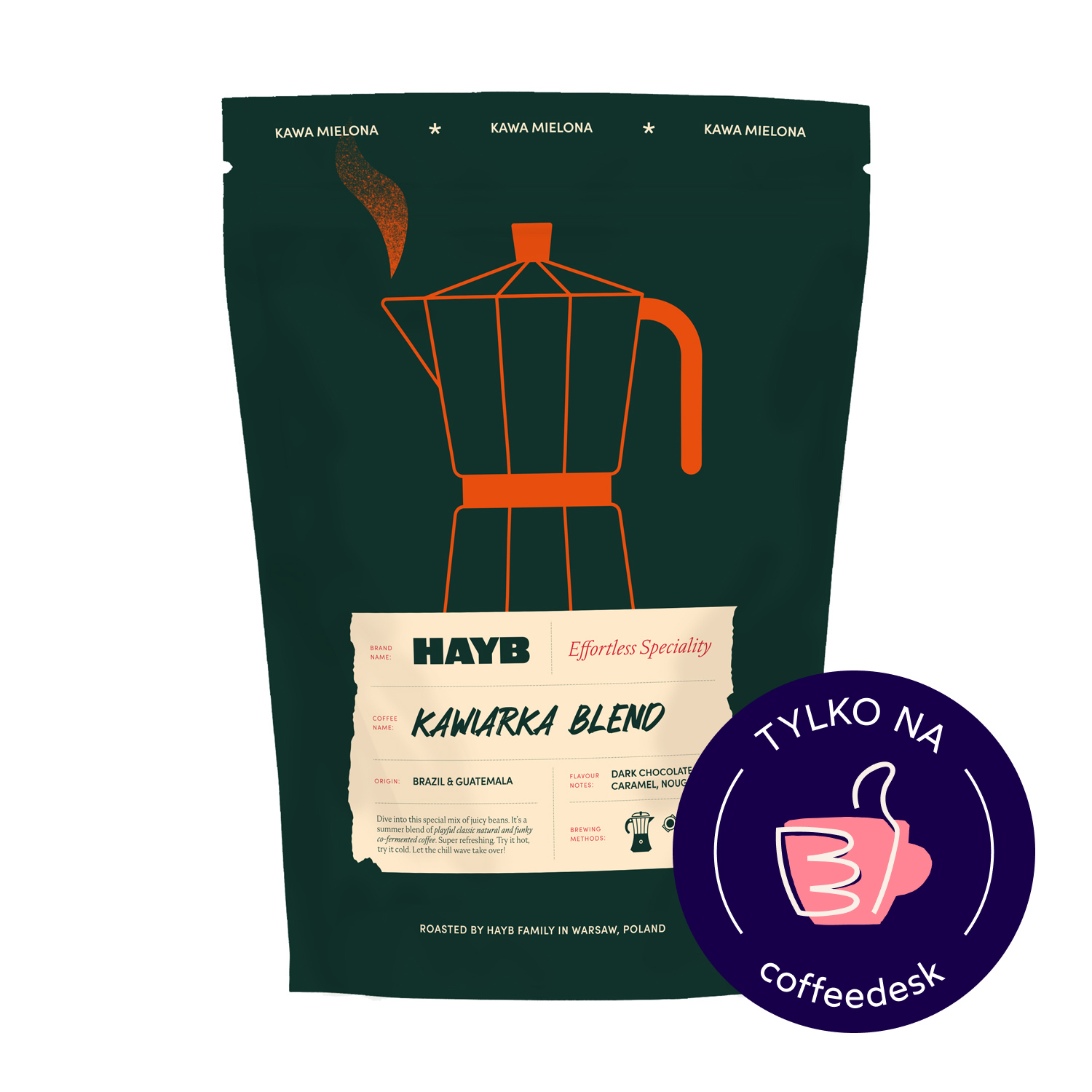
HAYB - Kawiarka Blend espresso 250 g
Manufacturer: HAYB
Roasting date: 15.09.2026
Specialty-grade whole-bean coffee from Brazil and Guatemala, roasted in Warsaw by HAYB. Medium roast, designed for espresso — perfect for espresso machines and moka pots. In its flavor, you can sense notes of dark chocolate, caramel, and nougat.Exactly what you’re looking for.Crossword clue: “In every Polish home…?”Correct answer: Moka pot!Even though our climate is a bit cooler than sun-drenched Italy’s, the moka pot has found a cozy place in Polish homes. And now we’ve got ground coffee that pairs perfectly with your brewer to create the perfect mała czarna — a classic strong black coffee. We guarantee high sweetness and a rich, full body, with low acidity and a deeply satisfying taste. You’re going to love it — enjoy!Store in a cold and dry space.
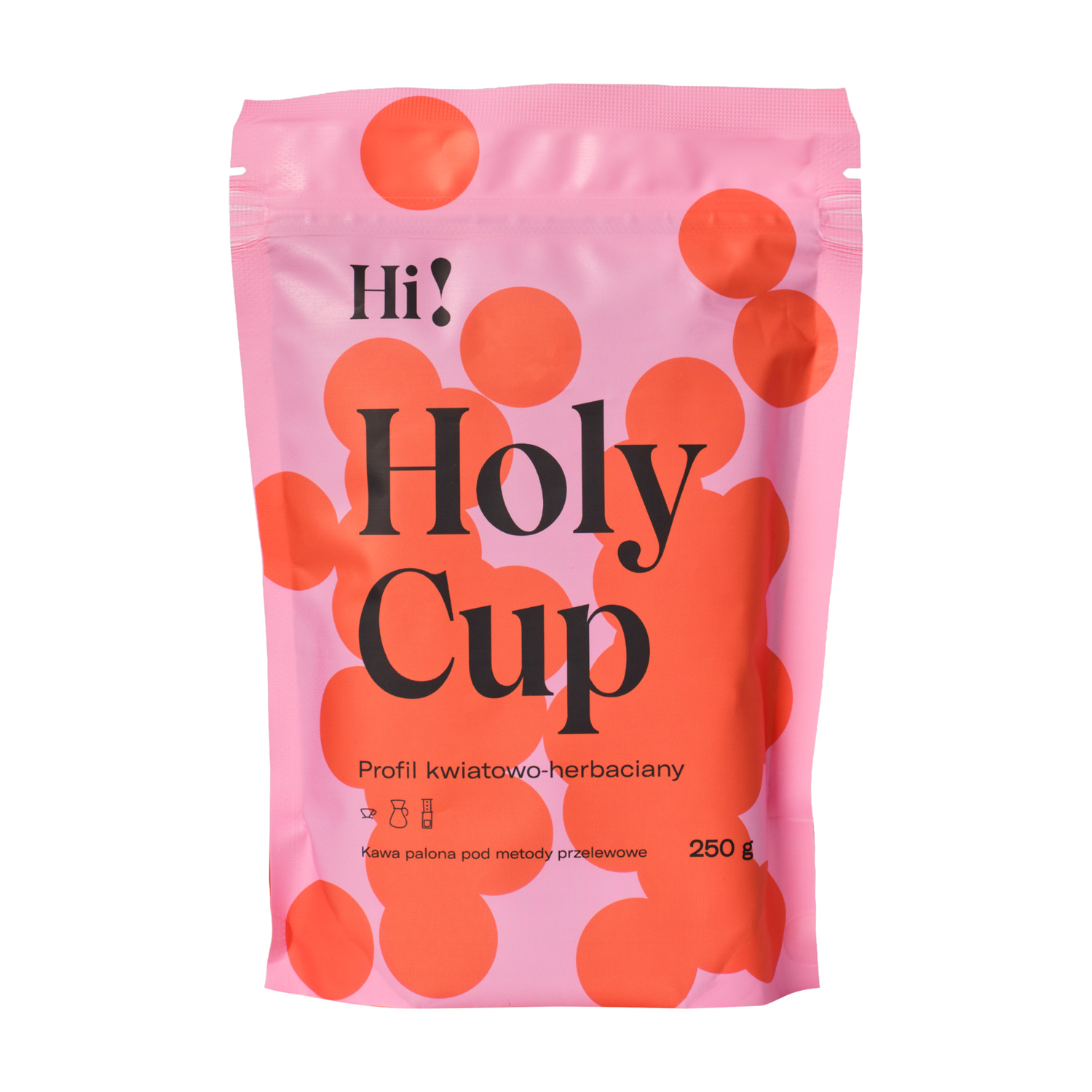
Hi! Coffeedesk - Holy Cup Filter 250 g
Manufacturer: HI! COFFEEDESK
Roasting date: 14.10.2026
Whole-bean specialty coffee from Ethiopia, roasted in Warsaw by CoffeeLab. Light roast, perfect for filter coffee machines, drippers, Chemex, AeroPress, French Press, and other pour-over brewing methods. In the cup, you can expect the hints of flowers, citrus fruits and peach.Origin: EthiopiaRegion: KaffaFarm: Bitta Coffee FarmVariety: JARCProcessing: WashedAltitude: 1900 – 2050 m a.s.l.ABOUT THE COFFEEEthiopia Bitta Farm is a coffee from the Kaffa region, which is widely considered one of the most important places in coffee history for good reason. In the cup, it delivers freshness, juiciness, and a highly organized profile, featuring a citrusy opening, a hint of dried fruits, and a spicy finish. No chaos. No exaggeration. Simply a good Ethiopia.ABOUT THE FARMBehind this coffee stands Bitta Coffee Farm, owned by Mullege – a family-run, long-established Ethiopian export company. This is important because such a model makes it easier to maintain control over quality and consistency: from cultivation and processing all the way to export. The farm itself invests not only in production but also in local infrastructure, training, and support for neighboring communities. This is not just a footnote to the story. It is a key element of how stable quality is built.The JARC selections 74110, 74112, 74140, and 8136 are cultivated on Bitta Farm. These varieties are highly valued for their resilience and quality potential. In practice, they deliver a profile that maintains cleanliness, freshness, and a distinct flavor direction. In this coffee, that translates into a cup that is vibrant but not overdone.Store in a dry and cool place.
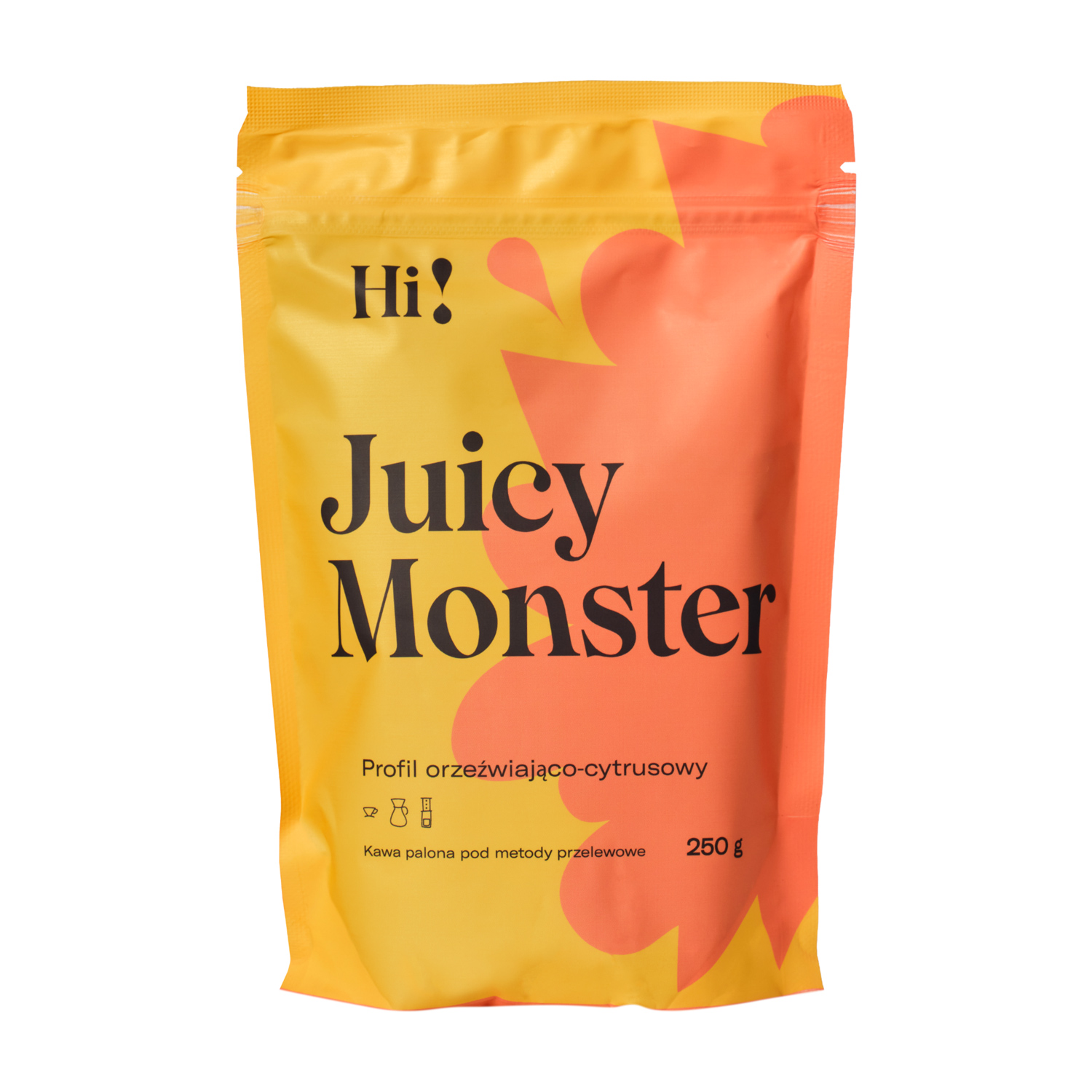
Hi! Coffeedesk - Juicy Monster Filter 250 g
Manufacturer: HI! COFFEEDESK
Roasting date: 24.09.2026
Whole-bean specialty coffee from Kenya. Light roast, perfect for filter coffee machines, drippers, Chemex, AeroPress, French Press, and other pour-over brewing methods. In the cup, you can expect the hints of black currants, grapefruit, red currant, tea and brown sugar.Origin: KenyaRegion: KirinyagaFarm: Kiamutuira Washing Station / Mutira Cooperative SocietyVariety: SL28, SL34, BatianProcessing: WashedAltitude: 1650–1700 m a.s.l.ABOUT THE FARMKiamutuira is a factory (washing station) in the Kirinyaga region, belonging to the Mutira Cooperative Society. The factory itself has been operating since 1996, and the cooperative has been a part of Kenyan coffee history since 1951. The coffee comes from approximately 600 smallholders, with the average farm measuring just 0.1 ha. Small scale. Great precision.The crops are situated at an altitude of 1,650–1,700 meters above sea level, near the forest boundary of Mount Kenya. The soils are volcanic, and macadamia trees appear among the shade trees. Tea is also grown in the region, which reflects the climate of the area well: high, green, humid, with excellent conditions for the slow ripening of cherries. The coffee is processed using the washed method, so we expect cleanliness, high acidity, and classic Kenyan juiciness.ROASTER'S OPINIONThis is Kenya in a good, precise style. High acidity, plenty of juiciness, a clean profile, and that exact character you look for in Kirinyaga. Blackcurrant, citrus, tea. Zero randomness. A coffee like this does not need stories about magic. It needs a good recipe.Store in a dry and cool place.
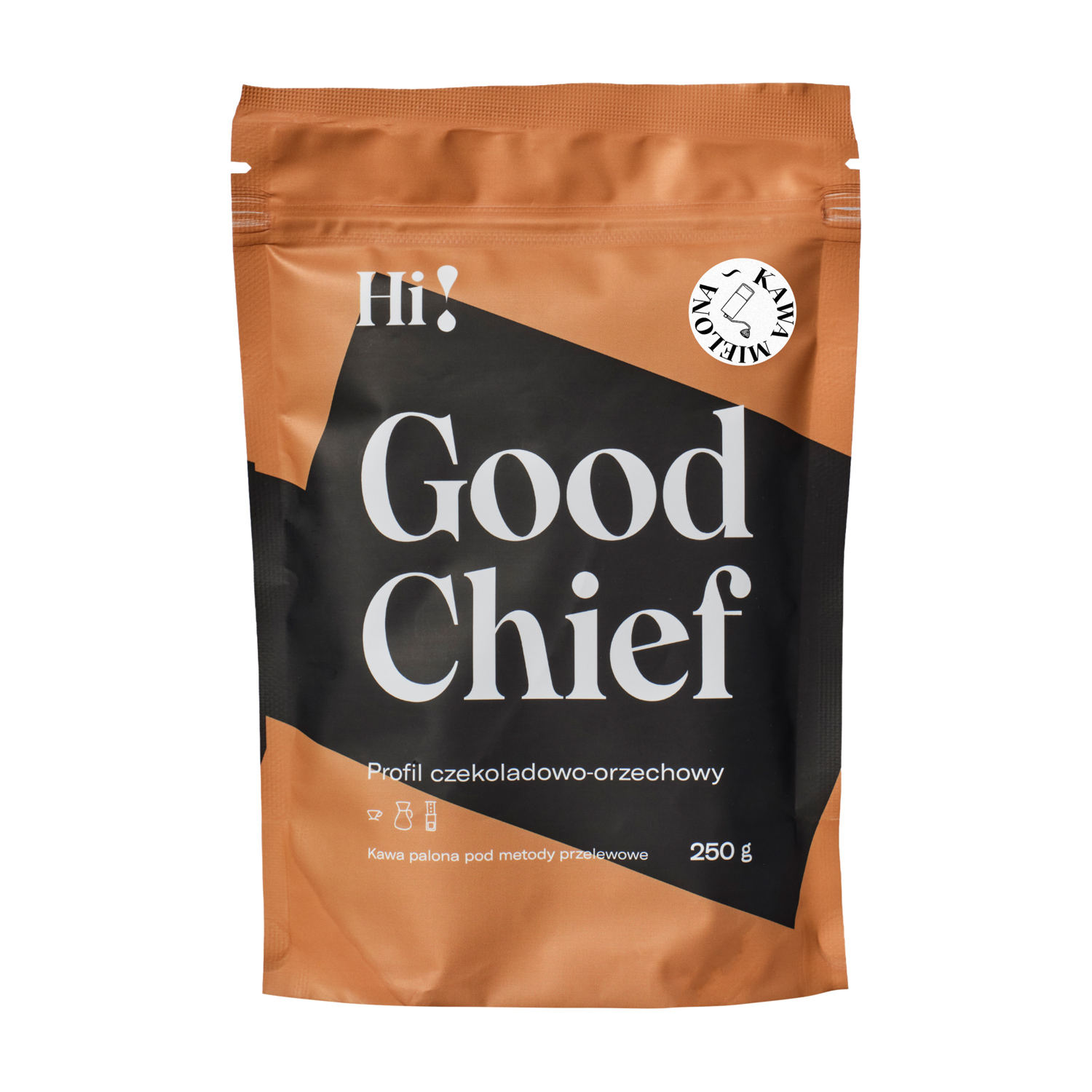
Hi! Coffeedesk - Good Chief Filter 250 g
Manufacturer: HI! COFFEEDESK
Roasting date: 10.09.2026
Whole-bean specialty coffee from. Light roast, perfect for filter coffee machines, drippers, Chemex, AeroPress, French Press, and other pour-over brewing methods. In the cup, you can expect the hints of almond, caramel and red apple.Origin: ColombiaRegion: Palestina, Huila Farm: CADEFIHUILAVariety: Caturra, TabiProcessing: WashedAltitude: 1700 m a.s.l.ABOUT THE REGION AND THE FARMThe municipality of Palestina is a unique place: it is called the "water and forest factory" of the Huila region. It is characterized by two types of climate: cold and temperate, and coffees from this area differ from the rest of Huila – they are more acidic and delicate, with distinct fruity notes. Our coffee comes from a selected group of producers from the upper part of the municipality of Palestina, located at an altitude of approximately 1700 meters above sea level. This group of farmers has specialized in cultivating varieties such as Tabi and Caturra. Cooperativa Departamental de Caficultores del Huila Ltda. CADEFIHUILA is a non-profit organization and one of the most important coffee cooperatives in Colombia. Its reach covers 27 municipalities, where a support network operates consisting of 45 coffee purchase points, 46 fertilizer stores, 36 agricultural supply stores, 16 permanent cupping laboratories, one mobile laboratory, and 7 points offering drying services. CADEFIHUILA implements programs aimed at achieving high production standards on farms. These standards are based on codes of conduct such as Fairtrade, Rainforest, 4C, and C.A.F.E. Practices. The development of certification processes for these specialized coffees allows the cooperative to meet market demand for coffee purchased under specific conditions.ABOUT THE VARIETYCaturra is a coffee variety that originated as a natural mutation of the Bourbon variety. It was discovered on a plantation in the state of Minas Gerais in Brazil between 1915 and 1918. The name "Caturra" comes from the word "Guarani", which means "small". This variety is characterized by the short stature of the plant. Due to its small size and closely spaced branches, it can be planted close together, which increases the yield per given area. Caturra contributed to the intensification of coffee cultivation, especially in Central America, where it was introduced into cultivation in the 1940s. This variety also played a significant role in breeding coffee plants resistant to coffee leaf rust, contributing to the creation of the "Catimor" family of varieties. Tabi is a relatively young variety, created in Colombia as a cross between Bourbon, Typica, and the disease-resistant Timor Hybrid variety. The word "Tabi" comes from the language of the indigenous people of Colombia and means "peace" or "life".ABOUT THE PROCESSINGThe coffee undergoes a traditional washing process, which begins with harvesting ripe cherries, weighing them, and leaving them for 24 hours in a processing tank. Next, the beans are depulped and placed in a water tank, where they are rinsed twice after about 12 hours. Finally, the coffee is dried in the sun or mechanically, depending on the producer's capabilities.Store in a dry and cool place.
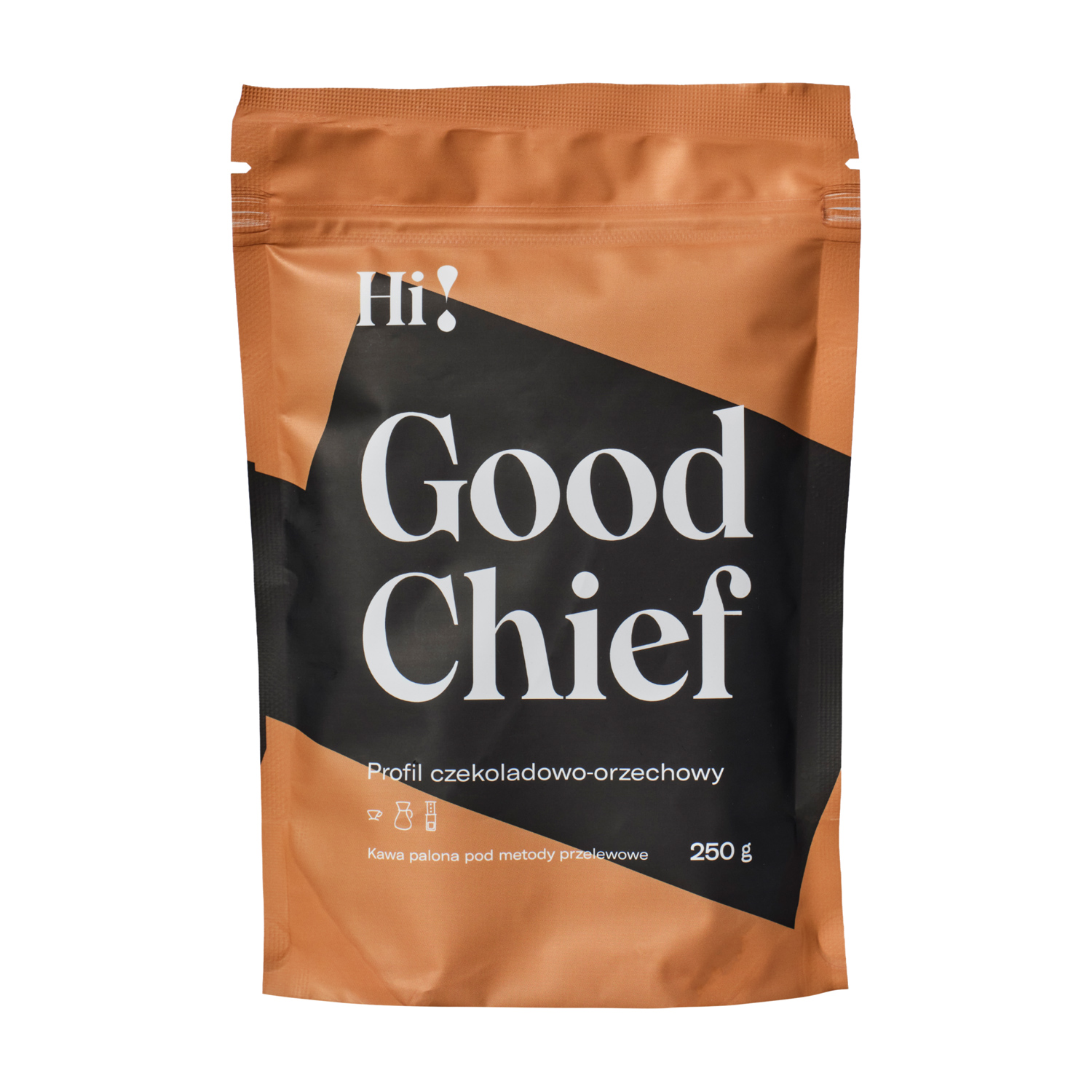
Hi! Coffeedesk - Good Chief Ground Coffee Filter 250 g
Manufacturer: HI! COFFEEDESK
Roasting date: 24.09.2026
specialty coffee from. Light roast, perfect for filter coffee machines, drippers, Chemex, AeroPress, French Press, and other pour-over brewing methods. In the cup, you can expect the hints of almond, caramel and red apple.Origin: ColombiaRegion: Palestina, Huila Farm: CADEFIHUILAVariety: Caturra, TabiProcessing: WashedAltitude: 1700 m a.s.l.ABOUT THE REGION AND THE FARMThe municipality of Palestina is a unique place: it is called the "water and forest factory" of the Huila region. It is characterized by two types of climate: cold and temperate, and coffees from this area differ from the rest of Huila – they are more acidic and delicate, with distinct fruity notes. Our coffee comes from a selected group of producers from the upper part of the municipality of Palestina, located at an altitude of approximately 1700 meters above sea level. This group of farmers has specialized in cultivating varieties such as Tabi and Caturra. Cooperativa Departamental de Caficultores del Huila Ltda. CADEFIHUILA is a non-profit organization and one of the most important coffee cooperatives in Colombia. Its reach covers 27 municipalities, where a support network operates consisting of 45 coffee purchase points, 46 fertilizer stores, 36 agricultural supply stores, 16 permanent cupping laboratories, one mobile laboratory, and 7 points offering drying services. CADEFIHUILA implements programs aimed at achieving high production standards on farms. These standards are based on codes of conduct such as Fairtrade, Rainforest, 4C, and C.A.F.E. Practices. The development of certification processes for these specialized coffees allows the cooperative to meet market demand for coffee purchased under specific conditions.ABOUT THE VARIETYCaturra is a coffee variety that originated as a natural mutation of the Bourbon variety. It was discovered on a plantation in the state of Minas Gerais in Brazil between 1915 and 1918. The name "Caturra" comes from the word "Guarani", which means "small". This variety is characterized by the short stature of the plant. Due to its small size and closely spaced branches, it can be planted close together, which increases the yield per given area. Caturra contributed to the intensification of coffee cultivation, especially in Central America, where it was introduced into cultivation in the 1940s. This variety also played a significant role in breeding coffee plants resistant to coffee leaf rust, contributing to the creation of the "Catimor" family of varieties. Tabi is a relatively young variety, created in Colombia as a cross between Bourbon, Typica, and the disease-resistant Timor Hybrid variety. The word "Tabi" comes from the language of the indigenous people of Colombia and means "peace" or "life".ABOUT THE PROCESSINGThe coffee undergoes a traditional washing process, which begins with harvesting ripe cherries, weighing them, and leaving them for 24 hours in a processing tank. Next, the beans are depulped and placed in a water tank, where they are rinsed twice after about 12 hours. Finally, the coffee is dried in the sun or mechanically, depending on the producer's capabilities.Store in a dry and cool place.
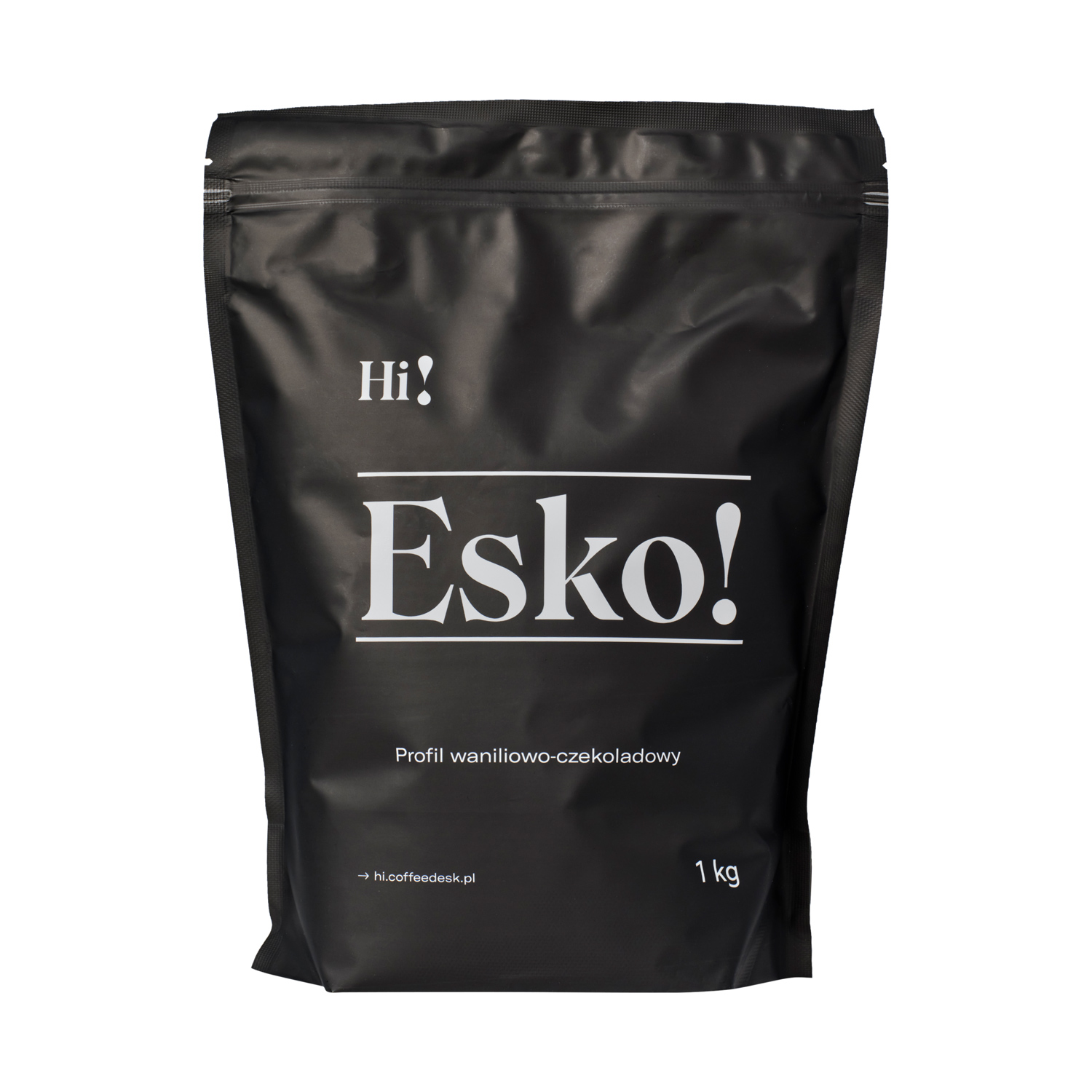
Hi! Coffeedesk - Esko Espresso 1 kg
Manufacturer: HI! COFFEEDESK
Roasting date: 15.09.2026
Whole-bean specialty coffee from Brazil and Peru roasted at HAYB. Dark roast, perfect for espresso machines and moka pots. In the cup, you can expect hints of milk chocolate, hazelnut, cocoa, caramel, stone fruits and citrus fruits.Origin: Brazil / PeruRegion: Mogiana / Chanchamayo, Villa Rica, Pichanaki, SatipoFarm: Santa Rita Rodrigo de Freitas Silva / NegrisaVariety: Mundo Novo, Red Catuai, TypicaProcessing: Natural / WashedAltitude: 1000–1200 m a.s.l.ESKO! is a blend based on Brazilian Mogiana. It does most of the work here: providing chocolate, nut, sweetness, and a calm body. An espresso classic. Without edgy acidity. Without pretending that morning coffee needs to be a research project.ABOUT THE COFFEEThe Brazil comes from the Mogiana region and is naturally processed. In the blend, it is responsible for the base: milk chocolate, hazelnut, cocoa, and a smooth profile. Peru Negrisa, making up 20% of the mix, adds a bit of freshness. It is a washed Typica, hand-picked and sun-dried, featuring a citric acidity, smooth body, and notes of stone fruits. The result is simple: the espresso is meant to be sweet, full-bodied, and suitable for everyday life, but not flat.ROASTER'S OPINIONESKO! is a coffee for everyday espresso. The kind that is supposed to work in the morning, in the afternoon, and whenever the espresso machine is already waiting and you just don't feel like analyzing life. Brazil provides the foundation: chocolate, nut, and body. Peru throws in a touch of fruit and a cleaner finish. Very good solo. Very good with milk. Straightforward.Store in a dry and cool place.
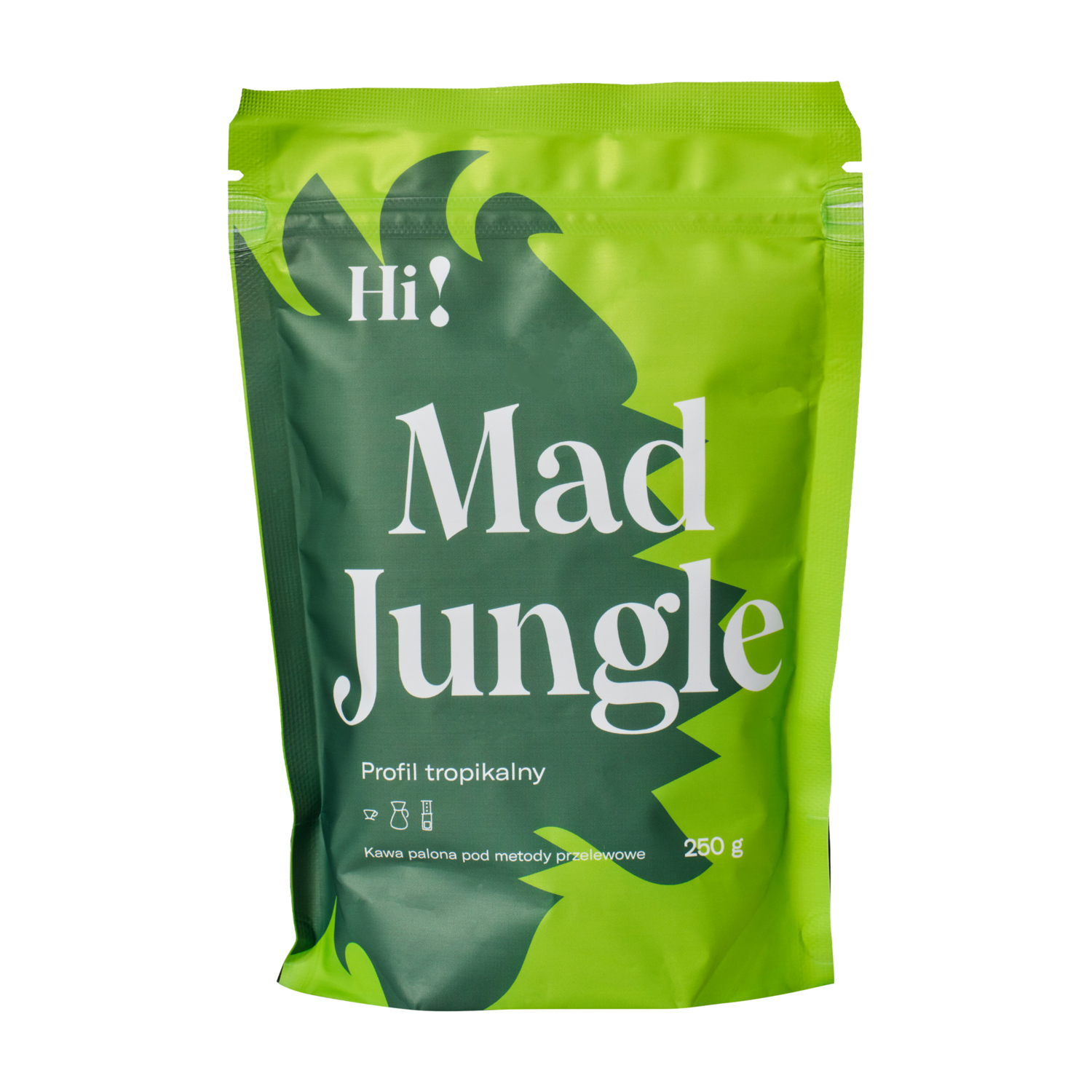
Hi! Coffeedesk - Mad Jungle Filter 250 g
Manufacturer: HI! COFFEEDESK
Roasting date: 07.10.2026
Whole-bean specialty coffee from Uganda, roasted in Warsaw by CoffeeLab. Light roast, perfect for filter coffee machines, drippers, Chemex, AeroPress, French Press, and other pour-over brewing methods. In the cup, you can expect the hints of cherry, blueberry, dried fruits, spices, rum and alcohol finish.Origin: UgandaRegion: Rwenzori, Western RegionFarm: Nyabirongo / Agri EvolveVariety: SL14, SL28Processing: NaturalAltitude: 1600–2200 m a.s.l.ABOUT THE COFFEENyabirongo is located on the southern slopes of the Rwenzori Mountains in western Uganda. It is an important point for local producers from the Bakonzo people and, at the same time, a quality hub for Agri Evolve, a company that has been working with farmers in the region since 2018. The facility in Nyabirongo has been operating since 2022 and combines both a wet and dry mill, ensuring that quality control covers the entire journey from receiving the cherries to preparing the green coffee for export.This lot is a natural. Ripe cherries are hand-picked, sorted through flotation, and then sealed in fermentation tanks. After fermentation, the coffee is dried in thin layers, and later hulled and sorted. The result? Plenty of fruit, high sweetness, and that characteristic, slightly rum-like finish. A coffee with character. No pretending.ROASTER'S OPINIONThis is Uganda on the darker, more fruity side of the force. It is not "polite." It is sweet and fermenty, with cherry and blueberry at the forefront. It works best as a filter coffee for people who like coffees with a strong processing profile but without a heavy, muddy body. Plenty of flavor. Very little boredom.Store in a dry and cool place.
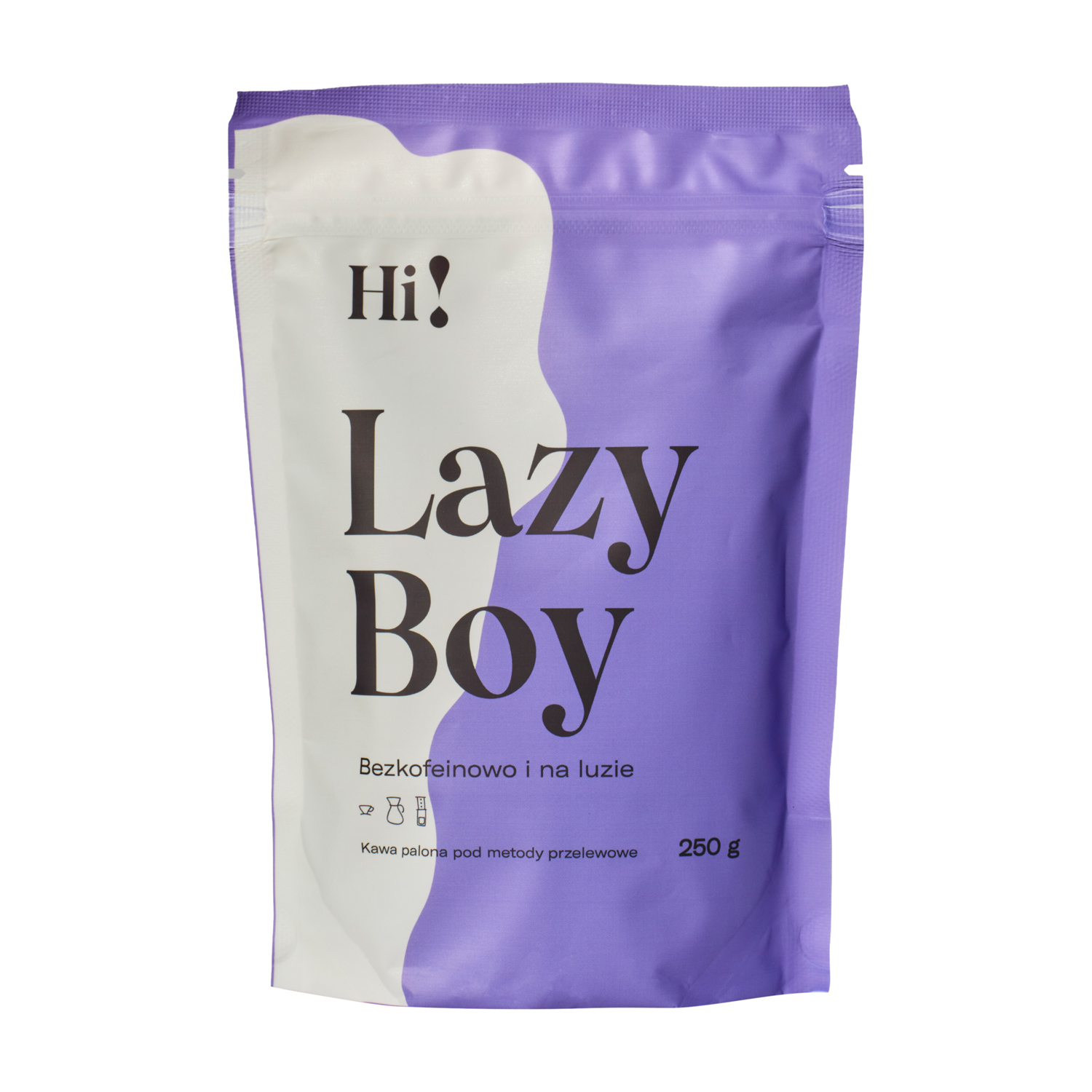
Hi! Coffeedesk - Lazy Boy Decaf Filter 250 g
Manufacturer: HI! COFFEEDESK
Roasting date: 05.10.2026
Decaffeinated specialty coffee. Light roast, perfect for filter coffee machines, drippers, Chemex, AeroPress, French Press, and other pour-over brewing methods. The brew is loaded with the highlighted notes of red fruits, spices and sweetness.Country: ColombiaRegion: TolimaFarm: EL VergelAltitude: 1450 m a.s.l.Varietal: Red & Yellow CaturraProcessing: WashedMethod of decaffeination: SugarcaneCaffeine-free, but full of flavor. Rich in aroma, and not just until the full moon. Drink as much as you want, even after the bedtime cartoon.ABOUT THE FARMThe Bayter family from the El Vergel farm has been involved in agriculture since 1995. Initially, they grew avocados, and since 2009, they have been experimenting with coffee cultivation. Gradually, under the guidance of Miguel Jimenez, they expanded their offer to include specialty coffee varieties. The farm underwent a major modernization in 2018. Natural drying processes were introduced, and research began on bacteria and yeast that control fermentation (including the Koji strain). Currently, over 28 different coffee varieties are grown there.ABOUT THE VARIETYCaturra is a coffee variety that originated as a natural mutation of the Bourbon variety. It was discovered on a plantation in the state of Minas Gerais in Brazil between 1915 and 1918. The name "Caturra" comes from the word "Guarani", which means "small". This variety is characterized by the short stature of the plant. Due to its small size and closely spaced branches, it can be planted close together, which increases the yield per given area. Caturra contributed to the intensification of coffee cultivation, particularly in Central America, where it was introduced to cultivation in the 1940s. This variety also played a significant role in breeding coffee trees resistant to coffee leaf rust, contributing to the creation of the "Catimor" family of varieties. The Red Caturra variety is characterized by an intense aroma and a rich flavor profile. On the other hand, Yellow Caturra is a subtle coffee variety with bright, yellow beans. It is characterized by a mild flavor profile.ABOUT THE PROCESSINGSugarcane is a unique type of fermentation resulting in more intense fruity notes. After the fermentation is complete, caffeine is removed through an extraction process in special containers, where it is washed with a mixture of water and ethyl acetate. This process is repeated multiple times until the caffeine level drops to just 0.1%.Store in a dry and cool place.
Pochodzenie
- Kawy z Afryki
- Kawy z Ameryki Południowej
- Kawy z Ameryki Środkowej
- Kawy z Azji
- Kawy z Brazylii
- Kawy z Burundi
- Kawy z Etiopii
- Kawy z Gwatemali
- Kawy z Hondurasu
- Kawy z Indii
- Kawy z Indonezji
- Kawy z Kenii
- Kawy z Kolumbii
- Kawy z Kostaryki
- Kawy z Meksyku
- Kawy z Nikaragui
- Kawy z Peru
- Kawy z Rwandy
- Kawy z Salwadoru
- Kawy z Tanzanii
- Kawy z Ugandy
Nuty smakowe
- Kawy z nutą alkoholu
- Kawy z nutą czekolady
- Kawy z nutą herbaty
- Kawy z nutą kwiatową
- Kawy z nutą orzechową
- Kawy z nutą owoców cytrusowych
- Kawy z nutą czerwonych owoców
- Kawy z nutą owoców leśnych
- Kawy z nutą owoców suszonych
- Kawy z nutą tropikalnych owoców
- Kawy z nutą zielonych owoców
- Kawy z nutą żółtych owoców
- Kawy z nutą owoców pestkowych
- Kawy z nutą przypraw
- Kawy z nutą słodyczy
- Kawy z nutą ziół
- Kawy z nutą warzyw
- Kawy z nutą mleczną
- Kawy z nutą wina i winogron
Parzenie
Rodzaje
- Kawy online
- Kawy 100% Arabica
- Kawy 100% Robusta
- Kawy Blend
- Kawy Single origin
- Kawy ziarniste
- Kawy mielone
- Kawy w kapsułkach
- Kawy w saszetkach
- Zestawy kaw
- Kawy speciality
- Kawa cascara
- Kawy bezkofeinowe Decaf
- Kawy LOW CAF
- Kawy ciemno palone
- Kawy średnio palone
- Kawy jasno palone
- Kawy obróbka Anaerobic
- Kawy obróbka Honey
- Kawy obróbka Natural
- Kawy obróbka Washed
More
Less