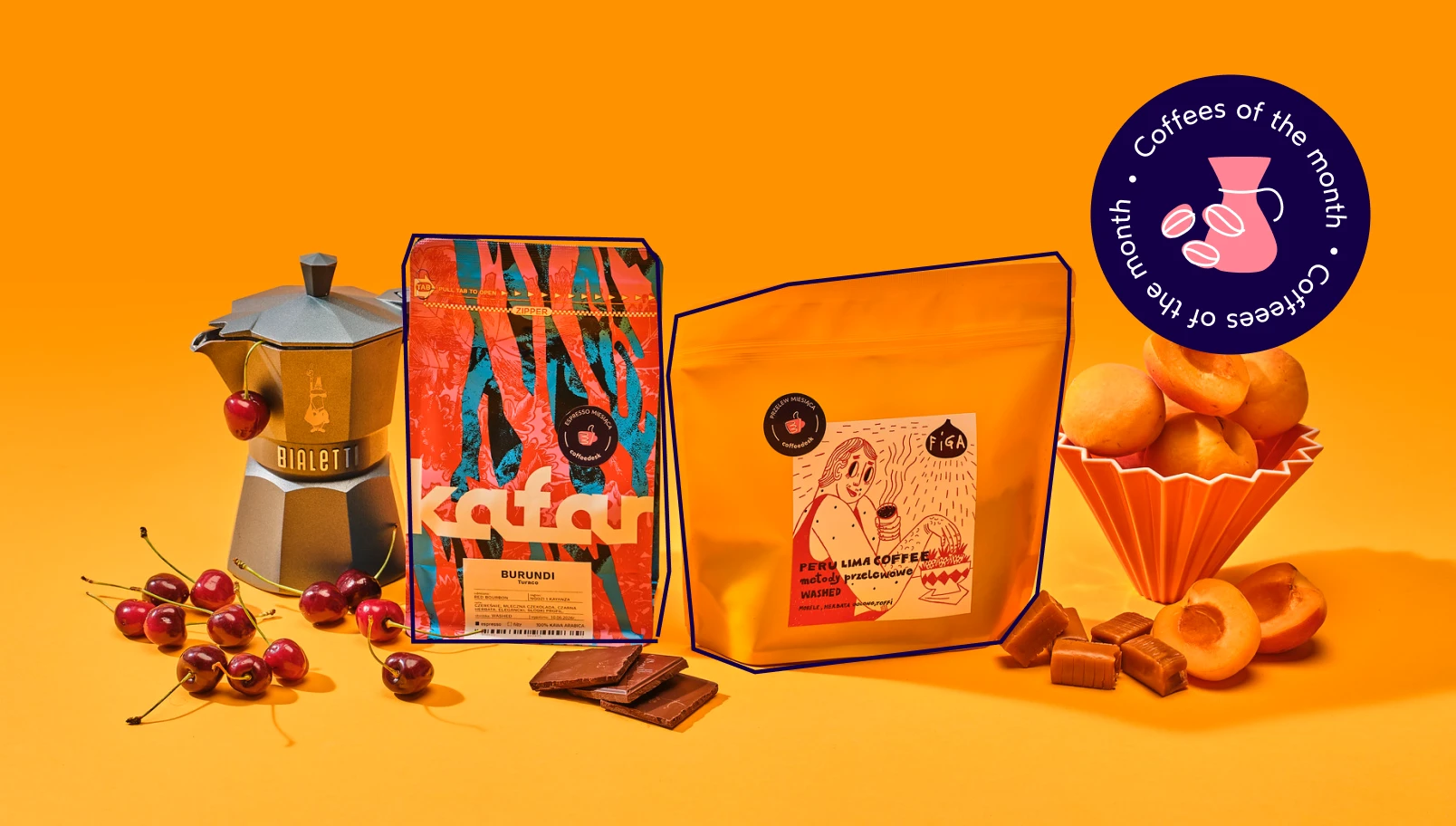
Every month, we pick special beans and mark them as Coffee of the Month — one roasted for espresso, one for filter brewing. We work directly with roasters to bring you fresh-roasted beans with a flavour profile worth talking about. Every coffee gets thoroughly tested across different brewing methods, and we write up the full story behind the beans — with recommended recipes and all the detail you'd want.
It's our way of helping you explore the world of specialty and discover the natural flavours coffee can carry. So that great coffee becomes part of your everyday routine, not just a one-off treat. Check out what we've picked for you this month.
Kawa Miesiąca
Every month, we pick special beans and mark them as Coffee of the Month — one roasted for espresso, one for filter brewing. We work directly with roasters to bring you fresh-roasted beans with a flavour profile worth talking about. Every coffee gets thoroughly tested across different brewing methods, and we write up the full story behind the beans — with recommended recipes and all the detail you'd want.
It's our way of helping you explore the world of specialty and discover the natural flavours coffee can carry. So that great coffee becomes part of your everyday routine, not just a one-off treat. Check out what we've picked for you this month.
1 - 3
of 3 available products
"Selection by Coffeedesk" is our in-house recommendation that combines expert quality assessment, customer popularity, and product freshness — so you always see the best coffees at the top.
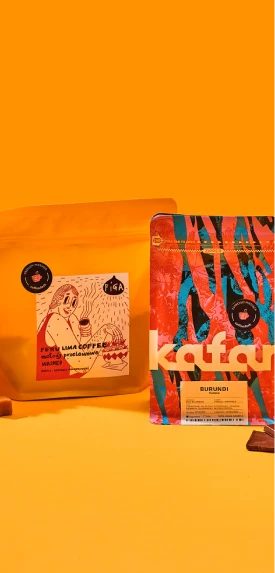
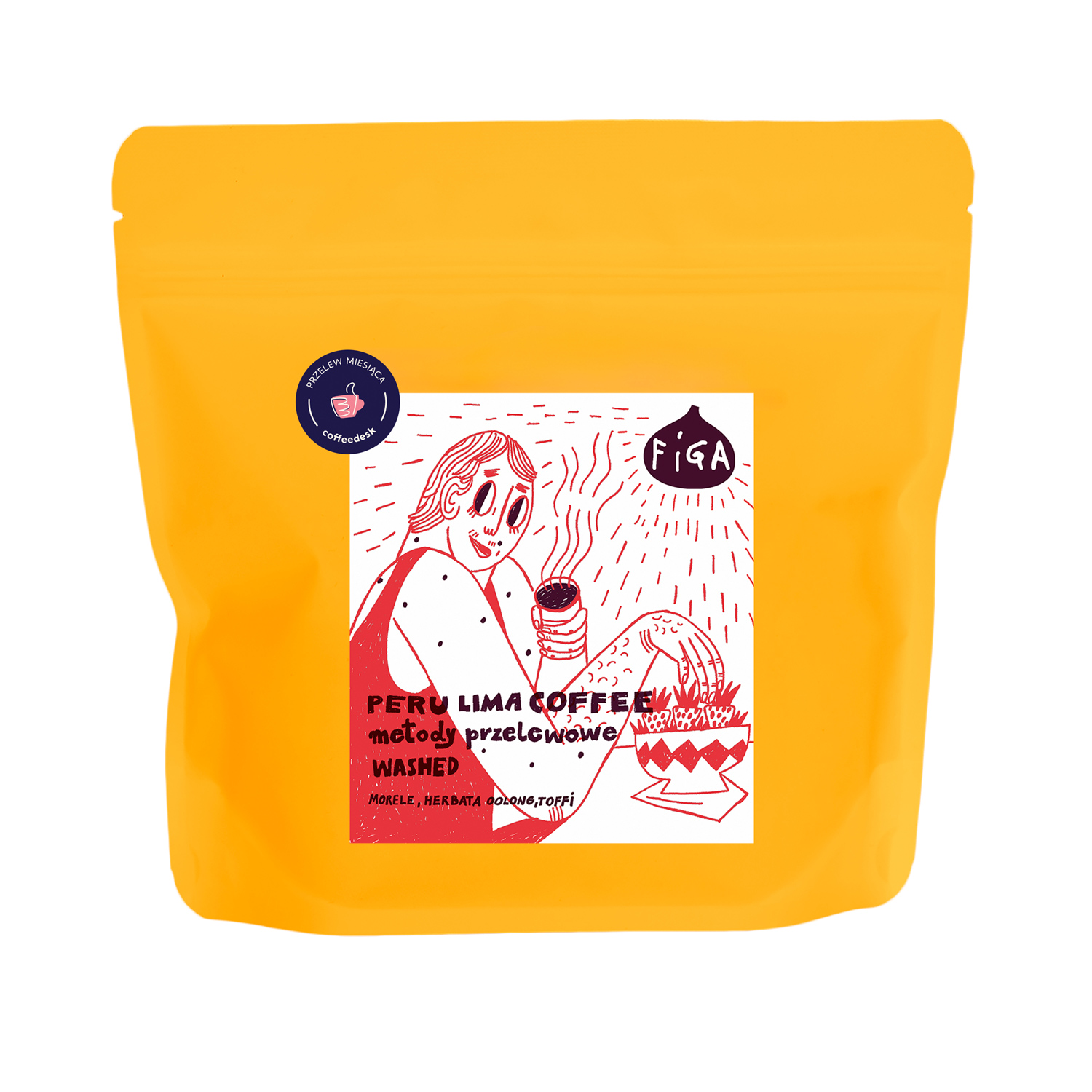
Whole-bean specialty coffee from Peru, roasted by Trigger roasting brand. Light roast, perfect for filter coffee machines, drippers, Chemex, AeroPress, French Press, and other pour-over brewing methods. The brew resembles the flavour of apricot, oolong tea and toffee.Country: PeruRegion: CajamarcaProducer: a lot of small producersProcessing: WashedAltitude: 1650-1800 m a.s.l.Variety: Catimor, Caturra, Bourbon, TypicaABOUT THE COFFEE AND THE REGIONLima Coffee (or LimCof) is an association operating since 2016, currently bringing together 814 coffee-producing families in the Peruvian region of Cajamarca. The president of Lima Coffee is Rony Lavan, who is responsible, among other things, for finding the most interesting coffees from small producers. He has guided the company toward specialty coffee, and his microlots are winning an increasing number of industry awards. Fun fact: Cajamarca is a relatively dry and cool tropical region located in the north-eastern highlands of Peru, characterized by very fertile soil at high Andean elevations. All of these factors contribute to the developing production of specialty coffee. Cajamarca is the main coffee-growing region in Peru, accounting for about 25% of national production. Small-scale producers own approximately 2-3 hectares of arable land, and many of them practice organic farming methods.COFFEE OF THE MONTHEvery month we pick two coffee specials – one for the espresso lovers, and the other for the pour-over sippers. Working directly with the roasteries, we deliver freshly roasted, unique coffee beans – always of the highest quality, at the lowest price you can get. What you get is also a thorough review, description, origin, and brewing guide.The aim of the project is to get you acquainted with speciality coffees and various flavours they offer. Check out the coffees of this month!Store in a cold and dry space.
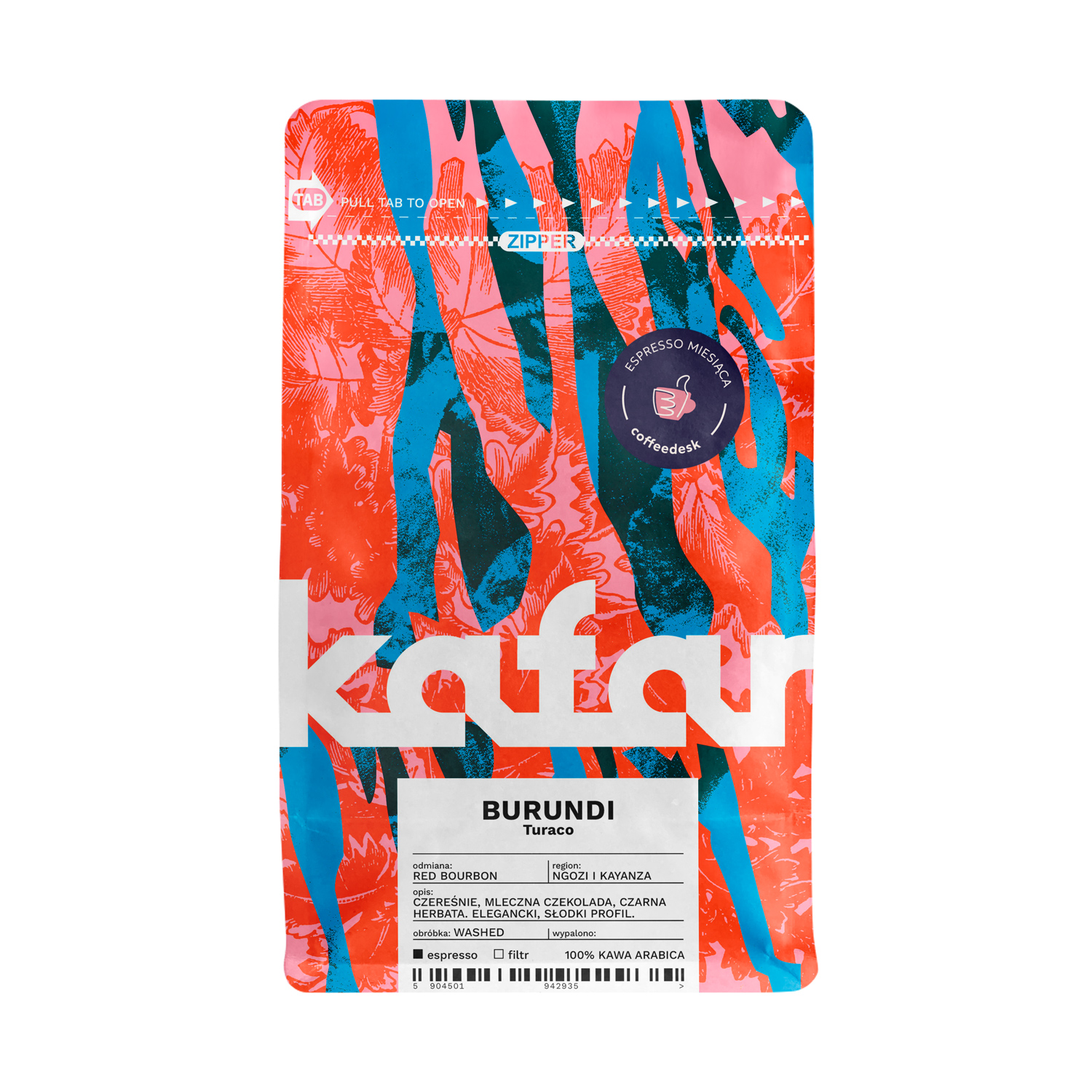
Whole-bean specialty coffee from Burundi, roasted by Kafar roastery. Medium roast, perfect for espresso, coffee machines, and moka pots. You can expect hints of cherries, milk chocolate and black tea.Country: BurundiRegion: Ngozi i KayanzaProducent: Greenco & BugestalProcessing: WashedAltitude: 1600 - 1900 m a.s.l.Variety: Red BourbonCupping score: 85 / 100ABOUT THE COFFEEThis coffee from Burundi delights with an elegant, harmonious profile, where fruity sweetness blends with a pleasant, chocolatey depth. At first taste, juicy cherries emerge — ripe, sweet, and gently tart. Moments later, the profile develops towards creamy milk chocolate, which gives the brew a soft and dessert-like character.The experience is rounded off by a subtle note of black tea, introducing a slightly dry, elegant touch and a clean, long finish. The silky body makes the coffee smooth and pleasantly enveloping, while simultaneously retaining a light feel and high flavor clarity.It is a balanced and highly approachable coffee — sweet, elegant, and multidimensional, yet free of overwhelming intensity. An excellent choice both for those seeking a classic, comforting profile and for those who wish to explore the fruitier side of coffees from Burundi.RECIPEdose: 17.3 gtime: 28 secyield: 42 gCOFFEE OF THE MONTHEvery month we pick two coffee specials – one for the espresso lovers, and the other for the pour-over sippers. Working directly with the roasteries, we deliver freshly roasted, unique coffee beans – always of the highest quality, at the lowest price you can get. What you get is also a thorough review, description, origin, and brewing guide.The aim of the project is to get you acquainted with speciality coffees and various flavours they offer. Check out the coffees of this month!Store in a cold and dry space.
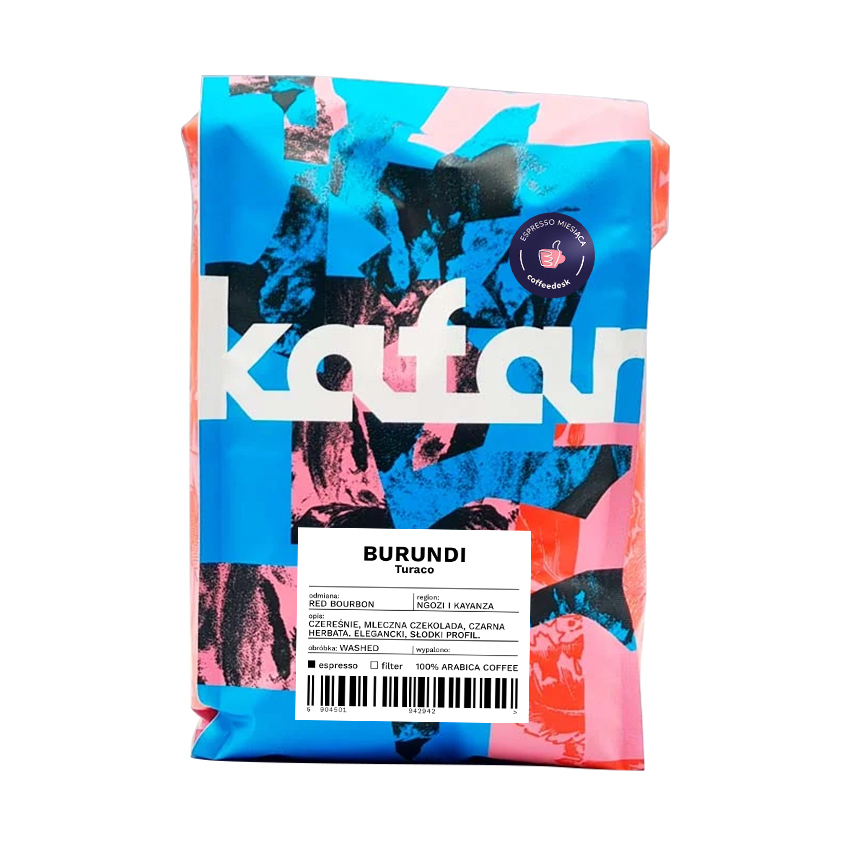
Whole-bean specialty coffee from Burundi, roasted by Kafar roastery. Medium roast, perfect for espresso, coffee machines, and moka pots. You can expect hints of cherries, milk chocolate and black tea.Country: BurundiRegion: Ngozi i KayanzaProducent: Greenco & BugestalProcessing: WashedAltitude: 1600 - 1900 m a.s.l.Variety: Red BourbonCupping score: 85 / 100ABOUT THE COFFEEThis coffee from Burundi delights with an elegant, harmonious profile, where fruity sweetness blends with a pleasant, chocolatey depth. At first taste, juicy cherries emerge — ripe, sweet, and gently tart. Moments later, the profile develops towards creamy milk chocolate, which gives the brew a soft and dessert-like character.The experience is rounded off by a subtle note of black tea, introducing a slightly dry, elegant touch and a clean, long finish. The silky body makes the coffee smooth and pleasantly enveloping, while simultaneously retaining a light feel and high flavor clarity.It is a balanced and highly approachable coffee — sweet, elegant, and multidimensional, yet free of overwhelming intensity. An excellent choice both for those seeking a classic, comforting profile and for those who wish to explore the fruitier side of coffees from Burundi.RECIPEdose: 17.3 gtime: 28 secyield: 42 gCOFFEE OF THE MONTHEvery month we pick two coffee specials – one for the espresso lovers, and the other for the pour-over sippers. Working directly with the roasteries, we deliver freshly roasted, unique coffee beans – always of the highest quality, at the lowest price you can get. What you get is also a thorough review, description, origin, and brewing guide.The aim of the project is to get you acquainted with speciality coffees and various flavours they offer. Check out the coffees of this month!Store in a cold and dry space.