MAMAM is a coffee roasting brand launched by a group of professionals in 2022 in Szczecin. Each of them has been building their experience and developing passion on various positions in coffee business - working as baristas, organising workshops, managing cafes, roasting coffee, purchasing green coffee, and judging competitions.
Their common goal is to build more awareness within the customers, maintaining a kind, humble and honest approach to coffee. MAMAM is specialty grade coffee that beside the quality of the cup also offers a story of hard working farmers and people who are responsible for the product.
1 - 22
of 22 available products
"Selection by Coffeedesk" is our in-house recommendation that combines expert quality assessment, customer popularity, and product freshness — so you always see the best coffees at the top.
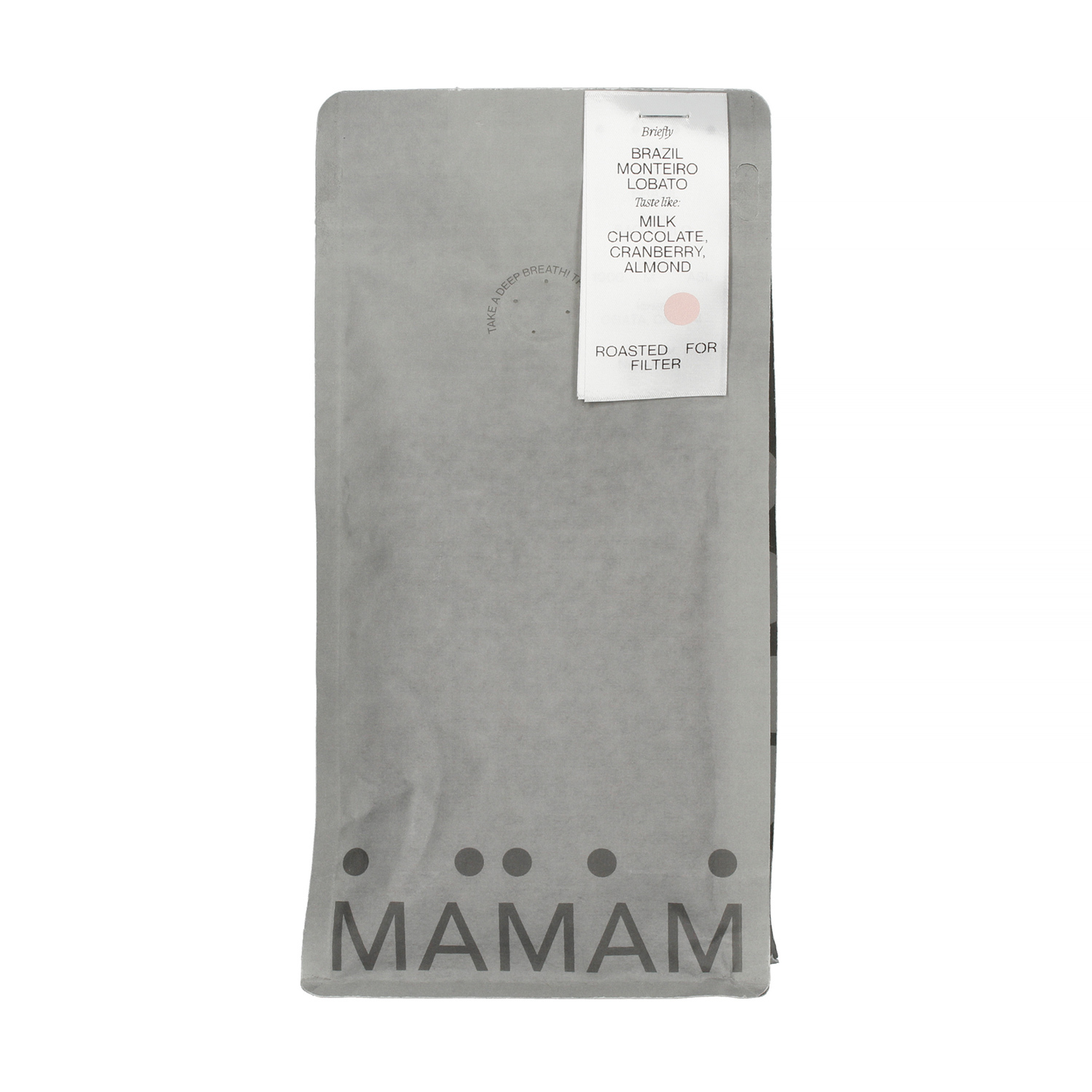
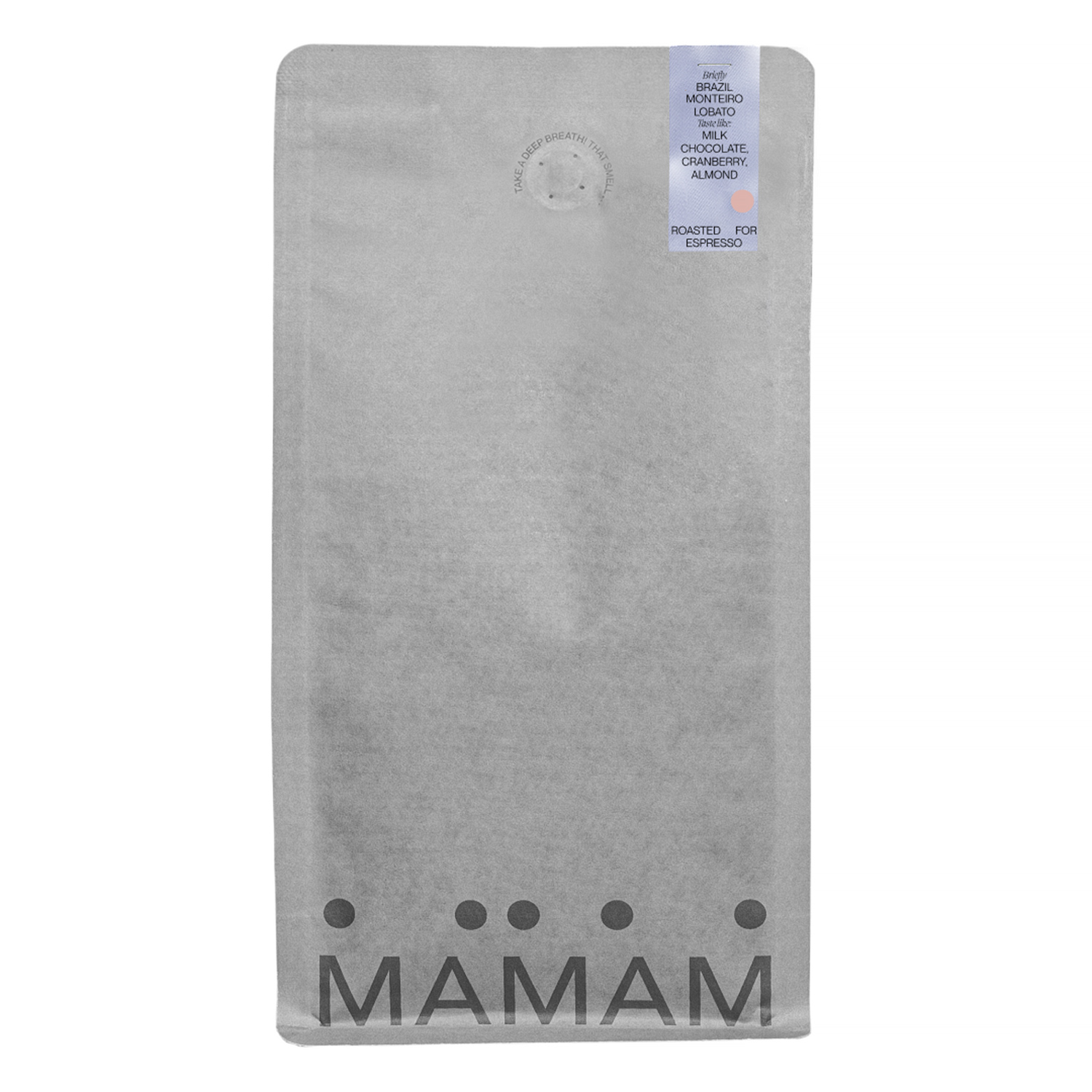
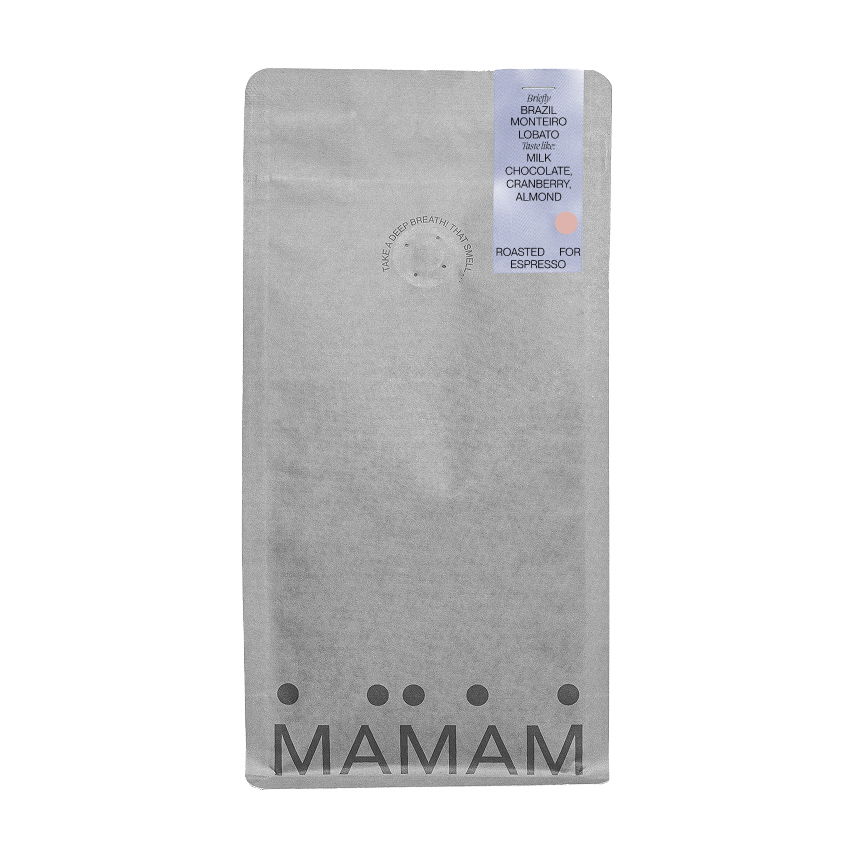
Whole-bean specialty coffee from Brazil, roasted by MAMAM roasting brand. Light roast, perfect for filter coffee machines, drippers, Chemex, AeroPress, French Press, and other pour-over brewing methods. The flavour of the brew resembles milk chocolate, cranberries, and almonds.Country: BrazilRegion: Sao PauloFarm: Monteiro LobatoVarietal: Obata, CatuiProcessing: NaturalAltitude: 1000 m a.s.l.Store in a cold and dry space.
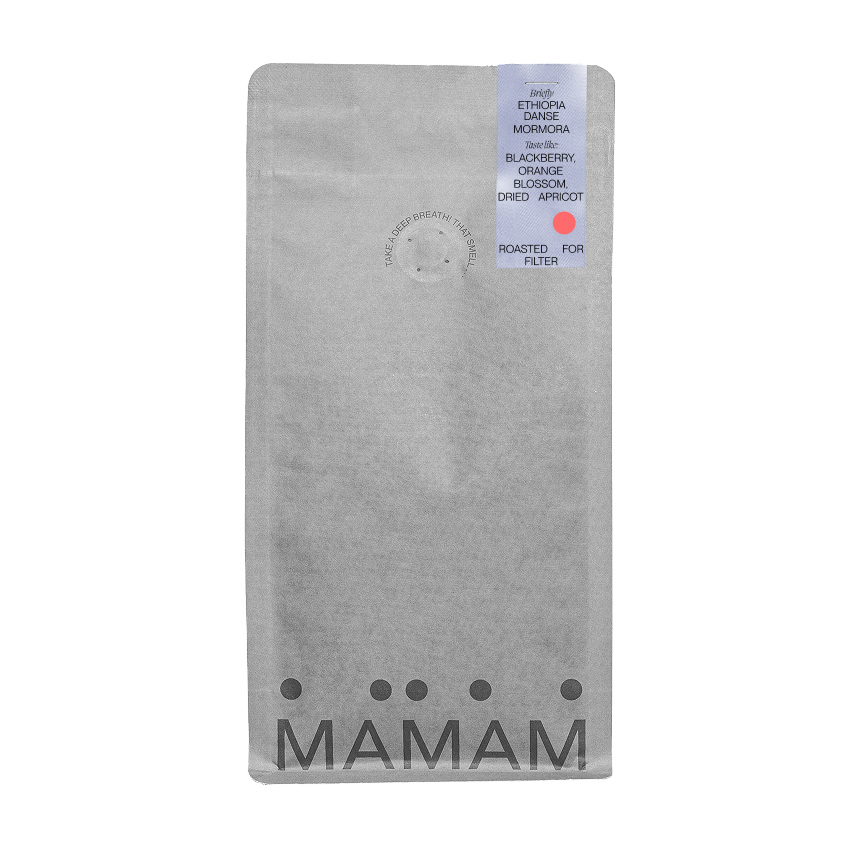
Whole-bean specialty coffee from Ethiopia, roasted by MAMAM roasting brand. Light roast, perfect for filter coffee machines, drippers, Chemex, AeroPress, French Press, and other pour-over brewing methods. The flavour of the brew resembles blackberry, orange blossom and dried apricot.Origin: EthiopiaRegion: GujiFarm: Danse Mormora Washing StationVariety: HeirloomProcessing: NaturalAltitude: 2200 m a.s.l.Cupping score: 87 / 100 ABOUT THE FARMDanse Mormora is located about 5 kilometers from the town of Haro Lebetu, and the farmers grow coffee in fertile clay soil at high elevation. The variety most commonly called "Bourbon" here is not the same as that type that is better-known in Central and South America: Coffees called "Bourbon" colloquially in Ethiopia are typical coffee-berry-disease-resistant cultivars.Coffees in Ethiopia are typically grown on very small plots of land by farmers who also grow other crops. The majority of smallholders will deliver their coffee in cherry to a nearby washing station or central processing unit, where their coffee will be sorted, weighed, and paid for or given a receipt. Coffee is then processed, usually washed or natural, by the washing station and dried on raised beds.The washing stations serve as many as several hundred to sometimes a thousand or more producers, who deliver cherry throughout the harvest season: The blending of these cherries into day lots makes it virtually impossible under normal circumstances to know precisely whose coffee winds up in which bags on what day, making traceability to the producer difficult. Typically farmers in this region don't have access to and therefore do not utilize fertilizers or pesticides in the production of coffee. ROASTERA clean, elegant, and floral natural Ethiopia. Complex, yet very easy for daily brewing and drinking.RECIPE V6016g of coffee250g of water 96°CMedium Grind Size 1. Put a paper filter in your V60 and rinse it with hot water ( 96C ). It will preheat your drip brewer and gets rid of a paper taste from the filter. For the best results always use filtered water (remember that 98,5 % of your brewed coffee is water)2. Remove the rinsing water from the server.3. Grind your beans just before you brew and add the coffee to the drip brewer. Gently distribute your coffee into the center of your V60.4. Place your V60 on a vessel on a scale and make sure that your water is 96 C.5. Tare your scale and start the timer.6. Add 50 grams of water. Your coffee will begin to bloom.7. At 30 seconds, add more water up to 100 grams. Pour the water slow, gently and in clockwise circles.8. At 00:50 pour hot water to 200g. 9. At 01:10 pour hot water to 250g.10. Swirl your V60 and let the coffee drip. 11. The water should have drained in around 3:00. You may need to change your grind setting, when the coffee finishes to brew too quickly or too long. But always taste and then judge your coffee.Store in a cold and dry space.
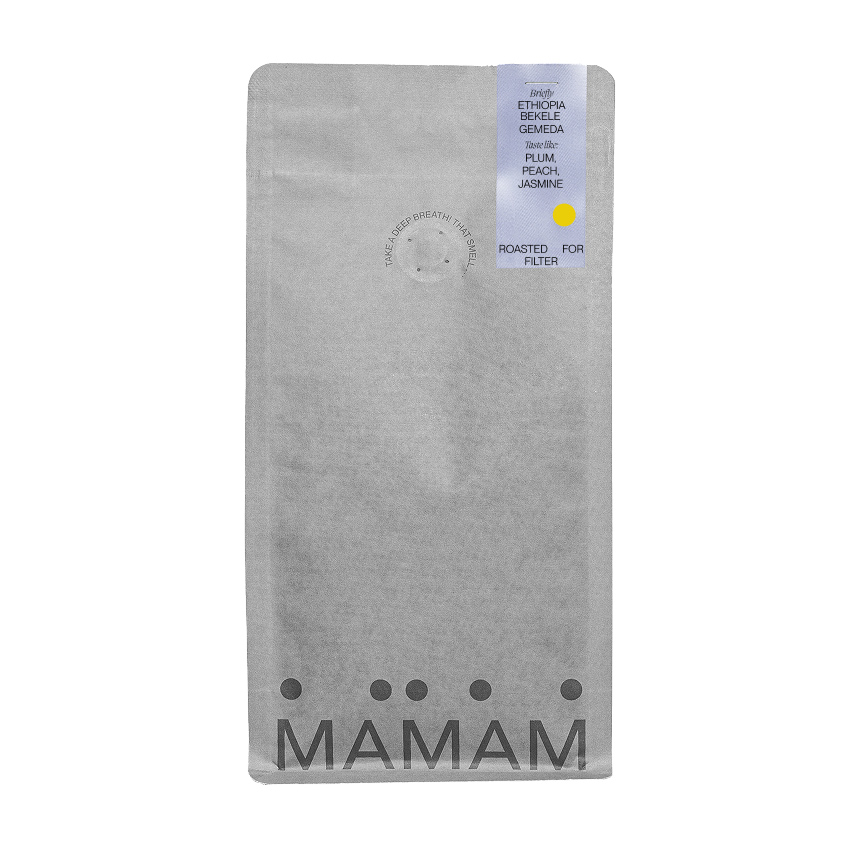
Whole-bean specialty coffee from Ethiopia, roasted by MAMAM roasting brand. Light roast, perfect for filter coffee machines, drippers, Chemex, AeroPress, French Press, and other pour-over brewing methods. The flavour of the brew resembles plum, peach and jasmin.Origin: EthiopiaRegion: Worka, Gedeb, YirgacheffeFarm: Bekele GemedaVariety: HeirloomProcessing: WashedAltitude: 2000 m a.s.l.Cupping score: 87 / 100 ABOUT THE FARM This single producer lot comes from Mr. Bekele Gemeda in the Worka village in Yirgacheffe. Mr Bekele Gemeda is a resident of small village called Worka 13 kms from Gedeb town. He owns 6.5 hectares of coffee farm in one place and another 3 hectares in another place within the same village. He works full time in his farm assisted by his able children who completed their primary education but couldn’t find another job in towns. Mr Bekele, who is the father of 11 children, fully relied on the income he generated from his coffee farm. The coffee farm business also supports his two elder married sons who also work together with him.Mr Bekele Gemeda was incredibly grateful to see the care he has put into his coffee showed well enough in the cup to have his coffee kept separate, something that is rare in Ethiopia. The coffee is picked ripe and depulped the same day. There is usually a fermentation period of 8–12 hours in open-air tanks, then washed in water channels to remove the mucilage. The coffee seeds will be spread on raised beds to dry for 5–15 days, depending on the weather.ROASTERTea with honey and lemon and a piece of yeast cake with plum - that is what this coffee reminds me of.RECIPE V6016g of coffee250g of water 96°CMedium Grind Size 1. Put a paper filter in your V60 and rinse it with hot water ( 96C ). It will preheat your drip brewer and gets rid of a paper taste from the filter. For the best results always use filtered water (remember that 98,5 % of your brewed coffee is water)2. Remove the rinsing water from the server.3. Grind your beans just before you brew and add the coffee to the drip brewer. Gently distribute your coffee into the center of your V60.4. Place your V60 on a vessel on a scale and make sure that your water is 96 C.5. Tare your scale and start the timer.6. Add 50 grams of water. Your coffee will begin to bloom.7. At 30 seconds, add more water up to 100 grams. Pour the water slow, gently and in clockwise circles.8. At 00:50 pour hot water to 200g. 9. At 01:10 pour hot water to 250g.10. Swirl your V60 and let the coffee drip. 11. The water should have drained in around 3:00. You may need to change your grind setting, when the coffee finishes to brew too quickly or too long. But always taste and then judge your coffee.Store in a cold and dry space.
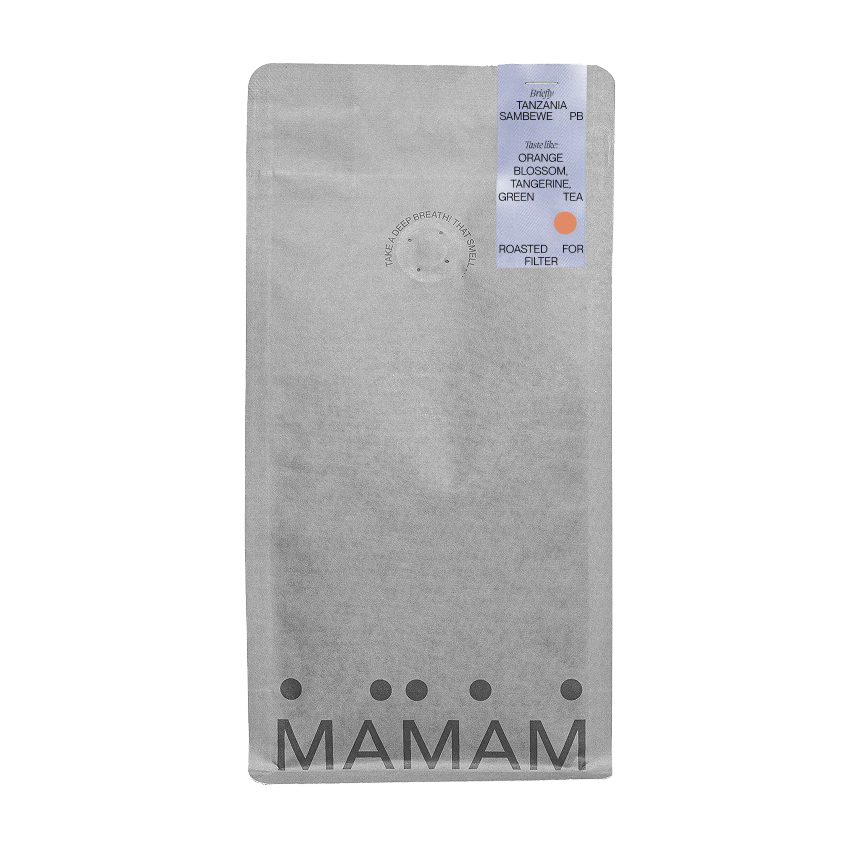
Whole-bean specialty coffee from Tanzania, roasted by MAMAM roasting brand. Light roast, perfect for filter coffee machines, drippers, Chemex, AeroPress, French Press, and other pour-over brewing methods. The flavour of the brew resembles orange blossom, mandarin and green tea.Origin: TanzaniaRegion: Songwe, MboziFarm: Sambewe AmcosVariety: KentProcessing: WashedAltitude: 1700 m a.s.l.Cupping score: 87 / 100 ABOUT THE FARMIn the heart of southwestern Tanzania, in the Mbeya Mountains, lies Sambewe Station, which produces exceptional coffee reflecting the unique terroir of the area. The altitude of over 1,800 m above sea level, the mineral-rich volcanic soil and the ideal microclimate give the coffee beans a full, complex flavour with exceptional sweetness and balanced acidity.AMCOS (Agricultural Marketing Cooperative Societies) group plays a very important role in supporting local farmers. AMCOS is a cooperative organization that brings together small farmers and provides them with various services that improve their living conditions and contribute to a better quality of their products.Mbeya Region – the pearl of the African highlandsMbeya is one of Tanzania’s most important coffee regions, located near Lake Nyasa and bordering Kitulo National Park. The area is known not only for its fertile soil but also for the small family farms that have been growing coffee here for generations. Agriculture is deeply rooted in the local culture – coffee cherries are hand-picked and farmers pay close attention to every detail of the harvest and processing. The Sambewe processing station works with more than 400 smallholder farmers who bring their carefully hand-picked cherries to it.For this particular batch, only Peaberry beans were selected, which give the coffee a unique flavor profile. After hand-picking, the floaters were sorted from the coffee and then the coffee was hulled and sent to fermentation tanks, where after 18-36 hours of fermentation, the beans were freed from the remaining pulp. After washing in channels, the subsequent beans were spread out in parchment on African beds, where they are dried for an average of 14-30 days depending on the weather. Coffees from Tanzania are covered by the AMCOS organization.The role of AMCOS in Mbeya regionEnsuring access to marketsAMCOS helps farmers in the region connect to wider markets and sell their coffee at fair prices. This cooperative gives smaller farmers, who would otherwise struggle to sell directly, collective access to larger buyers and exporters.Support for processing and quality productionAMCOS provides its members with access to improved processing technologies and advice on improving coffee quality. This includes training on proper cherry picking, drying and processing methods , resulting in high-quality coffee that is gaining international recognition.Securing financing and equipmentThe AMCOS cooperative often assists farmers in the Mbeya area with access to finance and necessary equipment such as peelers , drying beds and warehouses , which improves farm infrastructure and streamlines the entire production process.Social and community supportAMCOS also contributes to the development of local communities by investing in educational programs , healthcare , and infrastructure , thereby improving the living conditions of farmers and their families. It also promotes the sharing of experiences among farmers, ensuring the continued growth and stability of coffee production in the region.Ensuring sustainabilityA focus on sustainability is also part of AMCOS' work. The cooperative supports farmers in transitioning to organic and environmentally friendly practices , such as integrated pest management systems or protecting water resources in coffee growing areas.Thanks to these activities, AMCOS provides farmers not only with better conditions for growing quality coffee, but also with broader access to markets and sustainable economic opportunities for the entire region.ROASTER'S NOTEA juicy, yet tea-like coffee that is a great representative of Tanzanian coffees and demonstrates how complex they can be. Plenty of floral and citrus notes, just right for bright summer days.RECIPE V6016g of coffee250g of water 96°CMedium Grind Size 1. Put a paper filter in your V60 and rinse it with hot water ( 96C ). It will preheat your drip brewer and gets rid of a paper taste from the filter. For the best results always use filtered water (remember that 98,5 % of your brewed coffee is water)2. Remove the rinsing water from the server.3. Grind your beans just before you brew and add the coffee to the drip brewer. Gently distribute your coffee into the center of your V60.4. Place your V60 on a vessel on a scale and make sure that your water is 96 C.5. Tare your scale and start the timer.6. Add 50 grams of water. Your coffee will begin to bloom.7. At 30 seconds, add more water up to 100 grams. Pour the water slow, gently and in clockwise circles.8. At 00:50 pour hot water to 200g. 9. At 01:10 pour hot water to 250g.10. Swirl your V60 and let the coffee drip. 11. The water should have drained in around 3:00. You may need to change your grind setting, when the coffee finishes to brew too quickly or too long. But always taste and then judge your coffee.Store in a cold and dry space.
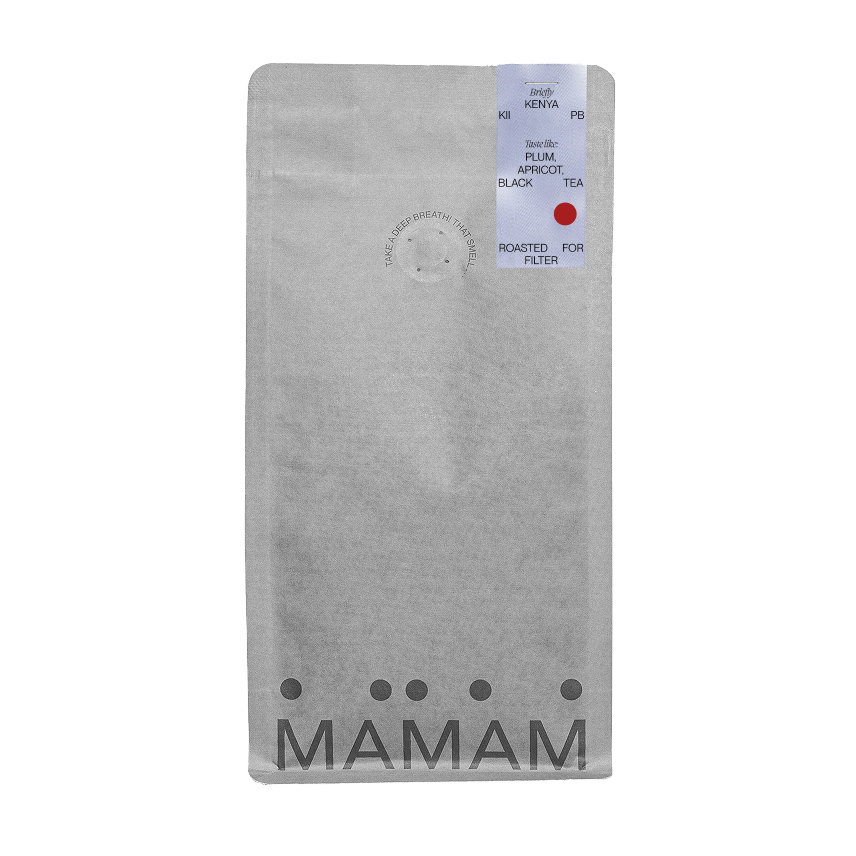
Whole-bean specialty coffee from Kenya, roasted by MAMAM roasting brand. Light roast, perfect for filter coffee machines, drippers, Chemex, AeroPress, French Press, and other pour-over brewing methods. The flavour of the brew resembles plum, apricot and black tea.Origin: KenyaRegion: KirinyagaFarm: Kii FactoryVariety: SL-28, SL-34Processing: WashedAltitude: 2000 m a.s.l.Cupping score: 88 / 100 ABOUT THE FARMThis coffee is processed at the Kii Factory, a member of the Rung’eto Farmers Cooperative Society in Central Kenya. Kii is one of three wet mills managed by the Rung’eto FCS in Kirinyaga and is Fairtrade certified. The Chairman of this society has implemented various quality-focused processes throughout all the factories of the Rung’eto FCS. For example he installed tiles on all the washing channels and fermentation tanks. Moreover, the water for the processing is being reused. Farmers associated with the Rung’eto Cooperative cultivate their crops on Mount Kenya's slopes, known for producing intense, complex, and flavour-dense coffees.Harvest & Post-HarvestSorting: Cherries are hand sorted for unripes and overripes by the farmers before they go into production.Pulping: A 3-Disc Agaarde pulping machine removes the skin and pulp. The coffees are graded by density into three grades by the pulper. Grade 1 and 2 go separately to fermentation. Grade 3 is considered a low grade.Fermentation: The coffee is dry fermented for 18-36 hours in concrete tanks under a roof that provides shade for better temperature control during fermentation.Washing/Grading: After fermentation the coffees are washed and again graded by density in washing channels. They are sometimes soaked in clean water overnight.Drying: Sun-dried 12 to 20 days on African drying beds. Time depends on weather conditions. Coffees are covered under plastic during midday and at night. In this area the flowering period is usually between February and March, following this the trees will be ready for harvest from October to December.Soil: The soil, primarily Nitisol, is rich and developed from volcanic materials, commonly found in highland areas and steep volcanic slopes. Nitisol exhibits superior chemical and physical properties compared to other tropical soils.ROASTER'S OPINIONLots of sweetness, a balanced yet distinct acidity, and a jammy character.RECIPE V6016g of coffee250g of water 96°CMedium Grind Size 1. Put a paper filter in your V60 and rinse it with hot water ( 96C ). It will preheat your drip brewer and gets rid of a paper taste from the filter. For the best results always use filtered water (remember that 98,5 % of your brewed coffee is water)2. Remove the rinsing water from the server.3. Grind your beans just before you brew and add the coffee to the drip brewer. Gently distribute your coffee into the center of your V60.4. Place your V60 on a vessel on a scale and make sure that your water is 96 C.5. Tare your scale and start the timer.6. Add 50 grams of water. Your coffee will begin to bloom.7. At 30 seconds, add more water up to 100 grams. Pour the water slow, gently and in clockwise circles.8. At 00:50 pour hot water to 200g. 9. At 01:10 pour hot water to 250g.10. Swirl your V60 and let the coffee drip. 11. The water should have drained in around 3:00. You may need to change your grind setting, when the coffee finishes to brew too quickly or too long. But always taste and then judge your coffee.Store in a cold and dry space.
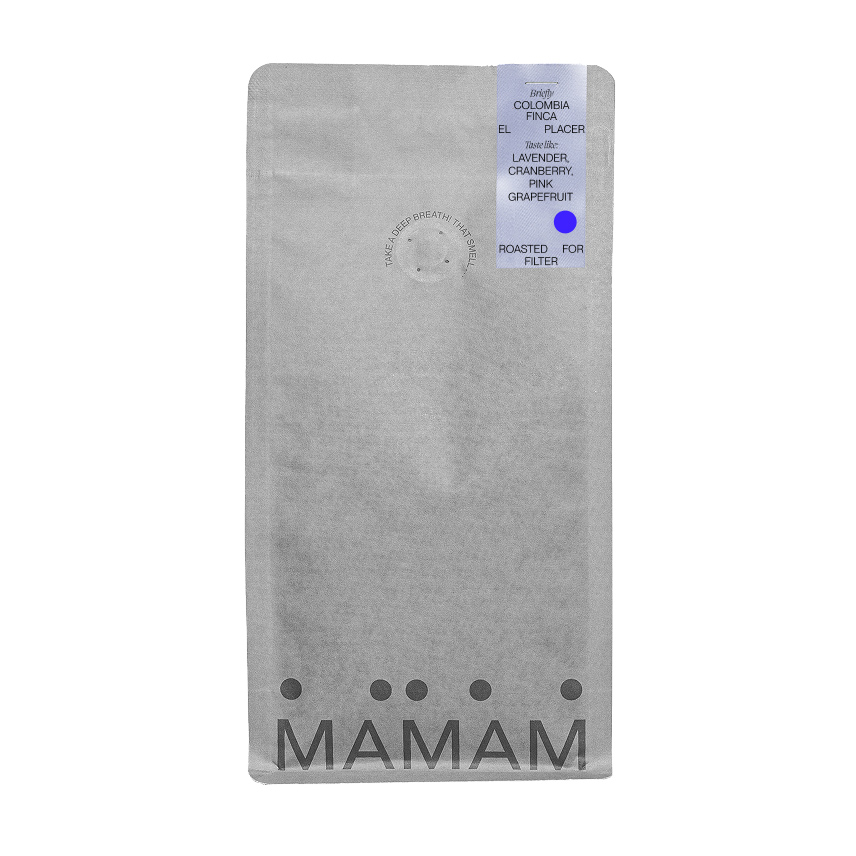
Whole-bean specialty coffee from Colombia, roasted by MAMAM roasting brand. Light roast, perfect for filter coffee machines, drippers, Chemex, AeroPress, French Press, and other pour-over brewing methods. The flavour of the brew resembles lavender, cranberry and pink grapefruit.Origin: ColombiaRegion: Acevedo, HuilaFarm: El PlacerVariety: Pink BourbonProcessing: NaturalAltitude: 1750 m a.s.l.Cupping score: 89 / 100 ABOUT FARMFinca El Placer, owned and operated by Jesús Arbey Iquira, is a distinguished coffee farm located in the Acevedo municipality of Huila, Colombia. Situated at elevations ranging from 1,700 to 1,800 meters above sea level, the farm benefits from the region's fertile soils and favorable microclimate, ideal for cultivating specialty coffee. Jesús Arbey Iquira is a dedicated coffee producer who employs meticulous farming practices to ensure the highest quality beans. His commitment to excellence is evident in the careful selection of coffee varieties and processing methods used on the farm. He has developed meticulous processing methods over the years that can give his coffees very unique profiles.ABOUT COFFEEIn general, the ripest cherries are selected for natural processing, they are often hand sorted or float-sorted, cleaned, and placed on raised beds in a covered area to dry for at least a two-week period. The high humidity and rainy climates across Colombia do add to the challenging of achieving a high-quality naturally-processed coffee; but, when it is done properly and the coffee is moved consistently throughout the curing process, we find the resulting cup profile to be exquisite. Pink Bourbon: Cultivated from hybridization of Red and Yellow Bourbon. It's very rare, but the producers say it is quite resistant to rust. Pink and Orange Bourbons are very difficult to produce with consistency. The recessive genes leading to the expression of these colors are easily thwarted by the presence of yellow and red genes in a given pollen grain. A carefully isolated and contained lot can do quite well and preserve the unique color and character of this variety, though this is quite hard to find.ROASTER'S NOTEElegant yet very expressive. A rarely encountered floral note reminiscent of lavender, paired with the sweetness and acidity of very ripe fruit.V60 RECIPE16g of coffee250g of water 96°CMedium Grind Size 1. Put a paper filter in your V60 and rinse it with hot water ( 96C ). It will preheat your drip brewer and gets rid of a paper taste from the filter. For the best results always use filtered water (remember that 98,5 % of your brewed coffee is water)2. Remove the rinsing water from the server.3. Grind your beans just before you brew and add the coffee to the drip brewer. Gently distribute your coffee into the center of your V60.4. Place your V60 on a vessel on a scale and make sure that your water is 96 C.5. Tare your scale and start the timer.6. Add 50 grams of water. Your coffee will begin to bloom.7. At 30 seconds, add more water up to 100 grams. Pour the water slow, gently and in clockwise circles.8. At 00:50 pour hot water to 200g. 9. At 01:10 pour hot water to 250g.10. Swirl your V60 and let the coffee drip. 11. The water should have drained in around 3:00. You may need to change your grind setting, when the coffee finishes to brew too quickly or too long. But always taste and then judge your coffee.Store in a cold and dry space.
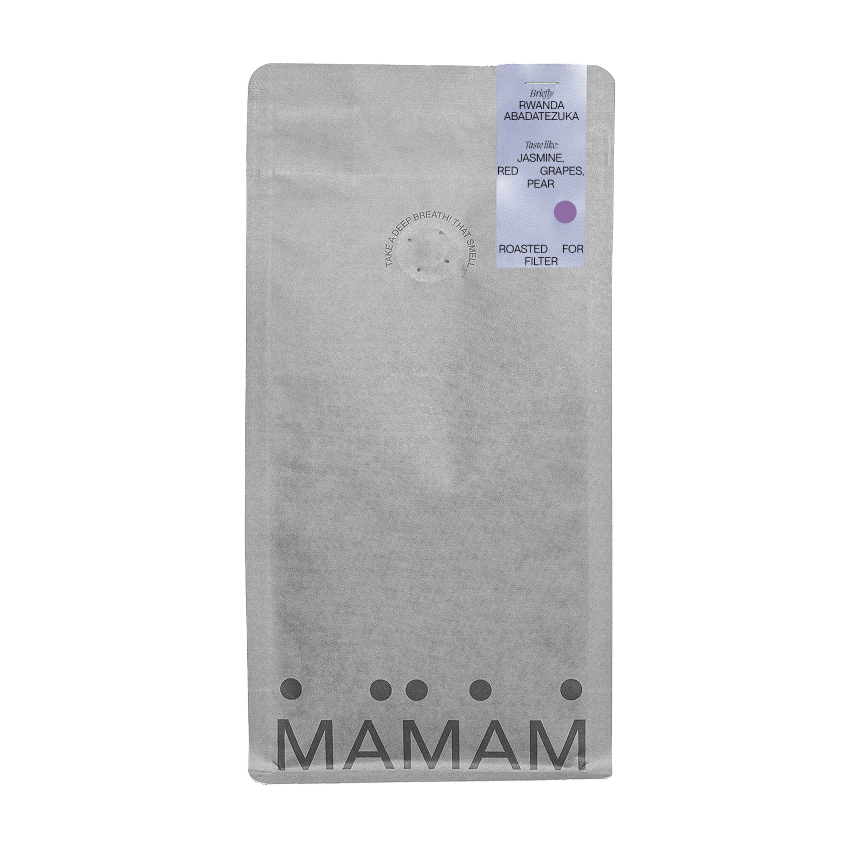
Whole-bean specialty coffee from Rwanda, roasted by MAMAM roasting brand. Light roast, perfect for filter coffee machines, drippers, Chemex, AeroPress, French Press, and other pour-over brewing methods. The flavour of the brew resembles jasmine flowers, red grapes and pear.Origin: RwandaRegion: NyamashekeFarm: Abadatezuka CoopVariety: Red BourbonProcessing: Anaerobic Honey Altitude: 2100 m a.s.l.Cupping score: 89 / 100 ABOUT THE FARMAbadatezuka Cooperative is a group of smallholder farmers in Rwanda's Western Province who deliver their coffee in cherry to the Cyato Washing Station, which is located in the Cyato sector of the Nayamasheke district in that region. The producers here grow coffee at elevations all the way up to 2,200 meters above sea level, and the washing station is located at 1,850 meters above sea level. Coffees are brought to the Cyato washing station from the surrounding areas of Kivoga, Kageyo, Rusumo, Gatare, and Nsinduka. The washing station was established in 2017.One interesting facet to coffee here is that the native honeybees that live in and around the Nyungwe forest where the coffee is grown are said to be responsible in part to the "unique profile" this coffee has. The bee-assisted pollination, fertile ground (black humus and sandy soil), and cool lake-affected climate thanks to the area's proximity to Lake Kivu contribute to the flavors found in the cup. The farmers use no synthetic inputs, either as fertilizers or as pest control.ABOUT THE PROCESSING Honey-processed coffees go through steps similar to washed, with one notable difference - the amount of mucilage left on the seed before drying. After the cherries are collected and sorted, the coffee is typically depulped and fermented. During fermentation, washed coffees will have all the mucilage broken down and removed from the seeds. In honey-processed coffees, the fermentation is cut short, leaving some mucilage still intact on the seeds. The coffee will then dry with this mucilage intact, often contributing a denser texture, more sugar browning, and fruit notes to the final cup. It is important to note this coffee was intentionally processed utilizing anaerobic fermentation. In general, placing freshly-harvested cherries inside a sealed container or bag of some sort for a period of time will create a flavor impact. We find those anaerobically-fermented coffees often exhibit an increase in the intensity of fruit and acidity and a slight increase in the body. Nonetheless, the anaerobic fermentation process has a distinct impact on the outcome of the flavor profile.ROASTER'S OPINIONFirst time in our offer: Anaerobic Honey processed coffee, and from Rwanda too! A very complex fruit-and-floral profile with a super silky body.RECIPE V6016g of coffee250g of water 96°CMedium Grind Size 1. Put a paper filter in your V60 and rinse it with hot water ( 96C ). It will preheat your drip brewer and gets rid of a paper taste from the filter. For the best results always use filtered water (remember that 98,5 % of your brewed coffee is water)2. Remove the rinsing water from the server.3. Grind your beans just before you brew and add the coffee to the drip brewer. Gently distribute your coffee into the center of your V60.4. Place your V60 on a vessel on a scale and make sure that your water is 96 C.5. Tare your scale and start the timer.6. Add 50 grams of water. Your coffee will begin to bloom.7. At 30 seconds, add more water up to 100 grams. Pour the water slow, gently and in clockwise circles.8. At 00:50 pour hot water to 200g. 9. At 01:10 pour hot water to 250g.10. Swirl your V60 and let the coffee drip. 11. The water should have drained in around 3:00. You may need to change your grind setting, when the coffee finishes to brew too quickly or too long. But always taste and then judge your coffee.Store in a cold and dry space.
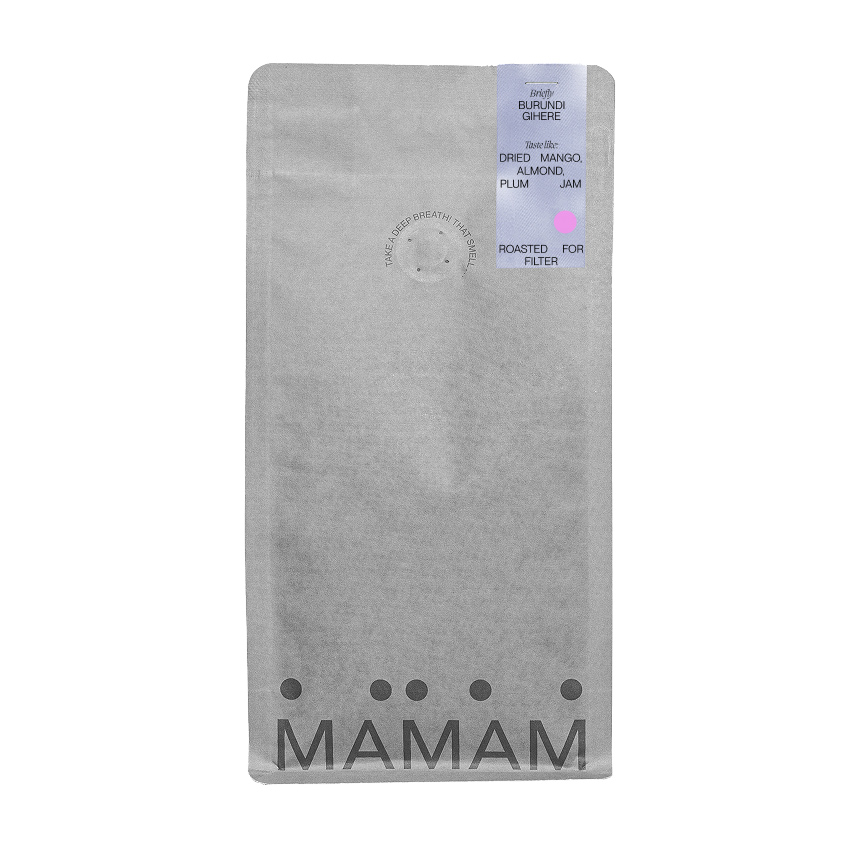
Whole-bean specialty coffee from Burundi, roasted by MAMAM roasting brand. Light roast, perfect for filter coffee machines, drippers, Chemex, AeroPress, French Press, and other pour-over brewing methods. The flavour of the brew resembles dried mango, almonds and plum jam.Origin: BurundiRegion: NgoziFarm: Gihere Washing StationVariety: BourbonProcessing: NaturalAltitude: 1800 m a.s.l.Cupping score: 87 / 100 ABOUT THE FARMGihere Central Washing station receives coffee from over 1600 small-holder producers in the Ngozi region of Burundi. The average farmer in this region only has approximately 250 trees, which is extremely small. They are picking their ripe coffee by hand here. This washing station was established in 1984 and features adequate soaking and floating tank for optimal coffee processing and has over 200 drying tables. As a result, they can process nearly 20,000 bags of coffee in total here. As a result of this washing station being established in the 80s, many small-holder farmers have gained access to capital investments, education, and infrastructure to produce exceptional coffees and improve their livelihoods. After coffee has dried, it it transported to the capital city of Gitega for dry milling and export. Natural Coffees in Burundi are picked ripe cherries then laid on raised beds for drying for varying times depending on weather.ROASTER'S OPINIONVery fruity, reminiscent of plum jam.RECIPE16 g coffee250 g water 96°CMedium grind sizePlace a paper filter in the V60 and rinse it with hot water (96°C). This will heat the dripper and server and remove any paper taste from the filter. For best results, always use filtered water (remember that 98.5% of brewed coffee is water).Discard the rinse water from the server.Grind the coffee beans just before brewing and pour them into the dripper. Gently level the coffee in the center of the V60.Place the V60 on a vessel set on a scale and ensure the water temperature is 96°C.Tare the scale and start the timer.Add 50 grams of water. Your coffee will begin the bloom phase (pre-infusion).After 30 seconds, add water until you reach 100 grams. Pour the water slowly, gently, and in circular clockwise motions.At 00:50, pour up to 200g of hot water.At 01:10, pour up to 250g of hot water.Give the V60 dripper a light swirl and let the coffee draw down.The water should finish filtering through around 3:00. You may need to adjust the grind setting if the coffee brews too quickly or too slowly. However, always taste and evaluate the quality of the coffee.Store in a cool and dry place.
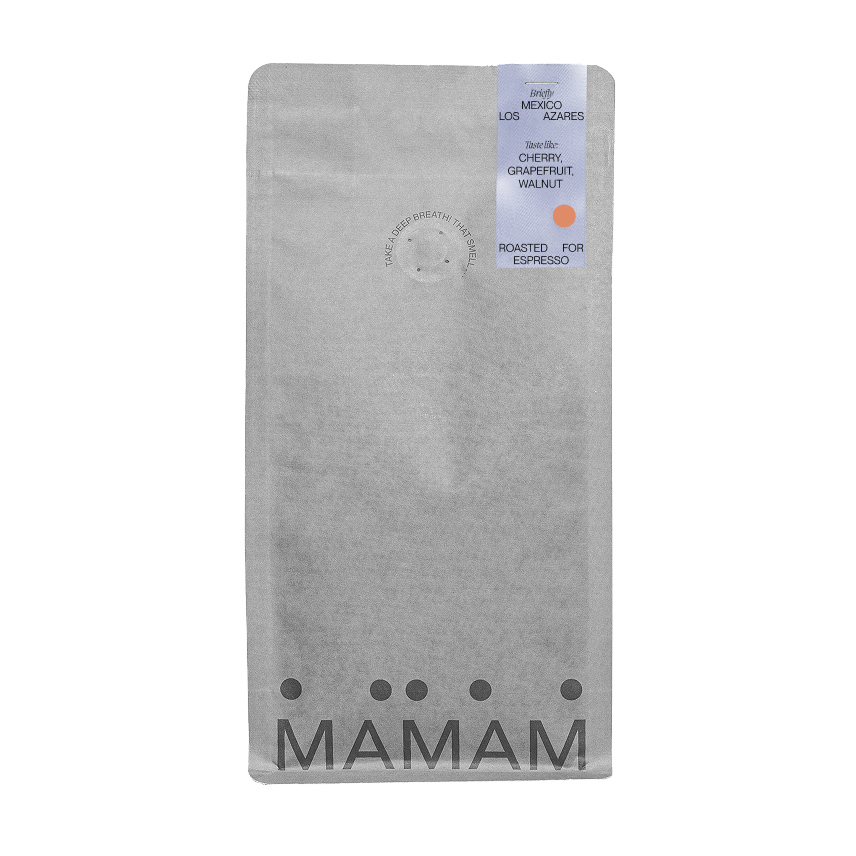
Whole-bean specialty coffee from Mexico, roasted by MAMAM roasting brand. Dark roast, perfect for espresso machines and moka pots. The brew resembles the flavour of cherry, grapefruit and walnut.Origin: MexicoRegion: Tenejapa, ChiapasFarm: Los AzaresVariety: Bourbon, Typica, Mundo NovoProcessing: WashedAltitude: 1500 m a.s.l.Cupping score: 85 / 100ABOUT THIS REGION AND FARMIn this region, the native language in Tzajalchen is Tzeltal, and 100% of the population can speak Tzeltal. Coffee cultivation is usually managed by family members, rarely hiring out external workers. 70% of the population wears traditional clothing, and 46% of the producers are women producers.Before the arrival of Spanish conquerors, Tzeltal indigenous people settled in the actual Tzajalchen area. The Aztecan people came and lived here, but in the 16th century, Dominican Friars started to colonize the area. In 1712 Tzeltal people started to rebel against the Dominican people, resulting in the entirety of the population today being the Tzeltal indigenous people.Pedro's father, along with his three brothers, initially grew corn and beans. There weren't any coffee trees planted in the farm. More than 30 years ago, a program of INMECAFE (El Instituto Mexicano del Café) arrived in Tzajalchen and brought coffee seeds of Bourbon and Caturra to plant, and that's how they started coffee cultivation in the area. About 20 years ago, his father handed over the farm to him and his two brothers, then Mr. Pedro began to work organically with his wife and his son. He produced 15 quintales from his 1-ha farm, and bought three more hectares. Now his farm is 4-has and continues to maintain organic practices.The harvest is picked by hand, selecting only 100% ripe cherries, and is usually done in 4 picking sessions per season. Pulping is done on the same day of the harvest, and the coffee is then fermented for 10-16 hours. The drying continues for 3-4 days thanks to the sunny climate on the roof of the house.Store in a cold and dry space.
Whole-bean specialty coffee from Brazil, roasted by MAMAM roasting brand. Dark roast, perfect for espresso machines and moka pots. The brew resembles the flavour of milk chocolate, cranberry, and almonds.Country: BrazilRegion: Sao PauloFarm: Monteiro ObatoVarietal: Obata, CatuaiProcessing: NaturalAltitude: 1000 m a.s.l.Store in a cold and dry space.
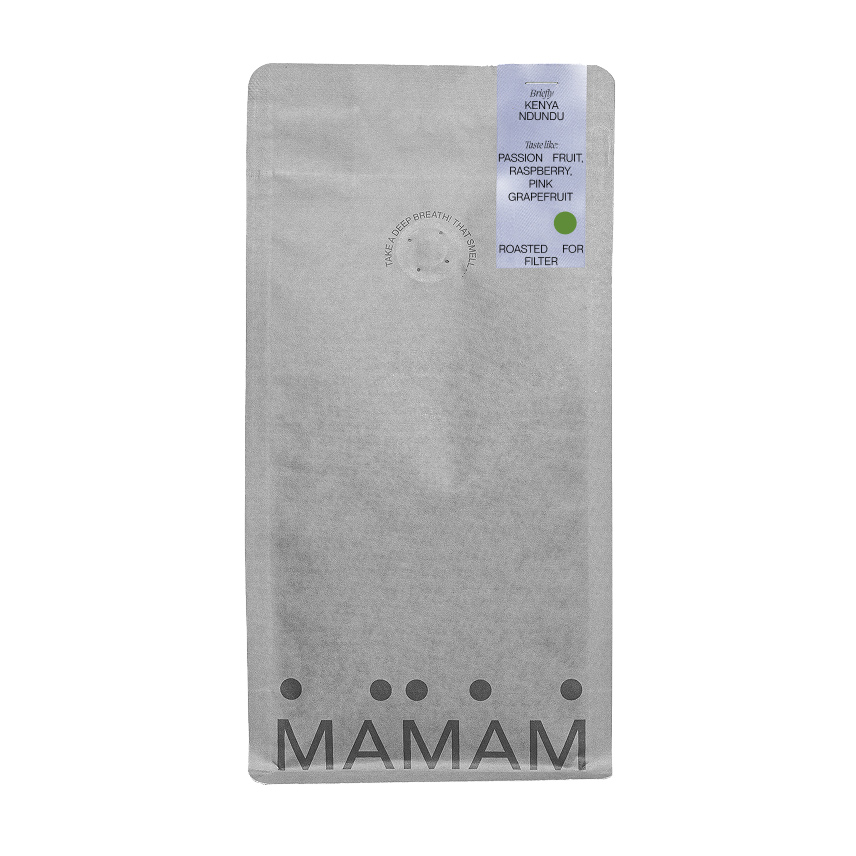
Whole-bean specialty coffee from Kenya, roasted by MAMAM roasting brand. Light roast, perfect for filter coffee machines, drippers, Chemex, AeroPress, French Press, and other pour-over brewing methods. The flavour of the brew resembles passion fruit, raspberry and pink grapefruit.Origin: KenyaRegion: KiganjoFarm: Ndundu FactoryVariety: SL-28, SL-34Processing: WashedAltitude: 2000 m a.s.l.Cupping score: 88 / 100 ABOUT THE FARMThe affiliate members of the co-op are required to be extremely diligent to carry out all agronomic activities associated with high quality coffee production, including sourcing coffee seeds from the Coffee Research Institute?s Coffee Research Station. Planting and cultivating is implemented according to the guidelines submitted by the group leaders and technical advisors. Fieldwork involves weeding, pruning, application of fertiliser, mulching and technical advice. Technical advice is offered through farmer training programs and field visits offered by the ministry of agriculture.As for the rest of the coop in the Ndundu factory all coffee cherries are handpicked and are delivered to the mill the same day, where they will get rigourously sorted through floatation tanks, whilst factory employees oversee the process and any under ripe or damaged cherries will not be accepted by the “Cherry Clerk”, who keeps meticulous records of how much coffee each producer delivers on any given day and thus how much payment is due once the coffee has been sold.PB means peaberry. Peaberry is the name given to a very specific shape of coffee bean, which is the result of a natural mutation of the coffee cherry. While there are usually two beans in each fruit, a cherry with a peaberry mutation produces only one rounder bean. Peaberry mutations occur in approximately 5% of all coffee varieties. These beans are known for being rounder, smaller, and denser, which, when handled correctly, can contribute to a more even roast color.PROCESSINGCoffee cherries are carefully handpicked at peak ripeness by smallholder farmers and delivered to the factory for processing. The cherries undergo a Fully washed method, where they are first sorted, then pulped to remove the outer skin. Parchment is then fermented in concrete tanks for 12 to 24 hours, depending on temperature and climate conditions, to break down the mucilage. After fermentation, parchment is washed through grading channels using fresh water. During the peak season, parchment may be soaked in clean, circulating water for up to 24 hours before being transferred to raised beds for drying. The drying process lasts 5 to 21 days , with workers frequently turning the parchment and covering it during the hottest part of the day to ensure even drying and prevent defects.VARIETYSL28 is one of the best known and most respected African varieties. From Kenya, where it was originally selected in the 1930s, it has spread to other parts of Africa (it is particularly important in the Arabica growing areas of Uganda) and now to Latin America. The variety is suitable for medium to high altitudes and is drought tolerant, but susceptible to the main coffee diseases. SL28 is characterised by rusticity, a trait that means it can be left untended for several years or even decades and then return to successful production. Many parts of Kenya have SL28 trees that are 60-80 years old and still productive. The variety was selected at the former Scott Agricultural Laboratories (now the National Agricultural Laboratories, NARL, located in Kabete). The individual tree selections made at Scott Laboratories between 1935 and 1939 were prefixed with SL. There were 42 in total and they were examined for yield, quality and resistance to drought and disease. Recent genetic tests have confirmed that SL28 is related to the Bourbon genetic group. It has become valued for its sweet, complex flavour with vinous undertones.SL34 was originally selected in Kenya in the late 1930s at Scott Agricultural Laboratories. It is very susceptible to major diseases such as coffee rust, coffee berry blight and coffee berry disease. Therefore, proper disease control and prevention strategies are essential for its successful cultivation. Recent genetic tests have shown that SL34 is related to the Typica genetic group. The variety is known for its exceptional cup quality, full body and pleasant acidity.ROASTER'S OPINIONCrisp, acidic, and fruity. A prominent acidity balanced by the sweetness of ripe citrus fruits. Perfect both hot and cold.RECIPE V6016g of coffee250g of water 96°CMedium Grind Size 1. Put a paper filter in your V60 and rinse it with hot water ( 96C ). It will preheat your drip brewer and gets rid of a paper taste from the filter. For the best results always use filtered water (remember that 98,5 % of your brewed coffee is water)2. Remove the rinsing water from the server.3. Grind your beans just before you brew and add the coffee to the drip brewer. Gently distribute your coffee into the center of your V60.4. Place your V60 on a vessel on a scale and make sure that your water is 96 C.5. Tare your scale and start the timer.6. Add 50 grams of water. Your coffee will begin to bloom.7. At 30 seconds, add more water up to 100 grams. Pour the water slow, gently and in clockwise circles.8. At 00:50 pour hot water to 200g. 9. At 01:10 pour hot water to 250g.10. Swirl your V60 and let the coffee drip. 11. The water should have drained in around 3:00. You may need to change your grind setting, when the coffee finishes to brew too quickly or too long. But always taste and then judge your coffee.Store in a cold and dry space.
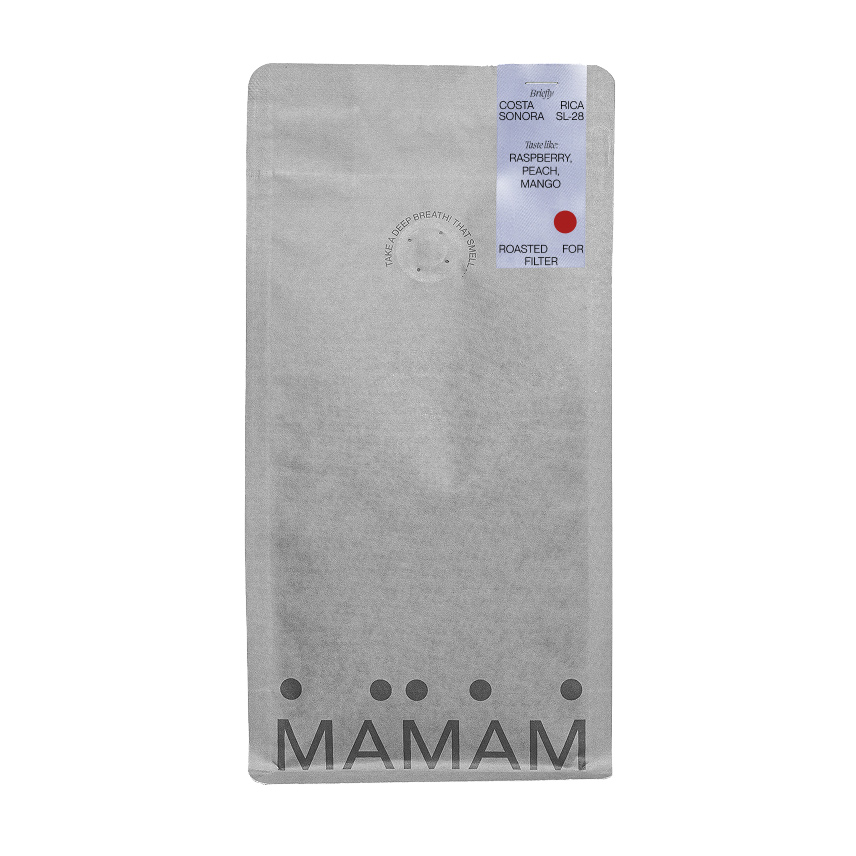
Whole-bean specialty coffee from Costa Rica, roasted by MAMAM roasting brand. Light roast, perfect for filter coffee machines, drippers, Chemex, AeroPress, French Press, and other pour-over brewing methods. The flavour of the brew resembles raspberry, mango, and peach.Country: Costa RicaRegion: AlajuelaFarm: Hacienda SonoraProducer: Alberto & Diego GuardiaVarietal: SL28Processing: NaturalAltitude: 1300 m a.s.l.Cupping score: 87,75 / 100 pointsStore in a cold and dry space.
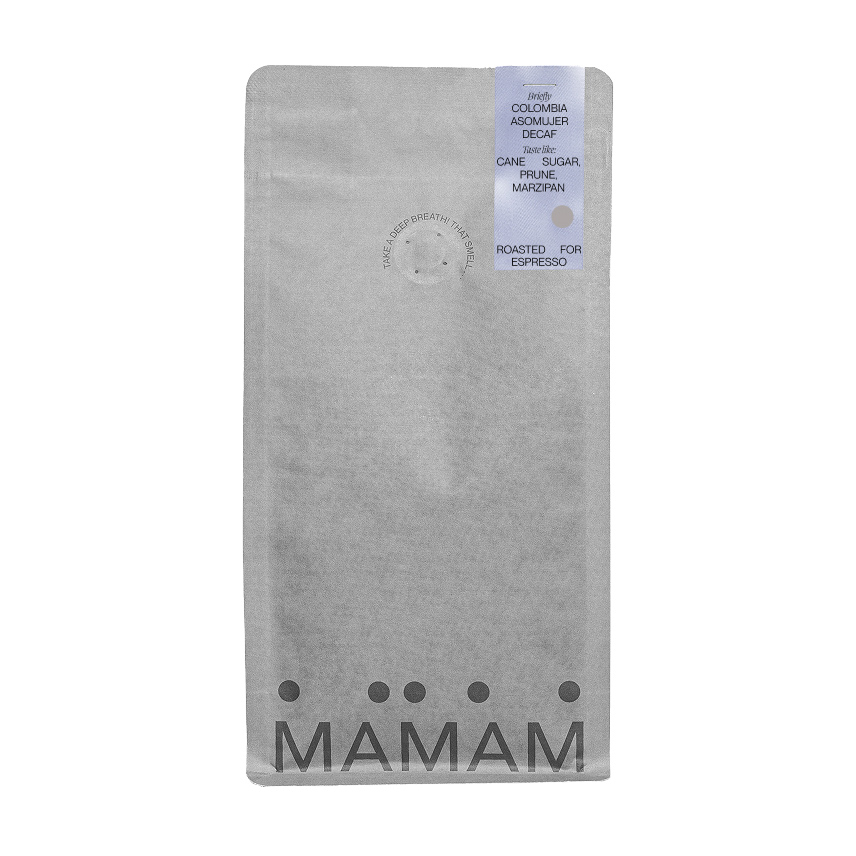
Decaffeinated specialty coffee from Colombia, roasted by MAMAM roasting brand. Dark roast, perfect for espresso and moka pots. The flavour of the brew resembles cane sugar, dried plums, and marzipan.Country: ColombiaRegion: Timana, HuilaFarm: Asomujer Women CooperativeVarietal: Castillo, Caturra, ColombiaMethod of decaffeination: Sugarcane (EA)Altitude: 1700 m a.s.l.Cupping score: 85 / 100 pointsStore in a cold and dry space.
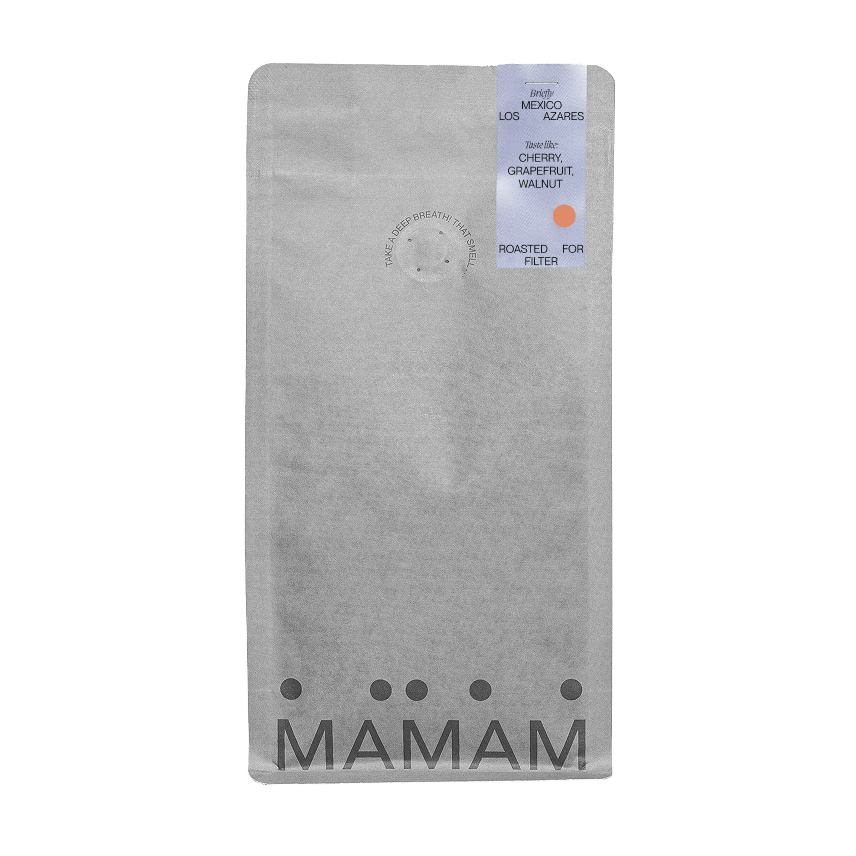
Whole-bean specialty coffee from Mexico, roasted by MAMAM roasting brand. Light roast, perfect for filter coffee machines, drippers, Chemex, AeroPress, French Press, and other pour-over brewing methods. The flavour of the brew resembles cherry, grapefruit and walnut.Origin: MexicoRegion: Tenejapa, ChiapasFarm: Los AzaresVariety: Bourbon, Typica, Mundo NovoProcessing: WashedAltitude: 1500 m a.s.l.Cupping score: 85 / 100ABOUT THIS REGION AND FARMIn this region, the native language in Tzajalchen is Tzeltal, and 100% of the population can speak Tzeltal. Coffee cultivation is usually managed by family members, rarely hiring out external workers. 70% of the population wears traditional clothing, and 46% of the producers are women producers.Before the arrival of Spanish conquerors, Tzeltal indigenous people settled in the actual Tzajalchen area. The Aztecan people came and lived here, but in the 16th century, Dominican Friars started to colonize the area. In 1712 Tzeltal people started to rebel against the Dominican people, resulting in the entirety of the population today being the Tzeltal indigenous people.Pedro's father, along with his three brothers, initially grew corn and beans. There weren't any coffee trees planted in the farm. More than 30 years ago, a program of INMECAFE (El Instituto Mexicano del Café) arrived in Tzajalchen and brought coffee seeds of Bourbon and Caturra to plant, and that's how they started coffee cultivation in the area. About 20 years ago, his father handed over the farm to him and his two brothers, then Mr. Pedro began to work organically with his wife and his son. He produced 15 quintales from his 1-ha farm, and bought three more hectares. Now his farm is 4-has and continues to maintain organic practices.The harvest is picked by hand, selecting only 100% ripe cherries, and is usually done in 4 picking sessions per season. Pulping is done on the same day of the harvest, and the coffee is then fermented for 10-16 hours. The drying continues for 3-4 days thanks to the sunny climate on the roof of the house.V60 RECIPE16g of coffee250g of water 96°CMedium Grind Size 1. Put a paper filter in your V60 and rinse it with hot water ( 96C ). It will preheat your drip brewer and gets rid of a paper taste from the filter. For the best results always use filtered water (remember that 98,5 % of your brewed coffee is water)2. Remove the rinsing water from the server.3. Grind your beans just before you brew and add the coffee to the drip brewer. Gently distribute your coffee into the center of your V60.4. Place your V60 on a vessel on a scale and make sure that your water is 96 C.5. Tare your scale and start the timer.6. Add 50 grams of water. Your coffee will begin to bloom.7. At 30 seconds, add more water up to 100 grams. Pour the water slow, gently and in clockwise circles.8. At 00:50 pour hot water to 200g. 9. At 01:10 pour hot water to 250g.10. Swirl your V60 and let the coffee drip. 11. The water should have drained in around 3:00. You may need to change your grind setting, when the coffee finishes to brew too quickly or too long. But always taste and then judge your coffee.Store in a cold and dry space.
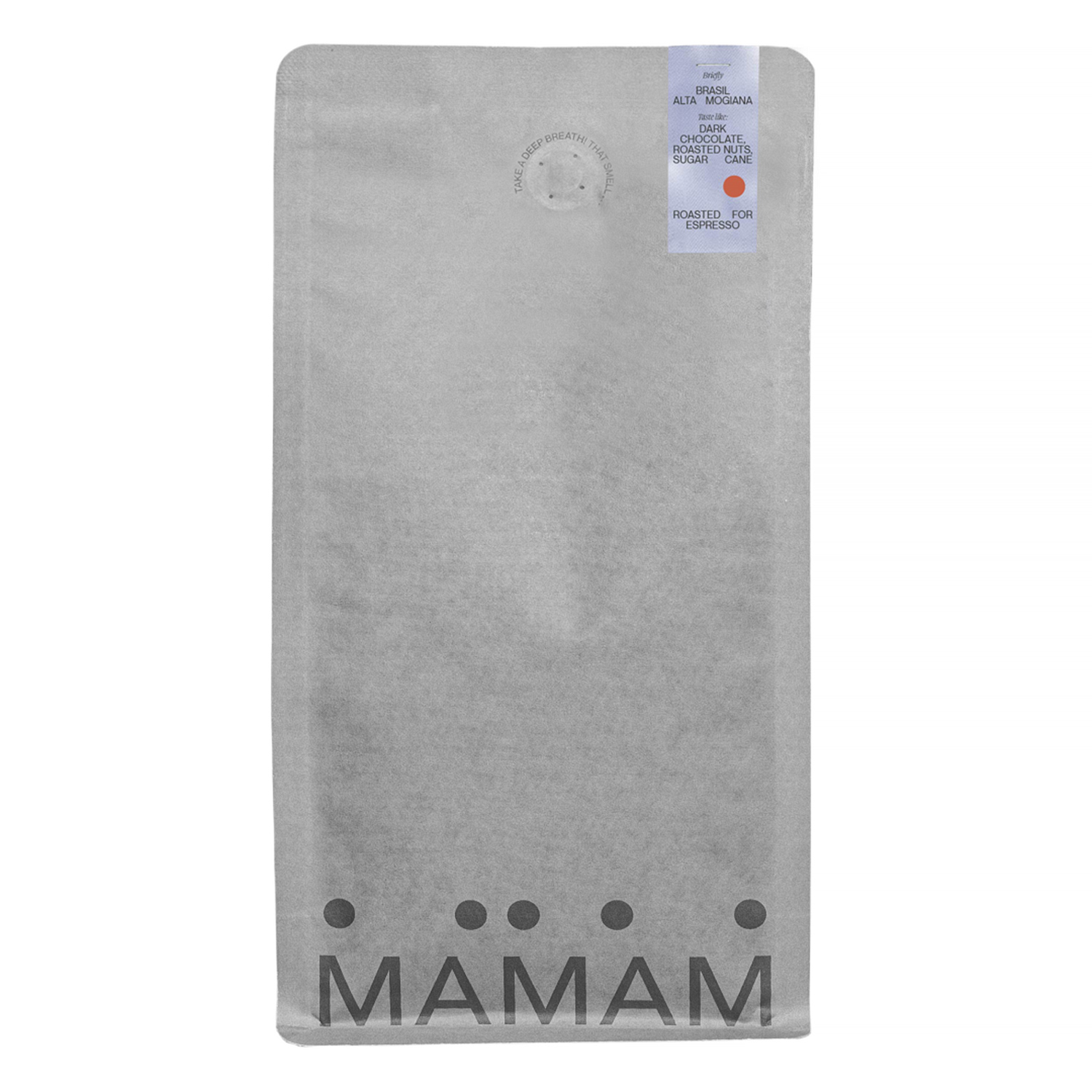
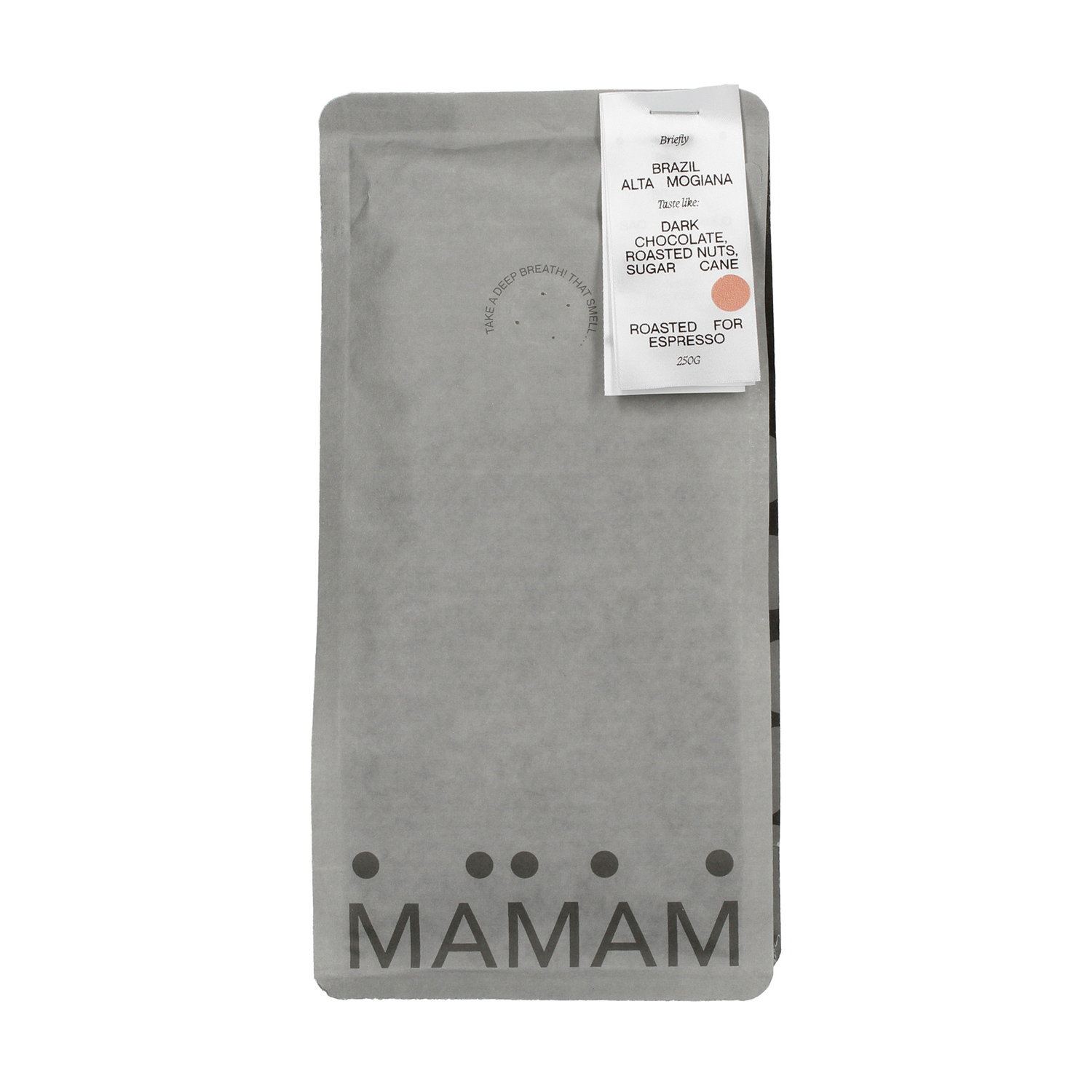
Whole-bean specialty coffee from Brazil, roasted by MAMAM roasting brand. Dark roast, perfect for espresso machines and moka pots. The brew resembles the flavour of dark chocolate, roasted nuts and cane sugar.Country: BrazilRegion: Sao PaoloVarietal: Bourbon, Mundo Movo, CatuaiProcessing: NaturalAltitude: 1100 m a.s.l.Store in a cold and dry space.
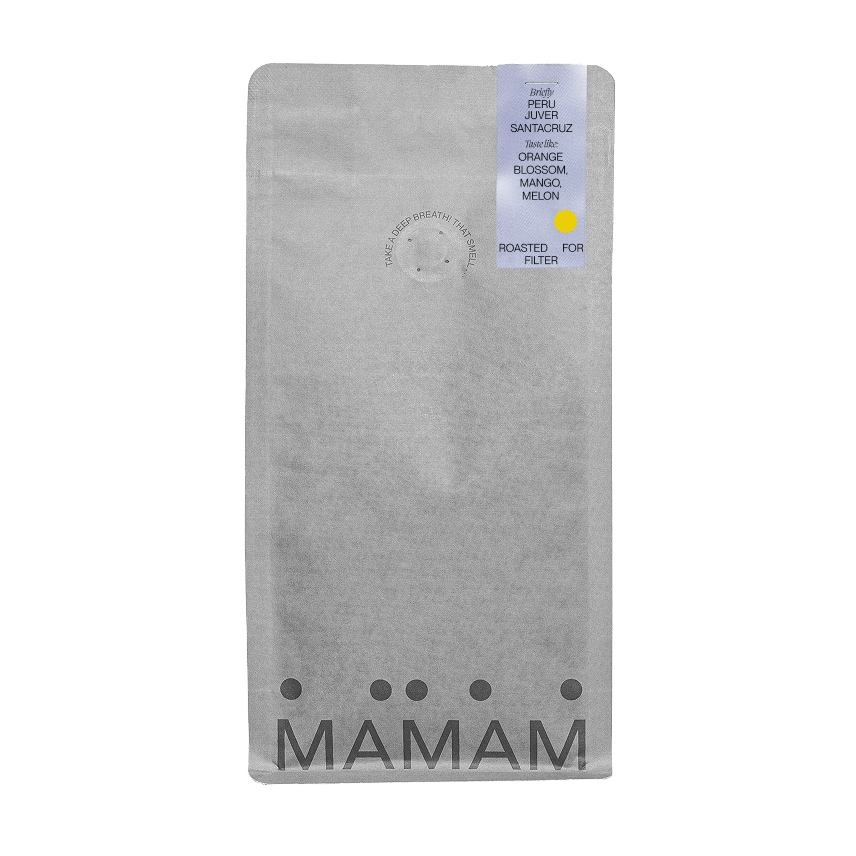
Whole-bean specialty coffee from Peru, roasted by MAMAM roasting brand. Light roast, perfect for filter coffee machines, drippers, Chemex, AeroPress, French Press, and other pour-over brewing methods. The flavour of the brew resembles orange flowers, mango and melon.Origin: PeruRegion: CajamarcaFarm: Juver SantacruzVariety: Red & Yellow Caturra, BourbonProcessing: WashedAltitude: 2000 m a.s.l.Cupping score: 89 / 100 ABOUT THE FARMTwo brothers are the protagonists of this lot: Jesus and Lizandro Llatas Santacruz. They live in Queromarca, a small town in the Callayuc district, province of Cutervo and Cajamarca region. Callayuc has all the conditions to grow fantastic coffee: fertile soils, altitude that range from 1600 to 2000 masl, good cup varieties (mainly red and yellow Caturra, but also bourbon, Typica) but it is more and more affected by droughts. So farmers have had to adjust to the conditions and as a consequence the use of water is limited. On top of that, they have been fermenting their coffees into closed environments (often thick plasticbags under shade) to allow yeasts to form and add a distinctive fruity profile to their cups. Of course they supervise the levels of fermentation to avoid defects.The story of the Santacruz brothers fits within many farmers in Peru as they used to sell their entire crops to local buyers that would arrive at their farm door and take the bags away at a cheap price. Now they deliver their coffee to Cultivar, where after through quality control they receive a much higher price for it. This gap in price is a great help in their income that they complement with growing cattle. Cajamarca is very well known for its cattle culture, providing the region with an abundant amount of cheese, milk and beef.As for the future of the Santacruz family and their coffee business we have very good hopes. Jesus, one of the brothers, has recently bought a few extra hectares of land with the idea to plant more exotic and delicate varieties like Geisha and he is a good representation of the younger generation of farmers that will take the lead in the coffee production in the years to come in Cajamarca.ROASTER'S OPINIONSuper floral and sweet coffee that reminds us slightly of the Geisha botanical variety, even though it isn't one.RECIPE V6016g of coffee250g of water 96°CMedium Grind Size 1. Put a paper filter in your V60 and rinse it with hot water ( 96C ). It will preheat your drip brewer and gets rid of a paper taste from the filter. For the best results always use filtered water (remember that 98,5 % of your brewed coffee is water)2. Remove the rinsing water from the server.3. Grind your beans just before you brew and add the coffee to the drip brewer. Gently distribute your coffee into the center of your V60.4. Place your V60 on a vessel on a scale and make sure that your water is 96 C.5. Tare your scale and start the timer.6. Add 50 grams of water. Your coffee will begin to bloom.7. At 30 seconds, add more water up to 100 grams. Pour the water slow, gently and in clockwise circles.8. At 00:50 pour hot water to 200g. 9. At 01:10 pour hot water to 250g.10. Swirl your V60 and let the coffee drip. 11. The water should have drained in around 3:00. You may need to change your grind setting, when the coffee finishes to brew too quickly or too long. But always taste and then judge your coffee.Store in a cold and dry space.
Whole-bean specialty coffee from Brazil, roasted by MAMAM roasting brand. Dark roast, perfect for espresso machines and moka pots. The brew resembles the flavour of dark chocolate, roasted nuts and cane sugar.Country: BrazilRegion: Sao PaoloVarietal: Bourbon, Mundo Movo, CatuaiProcessing: NaturalAltitude: 1100 m a.s.l.Store in a cold and dry space.
Leave us your e-mail, we will let you know as soon as the selected product appears in the offer!
Whole-bean specialty coffee from Brazil, roasted by MAMAM roasting brand. Dark roast, perfect for espresso machines and moka pots. The brew resembles the flavour of milk chocolate, cranberry, and almonds.Country: BrazilRegion: Sao PauloFarm: Monteiro ObatoVarietal: Obata, CatuaiProcessing: NaturalAltitude: 1000 m a.s.l.Store in a cold and dry space.
Leave us your e-mail, we will let you know as soon as the selected product appears in the offer!
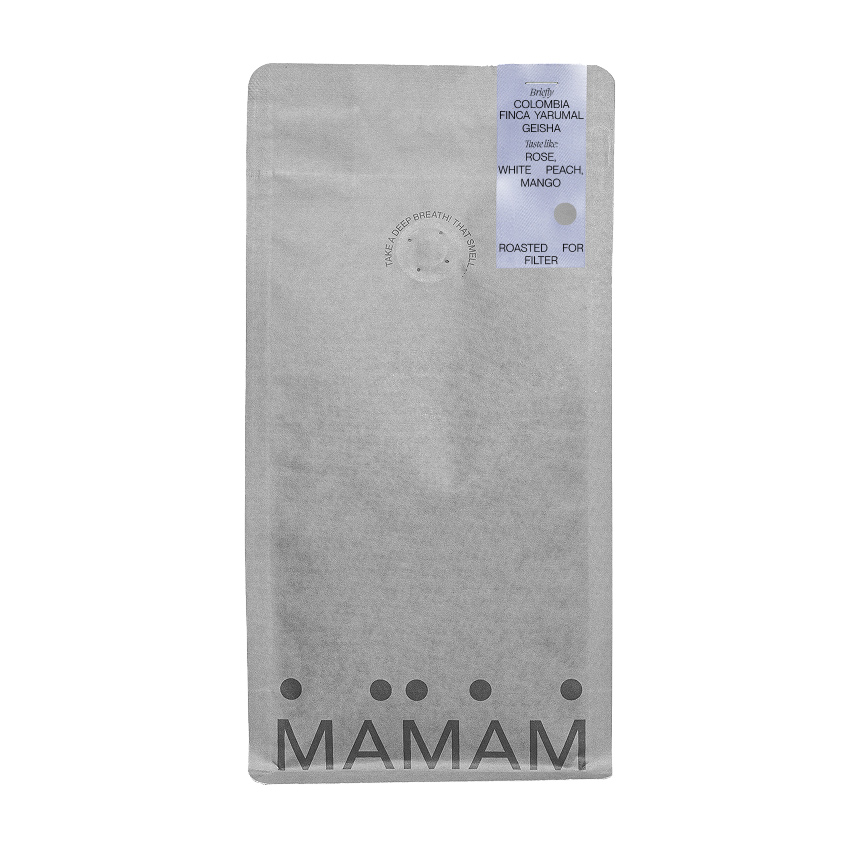
Whole-bean specialty coffee from Colombia, roasted by MAMAM roasting brand. Light roast, perfect for filter coffee machines, drippers, Chemex, AeroPress, French Press, and other pour-over brewing methods. The flavour of the brew resembles rose, white peach and mango.Origin: ColombiaRegion: Acevedo, HuilaFarm: Finca YarumalVariety: GeishaProcessing: NaturalAltitude: 1430 m a.s.l.Cupping score: 88 / 100 ABOUT THE FARM Omar Cardenas Benavides owns the 11 hectare Finca La Esperanza and Finca Yarumal in the Acevedo region of Huila, Colombia. This gorgeous farm has clay loam / volcanic soil and breathtaking terrain. Omar has planted nearly 30,000 trees and takes a very diligent approach to processing. They pick the ripest cherries every 15-20 days during harvest, use traditional pulpers, then dry ferment the coffee for 18-20 hours and rinse the coffee 3 times with clean water before drying in parabolic dryers for up to 18 days depending on weather. From Omar: When I was 7 years old my father helped me planting 300 coffee trees; he gave me a piece of land as an inheritance and when I got married, with the help of my wife, I bought another 4 hectares of land, which I also planted with coffee. Thanks to coffee I was able to pay for the education of my children, and I am proud to have been a finalist in the Best Cup Competitions. It is also very satisfying to be able to represent my municipality as a producer of high quality coffee. I am grateful for the help of the agronomists who have helped me continue to improve the quality of my coffee.OPINIA ROASTERAA very floral, delicate, and sophisticated coffee. A complex character and unique acidity are the two main features that prompted us to purchase this coffee. ROYAL BEANSWhat’s behind the name Royal Beans? If Speciality beans are the pinnacle of coffee, our Royal Beans reach the Himalayas! In this series, we present the very top of the coffee pyramid, the crème de la crème, as precious as crown jewels. Anaerobic, Gesha, Nanolot, Lychee – what does it mean to go beyond the ordinary? – Royal Beans is a selection of coffees chosen by us from various roasters – they share exceptional flavor, limited production, unique processing methods, and the highest quality. A treat for coffee connoisseurs (and those aspiring to be)!RECIPE V6016g of coffee250g of water 96°CMedium Grind Size 1. Put a paper filter in your V60 and rinse it with hot water ( 96C ). It will preheat your drip brewer and gets rid of a paper taste from the filter. For the best results always use filtered water (remember that 98,5 % of your brewed coffee is water)2. Remove the rinsing water from the server.3. Grind your beans just before you brew and add the coffee to the drip brewer. Gently distribute your coffee into the center of your V60.4. Place your V60 on a vessel on a scale and make sure that your water is 96 C.5. Tare your scale and start the timer.6. Add 50 grams of water. Your coffee will begin to bloom.7. At 30 seconds, add more water up to 100 grams. Pour the water slow, gently and in clockwise circles.8. At 00:50 pour hot water to 200g. 9. At 01:10 pour hot water to 250g.10. Swirl your V60 and let the coffee drip. 11. The water should have drained in around 3:00. You may need to change your grind setting, when the coffee finishes to brew too quickly or too long. But always taste and then judge your coffee.Store in a cold and dry space.
Leave us your e-mail, we will let you know as soon as the selected product appears in the offer!
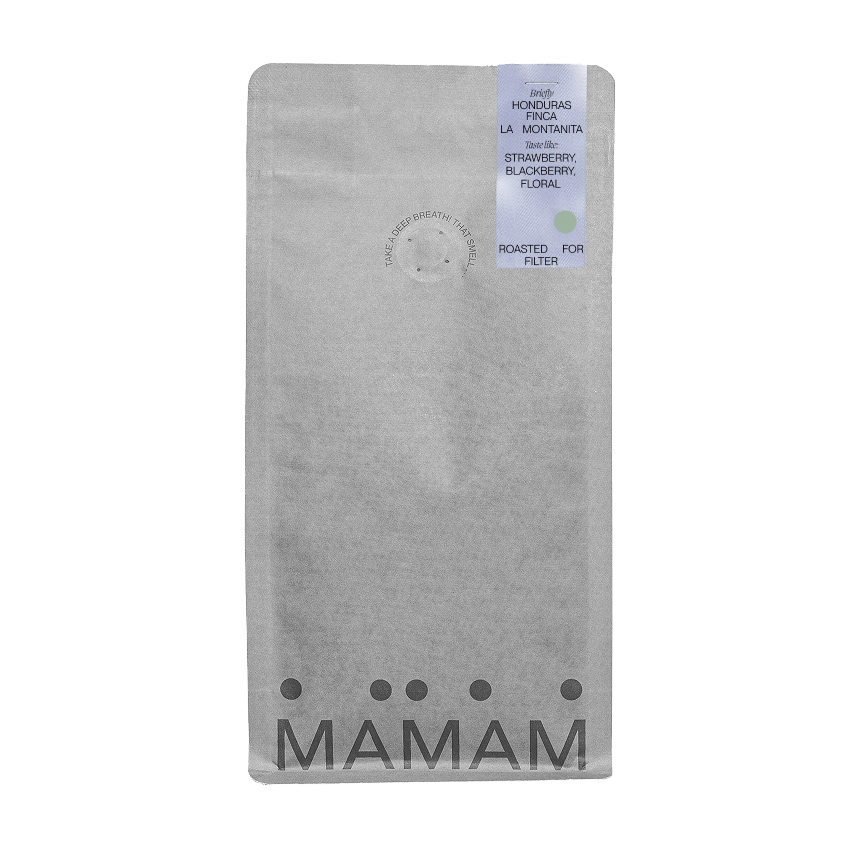
Whole-bean specialty coffee from Honduras, roasted by MAMAM roasting brand. Light roast, perfect for filter coffee machines, drippers, Chemex, AeroPress, French Press, and other pour-over brewing methods. The flavour of the brew resembles strawberry, blackberry and flowers.Origin: HondurasRegion: El Cedral, Santa BarbaraFarm: Finca La MontanitaVariety: PacasProcessing: Anaerobic WashedAltitude: 1620 m a.s.l.Cupping score: 88 / 100 Finca La Montanita is charmingly hidden in the green lush of El Cedral village in the Santa Barbara region. It’s owner, Evin Moreno is a 3rd generation coffee producer and a proud inheritor of a great coffee story. Moreno family was the first family in the local community to plant and grow coffee. Before that the region was known for cultivating only vegetables.In 2012 during the economic crisis Evin and his wife, Alma decided to move to Spain and work hard to bring their economical situation back to balance. They’ve managed to do so and luckily they were able to return to their 3,5 hectare beauty land. In 2013 Evin participated in the Cup of Excellence for the first time and placed 12th. Evin decided to focus on different methods of processing and has been extremely successful at it.He shares his wet mill with fourteen of his family members including his brothers and cousins. He constantly improves the farm’s and the wet mill’s infrastructure and this year he’s planning to build two more solar dryers to assure maximum coffee quality.We are so happy and proud to be able to share Evin’s Pacas anaerobic experiment.ABOUT COFFEEThe cherries were picked at the perfect maturation point, placed in plastic bags and underwent a 72 hour anaerobic fermentation. Next, fermented cherries were de-pulped and dry fermented in tanks for additional 4 hours, followed by multiple water rinsing and slow drying in a solar dryer for 18 days.ROASTER'S NOTEElegant, complex, and perfectly capturing the character of high-quality coffees from Honduras.V60 RECIPE16g of coffee250g of water 96°CMedium Grind Size 1. Put a paper filter in your V60 and rinse it with hot water ( 96C ). It will preheat your drip brewer and gets rid of a paper taste from the filter. For the best results always use filtered water (remember that 98,5 % of your brewed coffee is water)2. Remove the rinsing water from the server.3. Grind your beans just before you brew and add the coffee to the drip brewer. Gently distribute your coffee into the center of your V60.4. Place your V60 on a vessel on a scale and make sure that your water is 96 C.5. Tare your scale and start the timer.6. Add 50 grams of water. Your coffee will begin to bloom.7. At 30 seconds, add more water up to 100 grams. Pour the water slow, gently and in clockwise circles.At 00:50 pour hot water to 200g. At 01:10 pour hot water to 250g.Swirl your V60 and let the coffee drip. The water should have drained in around 3:00. You may need to change your grind setting, when the coffee finishes to brew too quickly or too long. But always taste and then judge your coffee.Store in a cold and dry space.
Leave us your e-mail, we will let you know as soon as the selected product appears in the offer!
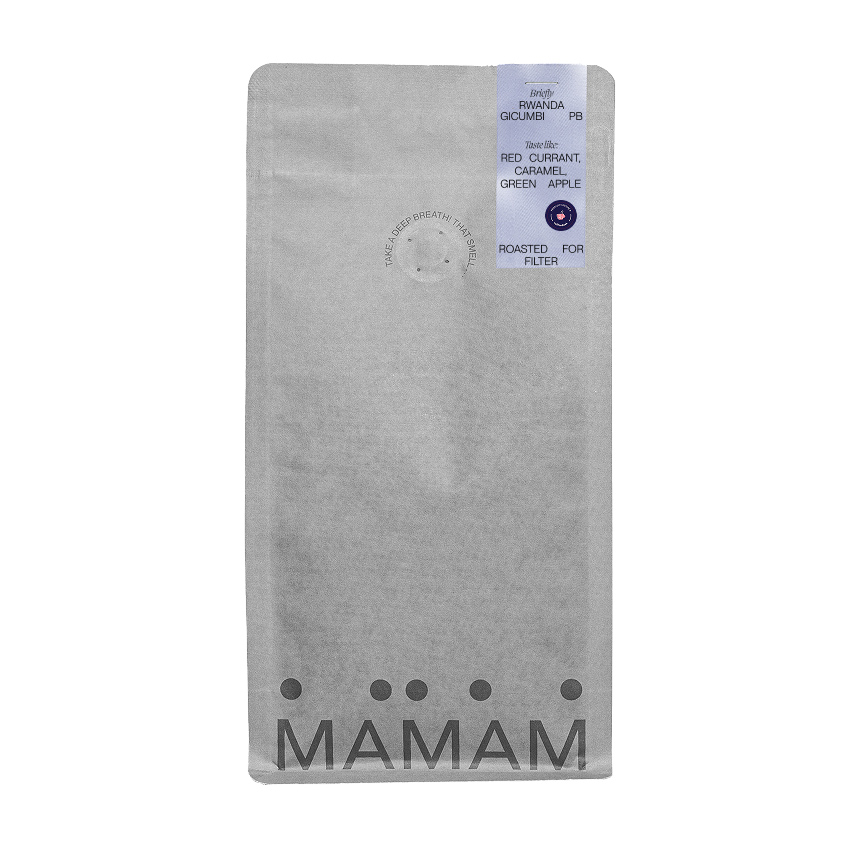
Whole-bean specialty coffee from Rwanda, roasted by MAMAM roasting brand. Light roast, perfect for filter coffee machines, drippers, Chemex, AeroPress, French Press, and other pour-over brewing methods. The flavour of the brew resembles red currant, caramel and green apple.Origin: RwandaRegion: Nothern Province, GicumbiFarm: GicumbiVariety: Red BourbonProcessing: WashedAltitude: 2000 m a.s.l.Cupping score: 86 / 100 A bright and highly fruity coffee that, despite its high acidity, also features equally pronounced sweetness, creating balance and complexity. A perfect representation of what we love about coffees from Rwanda.Store in a cold and dry space.
Leave us your e-mail, we will let you know as soon as the selected product appears in the offer!
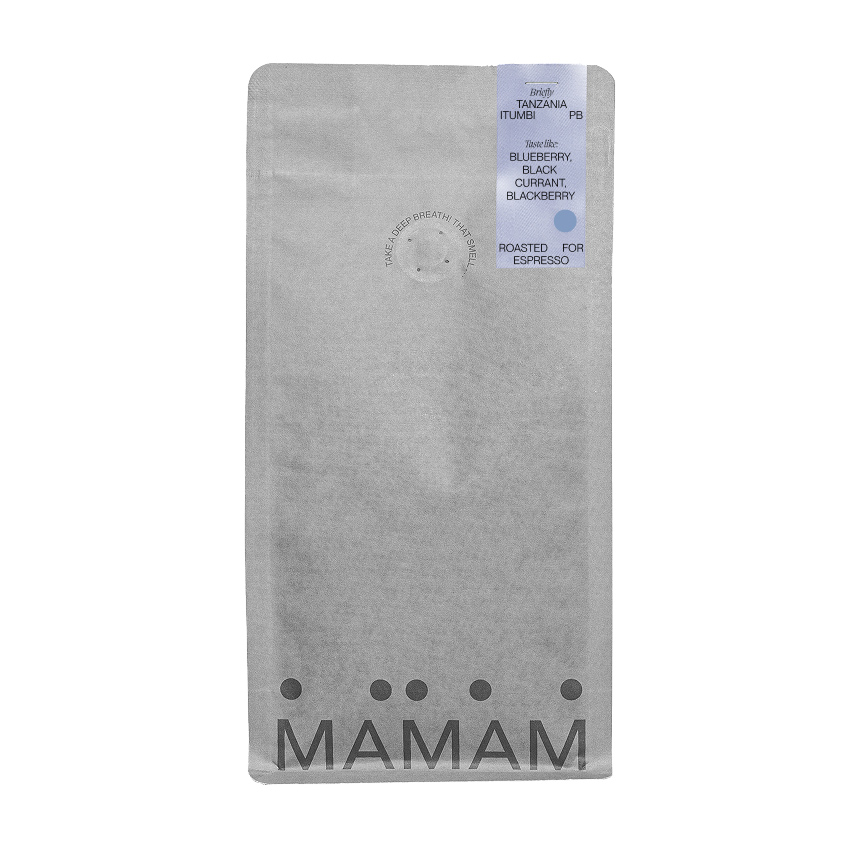
Whole-bean specialty coffee from Tanzania, roasted by MAMAM roasting brand. Dark roast, perfect for espresso machines and moka pots. The brew resembles the flavour of blackberry, black currants and blueberry.Origin: TanzaniaRegion: Songwe, MboziFarm: Itumbi AmcosVariety: BourbonProcessing: WashedAltitude: 2000 m a.s.l.Cupping score: 87 / 100 ABOUT THE FARMAMCOS was established in the 1970s under the name Ujamaa with 56 members. In 1994, the name was changed to Itumpi AMCOS. It continues to operate under this name today and has 160 active members. Farmers deliver cherries between 12:30 PM and 6:00 PM. Typically, the pulper is started around 2:00 PM and can run until 10:00 PM. After pulping, the parchment is sorted in washing channels into grades P1, P2, P3, P light, and pods, and then soaked in tanks for 8-10 hours. Drying the parchment in this area takes 7-10 days. The group began producing fully washed coffee in 2019.ROASTER'S OPINIONReminiscent of a sweet forest fruit brew. Very crisp and fruity.Store in a cool and dry place.
Leave us your e-mail, we will let you know as soon as the selected product appears in the offer!