

















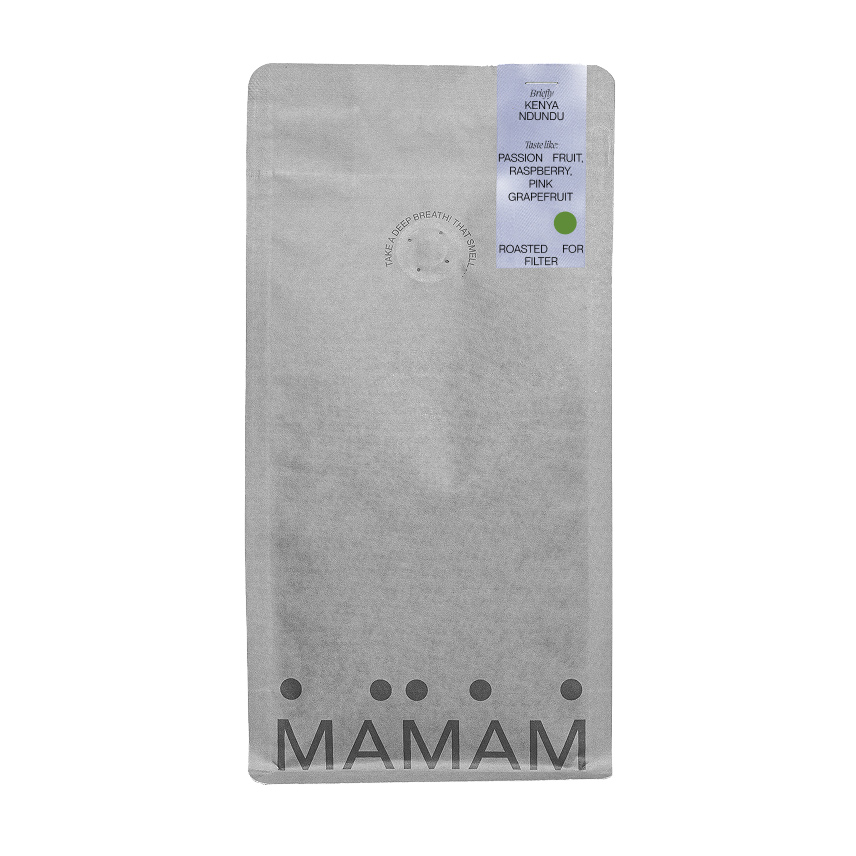
MAMAM - Kenya Ndundu Washed Filter 250 g
Roasting date: 20.08.2026
(TAX included)

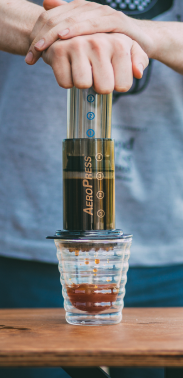
Whole-bean specialty coffee from Kenya, roasted by MAMAM roasting brand. Light roast, perfect for filter coffee machines, drippers, Chemex, AeroPress, French Press, and other pour-over brewing methods. The flavour of the brew resembles passion fruit, raspberry and pink grapefruit.
Origin: Kenya
Region: Kiganjo
Farm: Ndundu Factory
Variety: SL-28, SL-34
Processing: Washed
Altitude: 2000 m a.s.l.
Cupping score: 88 / 100
ABOUT THE FARM
The affiliate members of the co-op are required to be extremely diligent to carry out all agronomic activities associated with high quality coffee production, including sourcing coffee seeds from the Coffee Research Institute?s Coffee Research Station. Planting and cultivating is implemented according to the guidelines submitted by the group leaders and technical advisors. Fieldwork involves weeding, pruning, application of fertiliser, mulching and technical advice. Technical advice is offered through farmer training programs and field visits offered by the ministry of agriculture.
As for the rest of the coop in the Ndundu factory all coffee cherries are handpicked and are delivered to the mill the same day, where they will get rigourously sorted through floatation tanks, whilst factory employees oversee the process and any under ripe or damaged cherries will not be accepted by the “Cherry Clerk”, who keeps meticulous records of how much coffee each producer delivers on any given day and thus how much payment is due once the coffee has been sold.
PB means peaberry. Peaberry is the name given to a very specific shape of coffee bean, which is the result of a natural mutation of the coffee cherry. While there are usually two beans in each fruit, a cherry with a peaberry mutation produces only one rounder bean. Peaberry mutations occur in approximately 5% of all coffee varieties. These beans are known for being rounder, smaller, and denser, which, when handled correctly, can contribute to a more even roast color.
PROCESSING
Coffee cherries are carefully handpicked at peak ripeness by smallholder farmers and delivered to the factory for processing. The cherries undergo a Fully washed method, where they are first sorted, then pulped to remove the outer skin. Parchment is then fermented in concrete tanks for 12 to 24 hours, depending on temperature and climate conditions, to break down the mucilage. After fermentation, parchment is washed through grading channels using fresh water. During the peak season, parchment may be soaked in clean, circulating water for up to 24 hours before being transferred to raised beds for drying. The drying process lasts 5 to 21 days , with workers frequently turning the parchment and covering it during the hottest part of the day to ensure even drying and prevent defects.
VARIETY
SL28 is one of the best known and most respected African varieties. From Kenya, where it was originally selected in the 1930s, it has spread to other parts of Africa (it is particularly important in the Arabica growing areas of Uganda) and now to Latin America. The variety is suitable for medium to high altitudes and is drought tolerant, but susceptible to the main coffee diseases. SL28 is characterised by rusticity, a trait that means it can be left untended for several years or even decades and then return to successful production. Many parts of Kenya have SL28 trees that are 60-80 years old and still productive. The variety was selected at the former Scott Agricultural Laboratories (now the National Agricultural Laboratories, NARL, located in Kabete). The individual tree selections made at Scott Laboratories between 1935 and 1939 were prefixed with SL. There were 42 in total and they were examined for yield, quality and resistance to drought and disease. Recent genetic tests have confirmed that SL28 is related to the Bourbon genetic group. It has become valued for its sweet, complex flavour with vinous undertones.
SL34 was originally selected in Kenya in the late 1930s at Scott Agricultural Laboratories. It is very susceptible to major diseases such as coffee rust, coffee berry blight and coffee berry disease. Therefore, proper disease control and prevention strategies are essential for its successful cultivation. Recent genetic tests have shown that SL34 is related to the Typica genetic group. The variety is known for its exceptional cup quality, full body and pleasant acidity.
ROASTER'S OPINION
Crisp, acidic, and fruity. A prominent acidity balanced by the sweetness of ripe citrus fruits. Perfect both hot and cold.
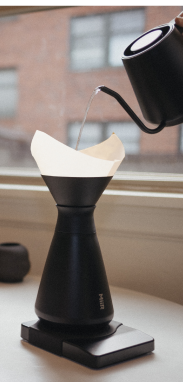
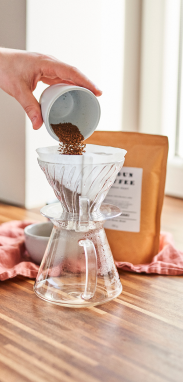
RECIPE V60
- 16g of coffee
- 250g of water 96°C
- Medium Grind Size
1. Put a paper filter in your V60 and rinse it with hot water ( 96C ). It will preheat your drip brewer and gets rid of a paper taste from the filter. For the best results always use filtered water (remember that 98,5 % of your brewed coffee is water)
2. Remove the rinsing water from the server.
3. Grind your beans just before you brew and add the coffee to the drip brewer. Gently distribute your coffee into the center of your V60.
4. Place your V60 on a vessel on a scale and make sure that your water is 96 C.
5. Tare your scale and start the timer.
6. Add 50 grams of water. Your coffee will begin to bloom.
7. At 30 seconds, add more water up to 100 grams. Pour the water slow, gently and in clockwise circles.
8. At 00:50 pour hot water to 200g.
9. At 01:10 pour hot water to 250g.
10. Swirl your V60 and let the coffee drip.
11. The water should have drained in around 3:00. You may need to change your grind setting, when the coffee finishes to brew too quickly or too long. But always taste and then judge your coffee.
Store in a cold and dry space.
| Full product name (PL): | MAMAM Kenya Ndundu Washed FIL 250g, kawa ziarnista |
|---|---|
| Product type: | Coffee |
| Country of roasting: | Poland |
| Coffee bean origin: | Kenya |
| Acidity: | High |
| Arabica / Robusta (ratio): | 100% Arabica |
| Body: | Low |
| Brewing method: | Chemex, aeropress, drip coffee brewer, dripper, french press |
| Caffeine content: | Caffeinated |
| Coffee form: | Whole Bean |
| Coffee scoring: | 88 |
| Farm: | NDUNDU FACTORY |
| Growing location: | 2000 |
| Growing region: | KIGANJO |
| Packaging: | 250 g |
| Processing: | Washed |
| Roast level: | Light |
| Specialty: | Yes |
| Sweetness: | Medium |
| Tasting notes: | citrus fruits, forest fruits, tropical fruits |
| Tasting notes: | Marakuja, Malina, Różowy Grejpfrut |
| Variety: | SL28, SL34 |
| Index: | 2101015546 |
| Manufacturer: |
MAMAM COLLECTIVE SPÓŁKA Z OGRANICZONĄ ODPOWIEDZIALNOŚCIĄ ul. Santocka 39/BUDYNEK B 71-083 Szczecin Polska |
Whole-bean specialty coffee from Kenya, roasted by MAMAM roasting brand. Light roast, perfect for filter coffee machines, drippers, Chemex, AeroPress, French Press, and other pour-over brewing methods. The flavour of the brew resembles passion fruit, raspberry and pink grapefruit.
Origin: Kenya
Region: Kiganjo
Farm: Ndundu Factory
Variety: SL-28, SL-34
Processing: Washed
Altitude: 2000 m a.s.l.
Cupping score: 88 / 100
ABOUT THE FARM
The affiliate members of the co-op are required to be extremely diligent to carry out all agronomic activities associated with high quality coffee production, including sourcing coffee seeds from the Coffee Research Institute?s Coffee Research Station. Planting and cultivating is implemented according to the guidelines submitted by the group leaders and technical advisors. Fieldwork involves weeding, pruning, application of fertiliser, mulching and technical advice. Technical advice is offered through farmer training programs and field visits offered by the ministry of agriculture.
As for the rest of the coop in the Ndundu factory all coffee cherries are handpicked and are delivered to the mill the same day, where they will get rigourously sorted through floatation tanks, whilst factory employees oversee the process and any under ripe or damaged cherries will not be accepted by the “Cherry Clerk”, who keeps meticulous records of how much coffee each producer delivers on any given day and thus how much payment is due once the coffee has been sold.
PB means peaberry. Peaberry is the name given to a very specific shape of coffee bean, which is the result of a natural mutation of the coffee cherry. While there are usually two beans in each fruit, a cherry with a peaberry mutation produces only one rounder bean. Peaberry mutations occur in approximately 5% of all coffee varieties. These beans are known for being rounder, smaller, and denser, which, when handled correctly, can contribute to a more even roast color.
PROCESSING
Coffee cherries are carefully handpicked at peak ripeness by smallholder farmers and delivered to the factory for processing. The cherries undergo a Fully washed method, where they are first sorted, then pulped to remove the outer skin. Parchment is then fermented in concrete tanks for 12 to 24 hours, depending on temperature and climate conditions, to break down the mucilage. After fermentation, parchment is washed through grading channels using fresh water. During the peak season, parchment may be soaked in clean, circulating water for up to 24 hours before being transferred to raised beds for drying. The drying process lasts 5 to 21 days , with workers frequently turning the parchment and covering it during the hottest part of the day to ensure even drying and prevent defects.
VARIETY
SL28 is one of the best known and most respected African varieties. From Kenya, where it was originally selected in the 1930s, it has spread to other parts of Africa (it is particularly important in the Arabica growing areas of Uganda) and now to Latin America. The variety is suitable for medium to high altitudes and is drought tolerant, but susceptible to the main coffee diseases. SL28 is characterised by rusticity, a trait that means it can be left untended for several years or even decades and then return to successful production. Many parts of Kenya have SL28 trees that are 60-80 years old and still productive. The variety was selected at the former Scott Agricultural Laboratories (now the National Agricultural Laboratories, NARL, located in Kabete). The individual tree selections made at Scott Laboratories between 1935 and 1939 were prefixed with SL. There were 42 in total and they were examined for yield, quality and resistance to drought and disease. Recent genetic tests have confirmed that SL28 is related to the Bourbon genetic group. It has become valued for its sweet, complex flavour with vinous undertones.
SL34 was originally selected in Kenya in the late 1930s at Scott Agricultural Laboratories. It is very susceptible to major diseases such as coffee rust, coffee berry blight and coffee berry disease. Therefore, proper disease control and prevention strategies are essential for its successful cultivation. Recent genetic tests have shown that SL34 is related to the Typica genetic group. The variety is known for its exceptional cup quality, full body and pleasant acidity.
ROASTER'S OPINION
Crisp, acidic, and fruity. A prominent acidity balanced by the sweetness of ripe citrus fruits. Perfect both hot and cold.
RECIPE V60
- 16g of coffee
- 250g of water 96°C
- Medium Grind Size
1. Put a paper filter in your V60 and rinse it with hot water ( 96C ). It will preheat your drip brewer and gets rid of a paper taste from the filter. For the best results always use filtered water (remember that 98,5 % of your brewed coffee is water)
2. Remove the rinsing water from the server.
3. Grind your beans just before you brew and add the coffee to the drip brewer. Gently distribute your coffee into the center of your V60.
4. Place your V60 on a vessel on a scale and make sure that your water is 96 C.
5. Tare your scale and start the timer.
6. Add 50 grams of water. Your coffee will begin to bloom.
7. At 30 seconds, add more water up to 100 grams. Pour the water slow, gently and in clockwise circles.
8. At 00:50 pour hot water to 200g.
9. At 01:10 pour hot water to 250g.
10. Swirl your V60 and let the coffee drip.
11. The water should have drained in around 3:00. You may need to change your grind setting, when the coffee finishes to brew too quickly or too long. But always taste and then judge your coffee.
Store in a cold and dry space.
| Full product name (PL): | MAMAM Kenya Ndundu Washed FIL 250g, kawa ziarnista |
|---|---|
| Product type: | Coffee |
| Country of roasting: | Poland |
| Coffee bean origin: | Kenya |
| Acidity: | High |
| Arabica / Robusta (ratio): | 100% Arabica |
| Body: | Low |
| Brewing method: | Chemex, aeropress, drip coffee brewer, dripper, french press |
| Caffeine content: | Caffeinated |
| Coffee form: | Whole Bean |
| Coffee scoring: | 88 |
| Farm: | NDUNDU FACTORY |
| Growing location: | 2000 |
| Growing region: | KIGANJO |
| Packaging: | 250 g |
| Processing: | Washed |
| Roast level: | Light |
| Specialty: | Yes |
| Sweetness: | Medium |
| Tasting notes: | citrus fruits, forest fruits, tropical fruits |
| Tasting notes: | Marakuja, Malina, Różowy Grejpfrut |
| Variety: | SL28, SL34 |
| Index: | 2101015546 |
| Manufacturer: |
MAMAM COLLECTIVE SPÓŁKA Z OGRANICZONĄ ODPOWIEDZIALNOŚCIĄ ul. Santocka 39/BUDYNEK B 71-083 Szczecin Polska |